President Volodymyr Zelensky has confirmed that Ukraine was behind a hack of Russia's mobile alert apps, but said the action was a direct response to a Russian cyber-attack that sent false nuclear and chemical warnings across Ukraine.
Ukraine responds to Russian alert app hack
Speaking about the cyber-operation, Zelensky said: "I underlined it several times that we only respond to their attacks." He added: "After the attack, when it was very clear to all our people and for all our personnel, and the intelligence, that it's [a personal attack against our people, civilians, of course, we responded."
On November 1, Ukraine's Air Alert App, which provides citizens with updates on incoming Russian strikes, was hacked with false warnings of nuclear, chemical, and street-fighting threats. The hacked app reportedly told users: "Hi! A nuclear alert is about to go off all across Ukraine!"
Russia's alert system compromised
Hours after the false warnings reached Ukrainian phones, Russia's own air raid alert system was compromised. Messages claimed that "nuclear warheads" had been "launched across all regions of Russia," and advised users to "stock up with food for three weeks" and hide in their basements.
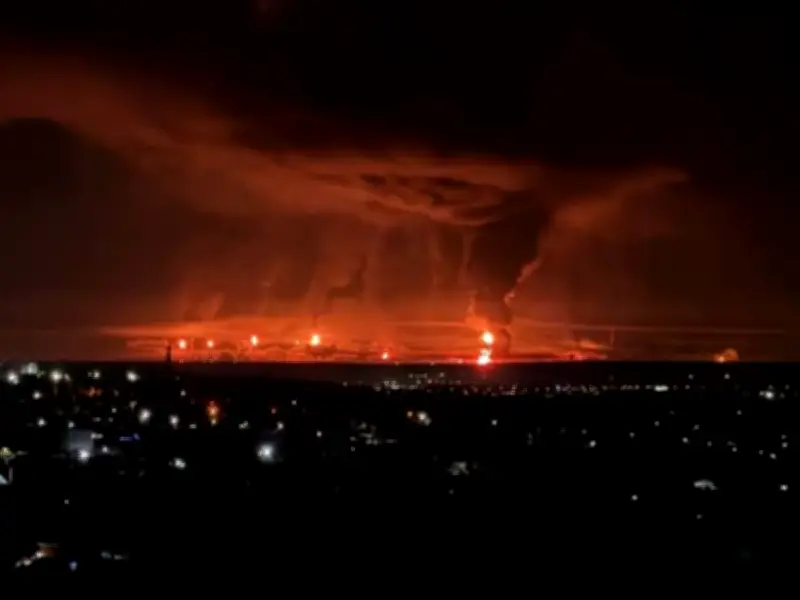
The cyber-exchange came as Ukraine stepped up assaults on Russia's oil industry. Overnight, Ukraine hit the Novo-Yaroslavl Oil Complex, one of Russia's largest oil refineries, causing major blazes and damaging infrastructure. The complex processes 15 million metric tons of crude oil annually and supplies fuel to Moscow and other regions in Russia's Central and Northwestern federal districts. Its customers include airports and facilities linked to Russia's military-industrial complex.
Renewed attacks on Russian energy
Ukraine's latest attacks on Russian energy supplies follow a general pause in its campaign. The halt, ordered by Donald Trump, was followed by increased Russian attacks on Ukrainian civilians, including an attack that killed 26 people at a school in Zaporizhzhia 24 hours earlier.
Russia then launched a major missile and drone attack on Ukraine overnight, striking energy infrastructure, residential buildings, and medical facilities. Dozens of people were injured, and explosions were reported in Kharkiv, Dnipro, Zhytomyr, and other cities. In Kharkiv, one of the hardest-hit cities, a Russian strike damaged a medical facility in the Nemyshlianskyi district.
The pause in Ukraine's attacks on Russia's oil industry followed pressure from US President Donald Trump, who urged Zelensky to stop targeting Russian refineries and diesel production facilities. On October 10, Trump publicly called on Kyiv to halt the attacks, and US envoys Steve Witkoff and Jared Kushner reportedly pressed Ukraine to suspend the strikes, warning that continued attacks could jeopardize intelligence sharing.