
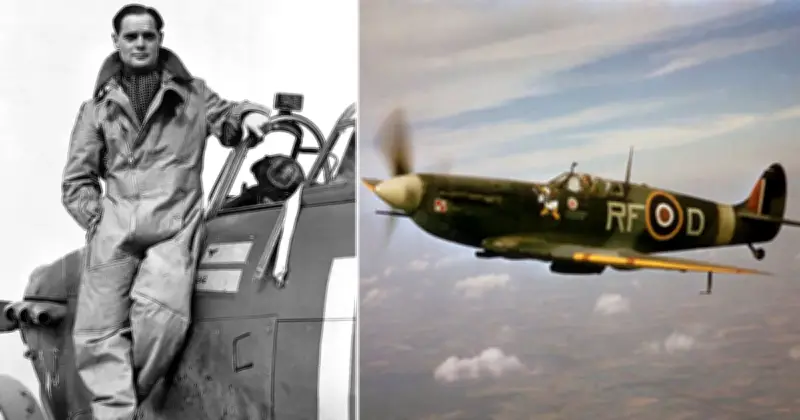
New evidence suggests that Douglas Bader, the legendary legless RAF ace, was shot down by friendly fire on August 9, 1941, and not by a German fighter as long believed.
The 85th Anniversary of a Controversial Downing
On the 85th anniversary of the event, questions remain over who was really responsible for ending the glittering career of the Battle of Britain hero. Bader, a charismatic but flawed character, was brought down over France on that day, leading to his capture and imprisonment for the remainder of the war.
Bader's own account, as told to his biographer Paul Brickhill in the 1954 book 'Reach for the Sky', was that a Messerschmitt 109 collided with his Spitfire from behind, slicing off the tail. This narrative was cemented in the popular imagination by the 1956 film of the same name starring Kenneth More.
Conflicting Accounts and New Evidence
However, a detailed analysis of military records, archaeological evidence, and eyewitness accounts paints a different picture. A fellow RAF pilot from Bader's Tangmere Wing, who was shot down and taken prisoner the same day, described an engagement with what he believed was a Messerschmitt 109. His account uncannily mirrors the facts known about Bader's Spitfire loss, including the timing, location, and the way the tail and rear fuselage broke away.
Luftwaffe records show that only one Messerschmitt 109 was lost that day and time, over St Omer, and that aircraft can be positively tied to the victory of another Tangmere pilot. The wreckage of that German aircraft, excavated in 2004, showed the tail section was intact upon impact, meaning it could not have been the one seen with its tail blown off.
The Conclusion: Friendly Fire
With no other German aircraft lost or damaged in that engagement, and no German pilot claiming an RAF aircraft destroyed that can be linked to Bader, the only conclusion is that Bader was downed by friendly fire. The identity of the pilot who fired the fatal shots remains unknown, but it is possible Bader himself may have been unaware of the true cause, or may have chosen to protect the other pilot by concocting a different narrative.
Bader was a complex figure, heroic yet often insufferable. He was known for his aggression, arrogance, and disregard for authority. After the war, he became a tireless advocate for the disabled, was knighted in 1976, and died in 1982. His legacy as a war hero remains, but the mystery of his downing has finally been solved.




