US Soldiers Challenge Official Narrative on Kuwait Drone Attack
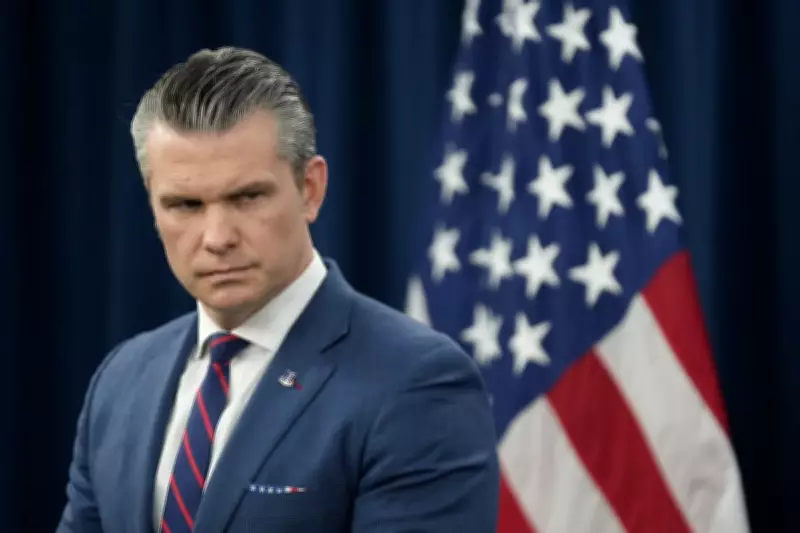
American soldiers who survived a devastating drone attack on a US tactical operations center in Kuwait have publicly disputed the account provided by Defense Secretary Pete Hegseth, asserting that the facility was fundamentally unprepared for aerial threats. The March 1 attack at Port Shuaiba resulted in the deaths of six service members and left dozens injured, marking a significant incident in ongoing regional tensions.
Survivors Describe Inadequate Defenses
Contrary to Hegseth's initial characterization of the event as a rare occurrence where a single drone penetrated air defenses to strike a fortified center, survivors paint a starkly different picture. One injured soldier told CBS News that portraying the incident as one drone slipping through is a falsehood, emphasizing that the unit was unprepared to provide any meaningful defense for itself.
Another soldier described the tactical operations center not as a secure military installation, but as a collection of small tin buildings serving as makeshift offices. These structures were surrounded by barriers designed to absorb rocket blasts but offered no protection against aerial attacks like the drone strike that occurred.

Chaotic Aftermath and Self-Triage
The survivors recounted the harrowing moments following the drone strike, describing intense shaking, clouds of dust and smoke, and ringing ears. The scene was one of chaos, with head wounds, heavy bleeding, perforated eardrums, and shrapnel scattered throughout the area.
With no organized medical response initially available, soldiers had to triage themselves using makeshift tourniquets and bandages. They eventually commandeered a civilian vehicle to transport the wounded to a local hospital. One survivor expressed anguish over knowing that not all soldiers were evacuated, with some potentially remaining inside the damaged structure.
Conflicting Accounts and Official Response
The soldiers' accounts align with earlier reports questioning why US troops were stationed within Iranian missile range at a facility with minimal aerial protection. Satellite imagery analysis indicated the center was a trailer-style structure lacking substantial air defense capabilities, protected only by concrete T-walls.
Joey Amor, husband of deceased Sgt 1st Class Nicole Amor, compared the tactical operations center to a shipping container-style building with no defenses when speaking with the Associated Press.
However, Pentagon spokesperson Sean Parnell has denied claims that the facility lacked proper defenses. In a March statement, Parnell asserted that a Tactical Operations Center is not a makeshift office space and described the secure facility as fortified with 6-foot walls.
The Pentagon has declined to comment further on the survivors' accounts, citing an ongoing investigation into the incident. The attack represents the first fatalities of US service members since the escalation of tensions with Iran, adding significance to the conflicting narratives about preparedness and defense capabilities at the Kuwait base.