Pentagon Readies for Ground Operations in Iran as Troop Numbers Swell
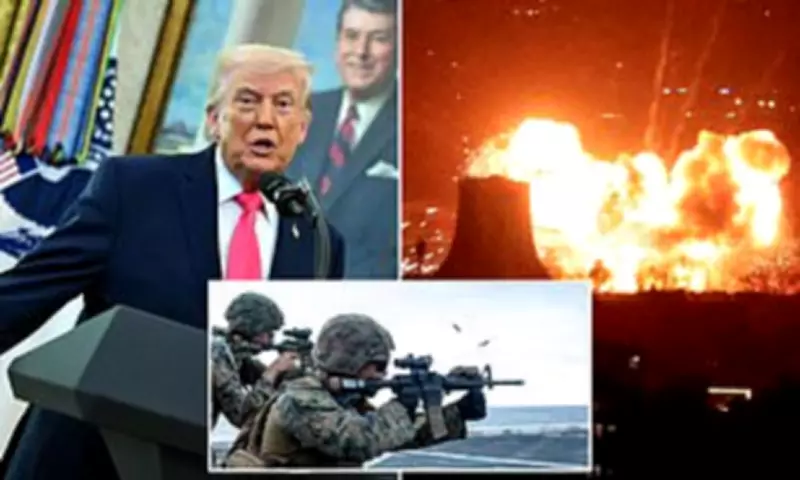
The Pentagon is actively preparing for potential ground operations in Iran that could extend for several weeks, according to officials who revealed the plans as thousands of US Marines pour into the Middle East region. Defense chiefs are bracing for what insiders describe as a 'major escalation', though sources indicate any military action is expected to stop short of a full-scale invasion.
Special Operations Forces at the Forefront
Instead of conventional invasion forces, military planners are focusing on Special Operations forces backed by infantry troops, according to sources familiar with the planning. The exact nature of these operations remains classified, but they would represent a significant escalation of US military involvement in the ongoing conflict with Iran.
It remains unclear whether President Donald Trump has approved or will approve the Pentagon's reported plans. The White House has maintained that all military options remain on the table while continuing to pursue diplomatic channels with Tehran.

Massive Troop Deployments Underway
The US 31st Marine Expeditionary Unit arrived in the region on Saturday, bringing approximately 3,500 additional troops to the Middle East. This unit's capabilities typically include intercepting vessels and seizing territory, according to military analysts. The deployment coincides with reports that the Pentagon is preparing to send an additional 10,000 troops from the 82nd Airborne Division to provide Washington with expanded military options.
These troop movements come as Iranian-backed Houthi forces have entered the conflict, launching an unsuccessful missile attack on Israel. The Houthis' involvement represents a significant expansion of the conflict beyond Iran's borders.
Conflicting Signals from Administration Officials
President Trump has offered mixed messages about the conflict's status, declaring recently: 'It's sort of finished, but it's not finished. It's got to be finished.' Meanwhile, Press Secretary Karoline Leavitt warned that if Tehran does not end its threats and nuclear ambitions, the President is 'prepared to unleash hell.'
Leavitt clarified in a statement: 'It's the job of the Pentagon to make preparations in order to give the Commander in Chief maximum optionality. It does not mean the President has made a decision.'
Planning Timeline and Military Assessment
The timeline for potential operations varies among sources, ranging from 'weeks, not months' to 'a couple of months.' A former senior defense official familiar with US military planning told reporters that 'this is not last minute planning' and that scenarios have been 'war-gamed' extensively.
Secretary of State Marco Rubio offered a more optimistic assessment, stating that the conflict is not projected 'to be a prolonged conflict' and that operations are ahead of schedule based on administration assessments. He added that the US 'can achieve all of our objectives without ground troops,' suggesting diplomatic and other military options remain viable.
Mounting Casualties and Regional Escalation
The conflict has already claimed the lives of at least 13 US soldiers, with six killed in a plane crash in Iraq and six more in a drone attack on Port Shuaiba. Approximately 300 US troops have been wounded, including about 225 suffering from traumatic brain injuries resulting from missile blasts.
Recent attacks have intensified, with around a dozen US soldiers wounded and multiple aircraft damaged following an Iranian missile strike at the Prince Sultan Air Base in Saudi Arabia on Friday. This represents one of the most serious breaches of US air defenses since the conflict began.
Strategic Waterways and Global Economic Impact
The conflict's economic implications are expanding as Iran has effectively shut down the Strait of Hormuz, a critical waterway that carries a fifth of the world's oil and nearly a third of global fertilizer trade. Now, Houthi forces in Yemen are threatening to close the Bab al-Mandeb Strait, an 18-mile-wide waterway connecting the Red Sea with the Gulf of Aden.

If both strategic waterways are compromised, the impact would extend far beyond the Middle East, affecting global supply chains, energy markets, and shipping costs worldwide. Ten percent of global seaborne trade passes through the Red Sea, including a fifth of the world's container traffic and car shipments.
Diplomatic Efforts and Ceasefire Proposals
Despite military preparations, diplomatic channels remain active. The Iranian ambassador to the United Nations in Geneva stated that Tehran has agreed to 'facilitate and expedite' humanitarian aid through the Strait of Hormuz, even as its nuclear sites face continued strikes.
Washington has passed a 15-point ceasefire plan to Iran through Pakistan, aiming to restrict Tehran's nuclear program and reopen the critical waterway. Tehran rejected this proposal and countered with its own five-point deal that included reparations and official control of the vital strait.
President Trump has warned that if Iran doesn't fully reopen the Strait of Hormuz by April 6, he will order strikes on the country's energy plants. This ultimatum adds pressure to already tense negotiations as regional powers signal a tougher stance against Iran's attacks.
Regional Diplomacy and Normalization Efforts
Amid the conflict, President Trump has renewed calls for Saudi Arabia and Israel to normalize relations through his Abraham Accords initiative. He declared that 'It's now time' for these two major Middle Eastern powers to establish ties once the Iran conflict concludes.
However, significant challenges remain, particularly Saudi Arabia's insistence on a credible path to a Palestinian state before establishing commercial and diplomatic relations with Israel. These diplomatic efforts continue alongside military preparations as the administration pursues multiple tracks in its Middle East policy.