
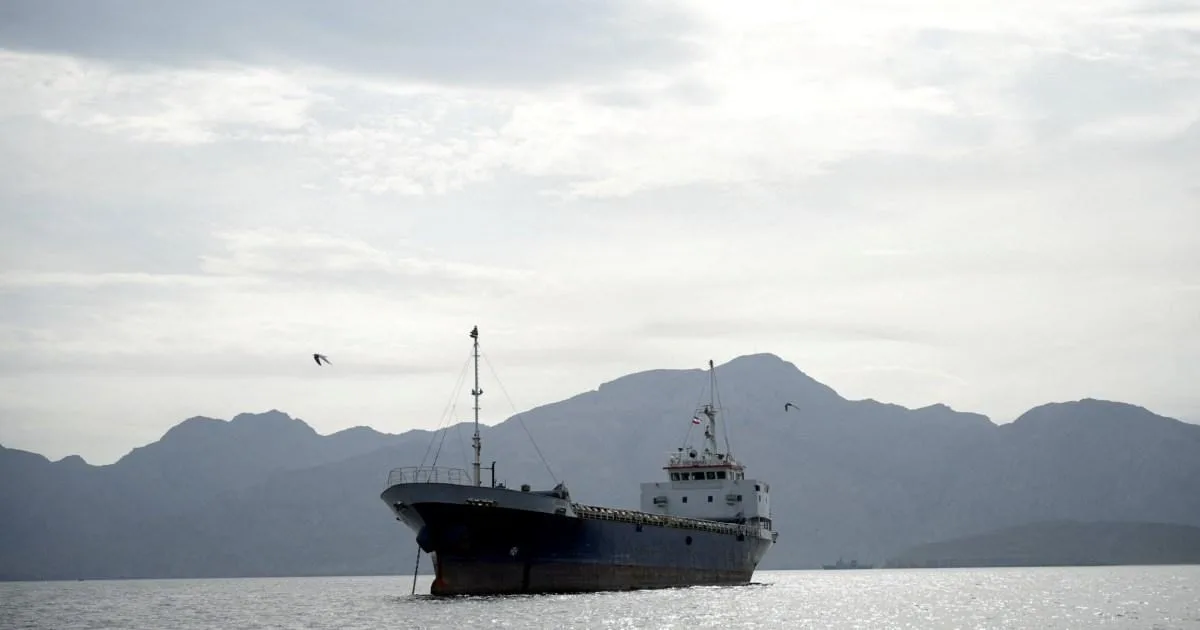
Donald Trump's blockade of the Strait of Hormuz appears less effective than claimed, with Iran-linked ships continuing to transit the key waterway. The US president had ordered the strait closed and deployed 10,000 sailors, marines and dozens of warships to enforce the measure. However, shipping data shows more than 20 commercial vessels, including three Iran-linked ships and a Chinese tanker, passed through in the past 24 hours.
The three Iran-linked ships that transited the strait were not heading to Iranian ports and were not affected by the blockade, according to MarineTraffic data. Two of these vessels, the Christianna and Elpis, had previously called at Iranian ports. The US military has warned that any Iran-linked ship violating the blockade will be taken to holding areas in Arabian Sea ports, though humanitarian shipments are exempt.
The blockade was announced by Trump after weekend peace talks in Islamabad between the US and Iran failed to reach a deal. However, Trump told the New York Post that a second round of talks 'could be happening over next two days', possibly in Europe or again in Islamabad. United Nations Secretary-General Antonio Guterres agreed it is 'highly probable' talks will restart.
Fabrizio Coticchia, professor of political science at the University of Genoa, described the strategy as an 'intermittent blockade', noting that US warships are positioned outside the strait in the Gulf of Oman and will divert rather than attack ships. Dr Bamo Nouri of the University of West London added that while the strait is technically open, Iran is effectively controlling access under conditions and implicit threats, keeping markets tense despite the ceasefire.




