US Marines Deploy to Middle East as Houthis Issue Fresh Attack Warnings
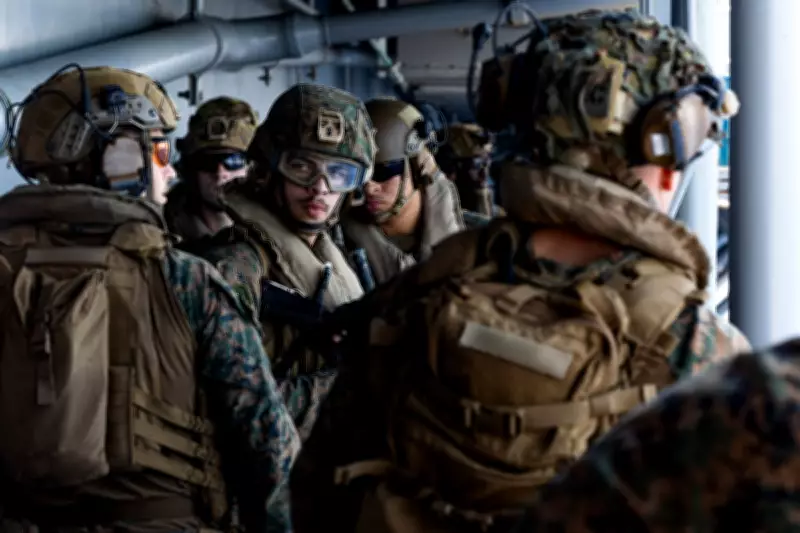
Thousands of United States Marines have arrived in the Middle East aboard the amphibious assault ship USS Tripoli, according to an official statement from US Central Command released on Saturday. The deployment comes as Yemen's Iran-aligned Houthi rebels have publicly warned they will continue carrying out military operations in the coming days, escalating regional tensions.
Military Buildup and Invasion Speculation Intensifies
The USS Tripoli serves as the flagship for the Tripoli Amphibious Ready Group and the 31st Marine Expeditionary Unit, comprising approximately 3,500 sailors and marines. The vessel carries transport and strike fighter aircraft alongside amphibious assault and tactical assets, representing a significant military reinforcement in the region.
This substantial arrival has fueled widespread speculation about a potential ground invasion of Iran. However, US Secretary of State Marco Rubio stated on Friday that America could achieve its strategic objectives without committing ground troops. "We can achieve all of our objectives without ground troops, but we are always going to be prepared to give the president maximum optionality," Rubio told reporters.

Houthis Conduct Attacks and Issue Threats
Yahya Saree, the military spokesperson for the Houthi group, announced in a televised speech that they had executed a second attack on Israel within twenty-four hours using missiles and drones. Saree explicitly vowed to continue military operations in the immediate future, demonstrating the group's ongoing combat readiness and regional ambitions.
Meanwhile, the United Arab Emirates defence ministry confirmed it is actively engaging with missiles and drones originating from Iran. Authorities in Dubai explained that sounds heard across parts of the city resulted from successful air defence interception operations. The government urged citizens to obtain information exclusively from official sources while security teams continue monitoring the situation.
Pentagon Plans and Iranian Counter-Threats
According to reports from The Washington Post, the US Pentagon is planning for potential ground operations in Iran that could extend for several weeks. While not constituting a full-scale invasion, these operations might include targeted raids by special forces troops. It remains uncertain whether President Donald Trump will approve any such plans.
Iran has responded with severe threats of its own. The Iranian Revolutionary Guard warned it would bomb campuses of US universities throughout the Gulf region unless the American government officially condemns previous strikes that destroyed two Iranian colleges by Monday at noon Tehran time. The statement advised all personnel and residents to stay kilometres away from American educational facilities.
Nuclear Treaty Withdrawal and Media Warnings
Amid the escalating conflict, Iranian politicians are advocating for Tehran's withdrawal from the Treaty on the Non-proliferation of Nuclear Weapons (NPT). Ebrahim Rezaei, spokesperson for Iran's parliamentary national security commission, argued that "the NPT treaty has not only failed to protect our country from attacks by nuclear powers, but our nuclear facilities have been repeatedly targeted." He announced that legislation has been submitted to parliament seeking Iran's exit from the treaty.
Iran's English-language daily, the Tehran Times, published a stark warning under the headline "Welcome to Hell," stating that any US troops setting foot on Iranian soil would "leave only in a coffin." This rhetoric coincides with the largest buildup of American forces in the Middle East in two decades.
Additional Developments and Regional Implications
President Trump made controversial remarks suggesting "Cuba's next" during discussions about the Iran conflict at an investment forum in Miami, before telling media to "pretend I didn't say that." Meanwhile, experts warn that the United Kingdom faces potential medicine shortages within weeks if the Iran war continues, which could also trigger significant drug price increases.

In related commentary, comedy actor Rob Schneider called for restoring the military draft in the United States, writing on social media that "every American" should serve two years in the military upon turning eighteen. These developments collectively underscore the expanding ramifications of the Iran-US confrontation across military, diplomatic, and domestic spheres.