US Commandos Execute Daring 36-Hour Rescue Mission for Airman in Iranian Mountains
US Commandos Rescue Airman in 36-Hour Iranian Mountain Mission

US Commandos Execute Daring 36-Hour Rescue Mission for Airman in Iranian Mountains

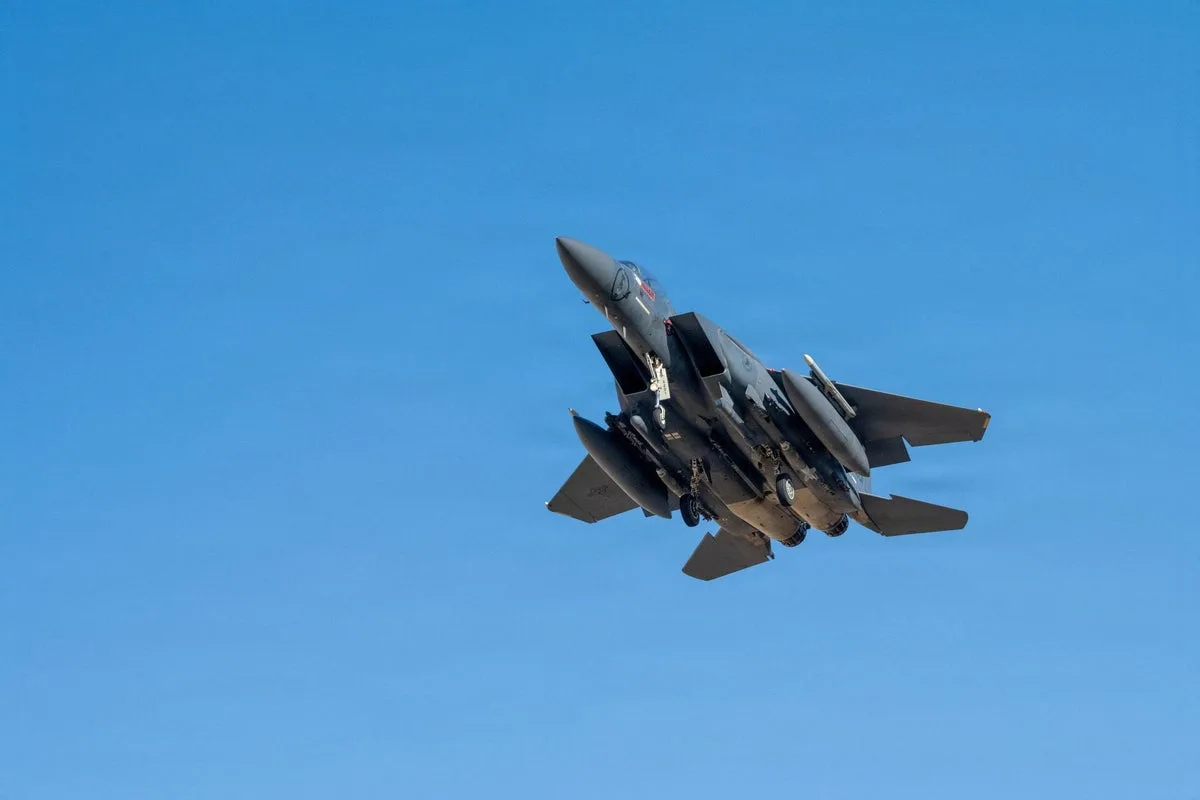
In an extraordinary display of military precision and bravery, United States special forces successfully rescued an injured airman who had been stranded approximately 200 miles behind enemy lines in the treacherous mountains of Iran. The complex 36-hour mission unfolded after Iranian air defences shot down a sophisticated $31 million F-15E Strike Eagle fighter jet on Friday morning, setting off a dramatic race against time between American and Iranian forces.

The Downed Aircraft and Initial Response

The incident began when Iranian military forces deployed what they described as new domestically-developed air-defence systems, targeting and destroying the American F-15E aircraft, callsign 'Dude 44'. The two-seat jet carried both a pilot and a weapons-system officer, with the latter becoming trapped deep within hostile territory after ejecting from the damaged aircraft.

President Donald Trump revealed on Sunday that dozens of military aircraft had been mobilized in a desperate effort to locate and extract the missing specialist, who was reportedly being actively hunted by Iranian forces. "The injured second airman was stuck in the treacherous mountains of Iran, being hunted down by our enemies, who were getting closer and closer by the hour," Trump stated, emphasizing the urgency of the situation.

Wide Pickt banner — collaborative shopping lists app for Telegram, phone mockup with grocery list

The Complex Rescue Operation

The rescue mission represented an unprecedented feat in American military history, marking the first time that two pilots had been rescued separately from deep within enemy territory. US commandos infiltrated Iranian airspace under cover of darkness, navigating challenging mountainous terrain that included scaling a formidable 2,100-meter ridge to reach the stranded airman.

The operation faced significant obstacles from the outset. The injured colonel, who had sustained injuries including a sprained ankle during ejection, had taken refuge in a mountain crevice with only a handgun for protection. Despite extensive Survival, Evasion, Resistance and Escape (SERE) training, the airman faced immense challenges in remaining undetected while awaiting extraction.

Intelligence Support and Deception Campaigns

The Central Intelligence Agency played a crucial role in the mission's success, providing critical intelligence about the airman's precise location to Pentagon and White House officials. According to senior administration sources, Israel also contributed valuable intelligence support and temporarily halted military operations to facilitate the rescue effort.

In a sophisticated deception campaign, the CIA reportedly spread false information suggesting the airman had already been recovered, while American military forces jammed electronic communications and targeted key transportation routes to impede Iranian search efforts. Meanwhile, Iranian state media had announced a substantial $60,000 bounty for the airman's capture alive, increasing pressure on the rescue team.

Combat Operations and Close Calls

During the intense operation, US MQ-9 Reaper drones provided protective cover by striking Iranian military personnel deemed threatening within a three-kilometer radius of the stranded airman. American B-1 bombers reportedly dropped nearly one hundred 2,000-pound satellite-guided bombs as part of the supporting operations.

The mission nearly encountered catastrophic failure when two MC-130 aircraft, which had transported approximately one hundred special operations forces into rugged terrain south of Tehran, suffered mechanical failures that prevented their takeoff. Commanders made the high-risk decision to deploy additional aircraft to extract the team in stages, leaving elite commandos exposed for several tense hours.

"If there was a 'holy s***' moment, that was it," one anonymous US official told Reuters, crediting rapid decision-making with preventing disaster. Ultimately, US forces destroyed the disabled MC-130s and four additional helicopters within Iran to prevent sensitive equipment from falling into enemy hands.

Pickt after-article banner — collaborative shopping lists app with family illustration

Successful Extraction and Aftermath

The airman was eventually extracted using smaller turboprop aircraft capable of landing on limited airstrips, with the rescue force successfully evacuated in waves. Upon reaching the extraction point, the airman reportedly radioed "God is good," a message initially met with suspicion in Washington over concerns about potential Iranian deception.

President Trump announced the successful recovery on Sunday morning, confirming the "highly respected Colonel" was "safe and sound" despite his injuries. The president emphasized that no American casualties occurred during either rescue operation, praising the mission as evidence of US air superiority in the ongoing conflict with Iran.

Iranian Claims and Regional Tensions

Iranian military officials made several claims regarding the incident, stating their new air-defence systems had successfully targeted not only the F-15E but also three drones and two cruise missiles. The elite Revolutionary Guard asserted that several American aircraft were destroyed during the rescue mission, including two Black Hawk helicopters allegedly shot down by nomadic tribes in the mountainous regions.

The conflict has resulted in significant casualties, with US Central Command reporting thirteen American service members killed and more than three hundred wounded. No US troops have been taken prisoner by Iranian forces throughout the hostilities, though Tehran had actively encouraged citizens to locate the missing airman to gain diplomatic leverage against Washington.

The dramatic rescue occurred just hours before President Trump intensified threats against Iranian infrastructure in a social media post, though negotiators subsequently developed proposals for an immediate ceasefire. The mission stands as a testament to specialized military capabilities and international intelligence cooperation under extreme pressure.




