US Deploys Massive 5,000-Pound Bombs on Iranian Missile Sites Near Strait of Hormuz
US Bombs Iranian Missile Sites Near Strait of Hormuz

US Military Unleashes Massive 5,000-Pound Bombs on Iranian Coastal Missile Sites

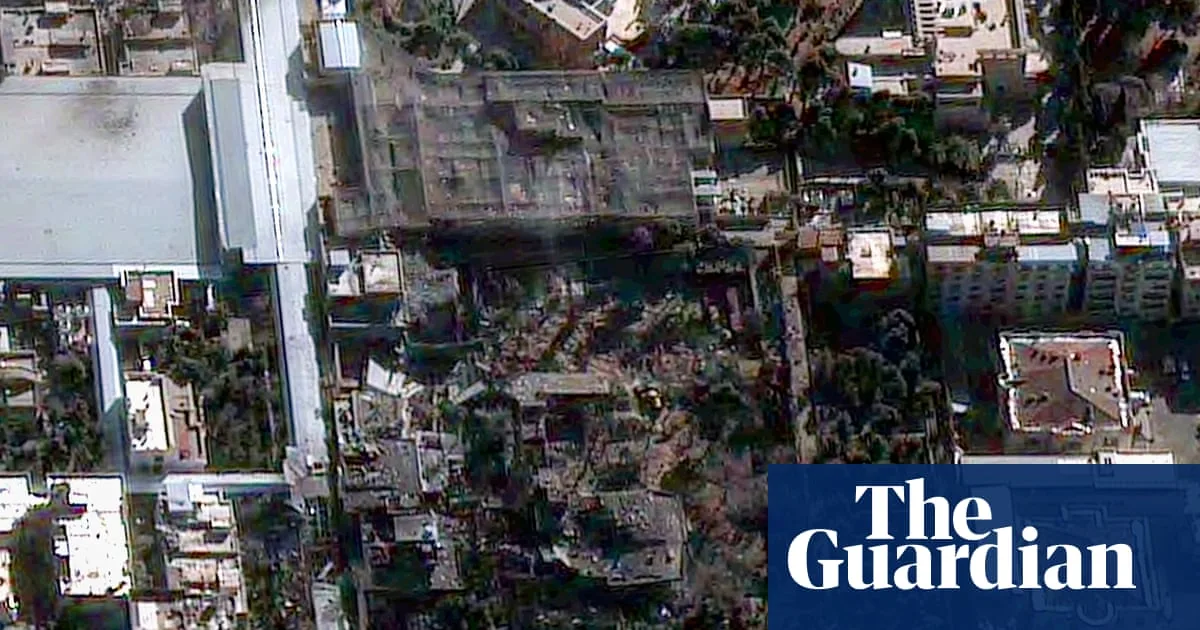
In a significant escalation of tensions, the United States military has conducted a major strike using multiple 5,000-pound deep penetrator bombs against hardened Iranian missile installations along Iran's coastline near the strategically critical Strait of Hormuz. The attack represents the latest move in the ongoing, unabated conflict between the US and Iran, with President Donald Trump focusing intensely on securing the narrow strait that serves as a crucial artery for the global economy.

Official Confirmation and Strategic Rationale

US Central Command officially confirmed the operation late Tuesday night, stating: 'Hours ago, U.S. forces successfully employed multiple 5,000-pound deep penetrator munitions on hardened Iranian missile sites along Iran's coastline near the Strait of Hormuz. The Iranian anti-ship cruise missiles in these sites posed a risk to international shipping in the strait.' The munitions deployed were identified as the GBU-72 Advanced 5K Penetrator, a weapon first utilized by American forces in 2021, according to CNN reports.

This military action is described as the most recent attempt by the United States to safeguard international commercial shipping traversing the Strait of Hormuz. The announcement followed President Trump's public criticism of America's traditional allies, who collectively rejected his appeals for assistance in securing the vital maritime passageway.

International Rejection and Economic Consequences

The United Kingdom, France, Japan, and Australia all declined to participate in efforts to protect shipping within the strait. This refusal prompted a sharp response from President Trump, who stated he had been informed that allies 'don't want to get involved' in the conflict with Iran, despite his requests for help as oil prices continue to spiral upwards.

In a post on his Truth Social platform, Trump remarked: 'We no longer 'need,' or desire, the NATO countries' assistance - we never did.' When questioned about potential retaliation against NATO allies for their reluctance, the President indicated he had 'nothing currently in mind,' though he has previously threatened to withdraw from the alliance entirely.

The economic ramifications are severe and immediate. Approximately twenty percent of the world's daily oil supply typically flows through the Strait of Hormuz. However, the waterway has been effectively closed by Iran since the US commenced its bombardment campaign. Iranian Foreign Minister Abbas Araghchi declared on Monday that the strait remains 'open, but closed to our enemies.' The Islamic Republic has vowed to block regional oil exports, asserting it will not permit 'even a single liter' to reach its adversaries.

This blockade has triggered a dramatic surge in fuel prices. The average cost of a gallon of gas in the US has jumped to $3.80, up from $2.90 just three weeks ago when the conflict began. The strait remains obstructed by a combination of Iranian naval mines and missile batteries.

Global Response and Military Buildup

In response to the crisis, the International Energy Agency has announced an unprecedented release of emergency oil reserves. The agency plans to make 400 million barrels of oil available from its member countries' strategic stockpiles. This volume more than doubles the 182.7 million barrels released in 2022 following Russia's full-scale invasion of Ukraine. While such measures can provide short-term relief, analysts emphasize that a lasting solution requires the Strait of Hormuz to be cleared and secured for navigation.

The United Arab Emirates indicated on Tuesday that it might join a US-led international initiative to ensure the safety and security of the waterway. Meanwhile, the US military has reinforced its presence in the region, deploying additional forces including the USS Tripoli and its accompanying 2,000-strong Marine Expeditionary Unit, which possesses the capability to seize Iranian ports if necessary.

Despite these movements, the US Navy currently cannot guarantee safe passage for commercial oil tankers through the contested strait. Alternative pipelines in Saudi Arabia and the UAE exist, but the US Energy Information Administration notes that 'most volumes that transit the strait have no alternative means of exiting the region.'

Domestic Political Fallout and Internal Dissent

The conflict has sparked significant internal dissent within the US administration. Joe Kent, the Director of the National Counterterrorism Center, resigned in protest, accusing Israel of pressuring the United States into a war he claims was 'built on lies.' In his resignation letter, Kent, who served under Director of National Intelligence Tulsi Gabbard, argued that Iran posed no imminent threat and that the conflict was initiated 'due to pressure from Israel and its powerful American lobby.' He stated: 'I cannot in good conscience support the ongoing war.'

Kent further accused President Trump of abandoning the non-interventionist principles he championed during his campaign. President Trump dismissed the resignation, calling it a 'good thing that [Kent's] out,' and labeling him 'very weak on security.'

Concurrently, Secretary of State Marco Rubio has placed all US embassies and diplomatic posts worldwide on high alert. This directive mandates that every diplomatic mission convene its Emergency Action Committee—specialized teams responsible for identifying threats, coordinating responses, and preparing for worst-case scenarios.

Strategic Outlook and Presidential Resolve

The substantial military deployment has led some observers to speculate that President Trump may be preparing to launch a limited ground offensive against the Iranian regime to alleviate the global oil crisis. In a social media post on Saturday, Trump declared: 'One way or the other, we will soon get the Hormuz Strait OPEN, SAFE, and FREE!' While the President has suggested that the fighting could conclude soon, he has also warned that the United States is prepared for a protracted offensive if necessary.

The White House is additionally examining potential policy adjustments, including waiving requirements of the Jones Act—a 1920s law often criticized for increasing fuel costs by mandating that goods shipped between US ports be transported on US-flagged vessels, a measure designed to protect the American shipbuilding industry.

As the standoff continues, the Strait of Hormuz remains a focal point of global economic and military tension, with its closure threatening to destabilize energy markets and international trade on an unprecedented scale.




