
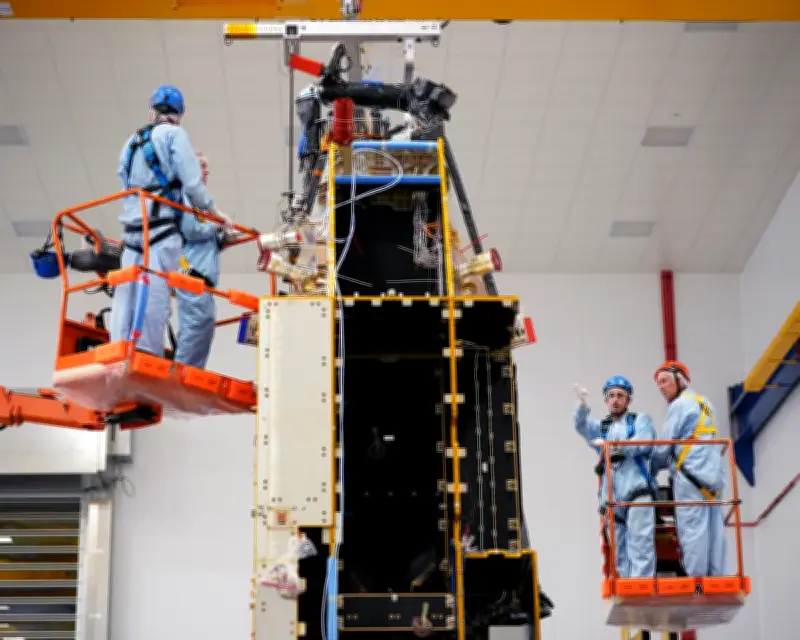
The Unite union has called on Defence Secretary Andy Burnham to award a £2.4bn military satellite contract to European manufacturer Airbus rather than US rival Lockheed Martin, warning that as many as 600 jobs may be at risk.
Union warns against US deal
Sharon Graham, general secretary of Unite, said it would be a “massive mistake” to choose a US company over Airbus, which designs and builds satellites in Stevenage and Portsmouth. The bid battle is seen as an early test of Burnham’s pledge to use public procurement to back British industry.
The Skynet 6 wideband satellite system (WSS) will consist of two geostationary satellites to carry the UK Ministry of Defence’s most sensitive data. Unite and Labour MP for Stevenage Kevin Bonavia are pressuring the government to opt for Airbus to preserve existing jobs.
Lockheed’s offer
Lockheed Martin has promised about 500 direct jobs in north-east England, including an assembly facility in Durham, plus 1,500 jobs in the supply chain. The potential for exports and integration with the US military are key parts of its offer. Critics say Lockheed would rely on American intellectual property rather than UK-developed technology. Lockheed has pledged to keep any IP developed in the UK and has invested in a research partnership with Northumbria University.
Political implications
Graham said: “Andy Burnham has said he is backing Britain and British jobs. The Skynet WSS contract could be the first test of this. ... Handing the British space industry over to the Americans in the first days of the new government would be a massive mistake, industrially and politically.”
Defence Eye reported the MoD was pushing for a decision as soon as 1 August. Senior defence industry insiders said awarding the contract to Lockheed could make Airbus more likely to move satellite construction elsewhere, and would be a fatal blow to exporting British technology. The contract could also secure the facility during a planned merger of space businesses of Airbus, Thales and Leonardo.
Airbus and its predecessors have built UK military satellites for decades, including the Skynet 5 system. The first Skynet satellite launched in 1969.
Lockheed Martin declined to comment on the competition. Rod Drury, Lockheed Martin’s vice-president for global business, said: “All our initiatives in the UK are based around UK government contracts, with a UK company, delivered predominantly through UK-based staff, leveraging the best of US-based tech and capabilities.”
Bonavia said: “This is a big opportunity for our new prime minister to back British manufacturing and sovereign capabilities, right off the bat. ... Design, manufacture and test of military satellites is one of the UK’s crown jewels of defence capability.”
Airbus declined to comment.




