
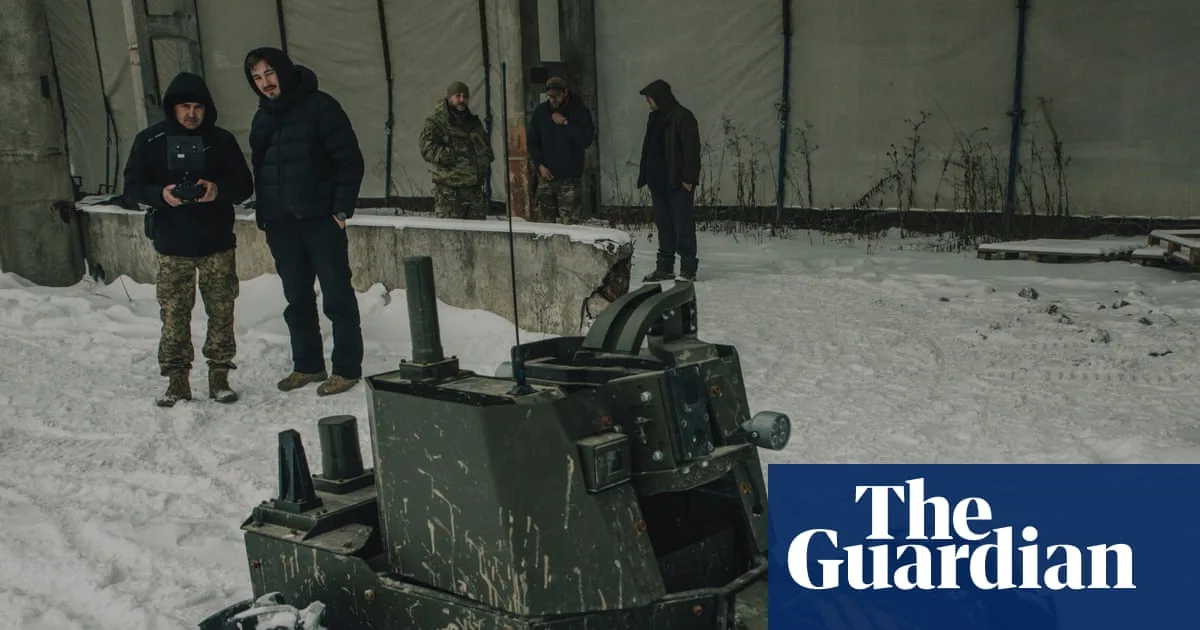
Ukraine has increasingly deployed unmanned ground vehicles (UGVs) on the battlefield, with their use growing exponentially since spring 2024. These battery-powered robots, ranging from caterpillar-tracked vehicles to wheeled models, are used for logistics, combat, and engineering tasks. Lieutenant Victor Pavlov of Ukraine's 3rd Army Corps described them as essential to modern warfare, stating, 'This is what modern warfare looks like. Armies everywhere will have to robotise.'
The conflict, now in its fifth year, has become a technological contest where cheap drones and robots replace expensive tanks. Ukraine's drone expertise has attracted international interest, with President Volodymyr Zelenskyy signing 10-year defence agreements with Gulf states including Saudi Arabia and Qatar to provide low-cost interceptors for Shahed drones. The war has turned Kyiv into a hub for unmanned weapons development, with engineers and soldiers collaborating on new designs.
Land robots now account for 90% of Ukrainian army logistics, with a record 7,000 operations using UGVs in January 2025. They deliver food, ammunition, and materials, evacuate wounded soldiers, and even engage in combat. One robot, a DevDroid TW 12.7, defended a position for 45 days, while a kamikaze robot carrying 200kg of explosives destroyed a Russian-held school. Drone operator Bambi of the 25th Airborne Brigade compared the frontline to 'Terminator', noting that robots feel no pain and can be remotely operated.
UGVs also perform engineering tasks such as mining, de-mining, and vehicle recovery. Pavlov reported losing about three robots per day to Russian attacks, a 25% attrition rate, but called it 'a small price to pay when you consider that we are saving the lives of our infantry'. Defence Minister Mykhailo Fedorov highlighted the rapid expansion of remote operations, noting that casualty evacuation by robots has become routine.
In a historic first last summer, Russian soldiers surrendered to an armed ground robot. The 3rd Army Corps confirmed the incident, where soldiers emerged from a wrecked building after sustained Ukrainian fire. The development underscores the transformative role of robotics in the conflict, offering Ukraine a strategic advantage while minimizing human casualties.




