
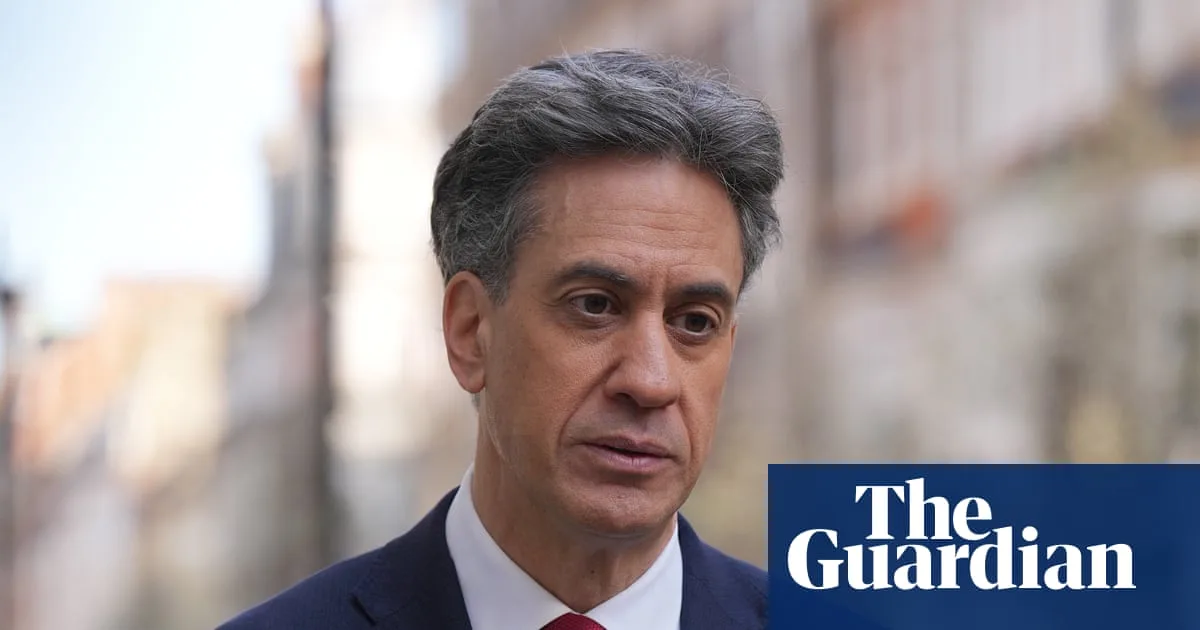
Britain is considering sending ships and mine-hunting drones to the Middle East in an attempt to reopen the Strait of Hormuz, Energy Secretary Ed Miliband has said. Miliband confirmed on Sunday that ministers were in talks with allies about how the UK could help secure the vital waterway, through which about 20% of the world's oil supply passes. Its effective closure earlier in the war has sent oil prices rocketing from approximately $65 a barrel to about $100 (£75), prompting alarm among Western governments.
Miliband told the BBC's Laura Kuenssberg that ministers were looking at all options for helping to reopen the strait. “It is very important that we get the Strait of Hormuz reopened. And we have already been talking with our allies, including the US, about this,” he said. “There are different ways that we could contribute, including with mine-hunting drones. All of these things are being looked at in concert with our allies … Any options that can help to get the strait reopened are being looked at.”
The energy secretary's comments came a day after US President Donald Trump wrote on his Truth Social platform calling for the UK, China, France, Japan, South Korea and others to send naval vessels to the region. “Many Countries, especially those who are affected by Iran’s attempted closure of the Hormuz Strait, will be sending War Ships, in conjunction with the United States of America, to keep the Strait open and safe,” he wrote. Trump added that the US would be “bombing the hell out of the shoreline” and “continually shooting Iranian Boats and Ships out of the water” to ensure the strait is reopened.
Britain is reportedly considering sending mine-hunter drones, which trick mines into detonating safely by flying in a pattern that makes them look like passing ships. However, Prime Minister Keir Starmer and senior military figures have faced criticism for not deploying ships to the Middle East more quickly. HMS Dragon departed for Cyprus on Tuesday to bolster the RAF base at Akrotiri, but the navy no longer has mine-hunting ships in the region after the last one was towed back from Bahrain days before the conflict began.
Ministers are also considering the domestic fallout of higher energy prices, which threaten to derail the UK’s nascent economic recovery. Asked whether the government would cancel a rise in fuel duty planned for September, Miliband said ministers would “stand by” the British people. “We will stand by the British people in this, in this crisis, and we’ll do what it takes to do that,” he said. Government officials say no decision has been taken on the fuel duty rise.




