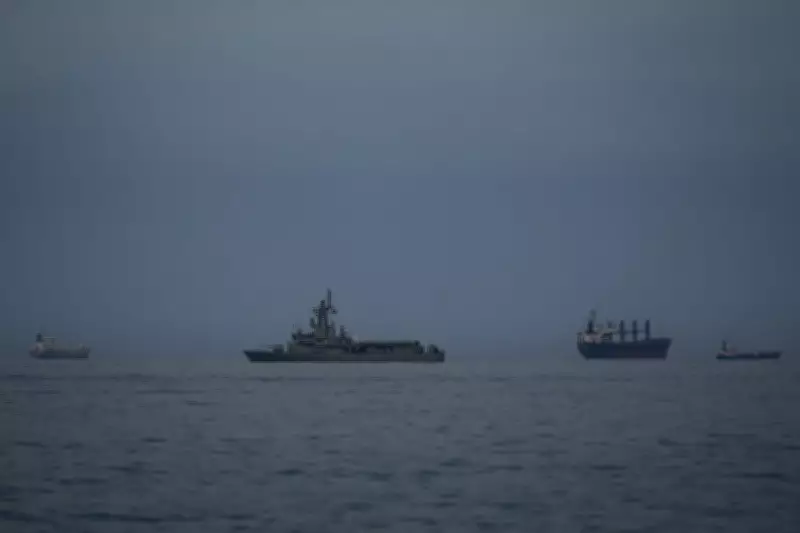
UK Weighs Deploying Minehunter Drones to Break Iran's Strait of Hormuz Blockade
The United Kingdom is actively considering the deployment of minehunting drones to the Middle East in a bid to end Iran's blockade of the Strait of Hormuz, a critical global oil shipping route. This move comes in response to a direct appeal from former US President Donald Trump, who urged allied nations to send naval vessels to secure the waterway and protect international tankers.
Trump's Call to Action and Escalating Tensions
On Saturday, Donald Trump took to his Truth Social platform to call upon the UK, China, France, Japan, South Korea, and other affected nations to dispatch ships to the region. He declared that the United States would continue aggressive military actions, including bombing Iranian shorelines and targeting Iranian vessels, to force the reopening of the strait. Trump emphasised the need for the passage to become "OPEN, SAFE, and FREE" once again.
The Strait of Hormuz has been effectively closed since the Islamic Revolutionary Guard Corps claimed "complete control" over it. This blockade has halted approximately twenty percent of the world's daily oil flow, severely disrupting global trade and driving energy prices sharply higher. The situation has created widespread economic strain, particularly for nations dependent on Middle Eastern oil exports.

UK Defence Secretary Confirms Options Under Review
In response to Trump's demands, the UK Ministry of Defence confirmed that it is discussing a "range of options to ensure the security of shipping in the region." Cabinet Minister Ed Miliband specifically acknowledged that the government is examining the possibility of sending autonomous mine-hunting equipment to assist in reopening the strait.
Miliband stated, "We do want to work with our allies to seek to get the strait reopened. And as you say, there are a range of things that we can do, including autonomous mine-hunting equipment. And that's something we're obviously looking at." He added that while reopening the passage is in everyone's interest, de-escalating the broader conflict with Iran remains crucial for a lasting solution.
Details of the Proposed Drone Deployment
According to reports from The Sunday Times, the minehunting drones could be deployed from the Royal Navy's Mine and Threat Exploitation Group, which is currently stationed in the Middle East. However, the exact number of available drones and their specific deployment capabilities remain unclear at this stage.
Additionally, The Telegraph has revealed that the UK is also evaluating the transfer of thousands of interceptor drones, originally manufactured for Ukraine's defence against Russia, to the Middle East. These drones would potentially be used to counter Iran's aerial Shahed drones, though this option is reportedly at an earlier stage of consideration.
Iran's Stance and Regional Fallout
Iran's new supreme leader, Mojtaba Khamenei, has vowed to maintain the blockade as a means of pressuring the United States, further complicating diplomatic efforts. In retaliation, Trump has threatened to "wipe out" Kharg Island, a key component of Iran's oil infrastructure, if Tehran does not reopen the strait. The US has already conducted significant military strikes on the island, which Trump described as "one of the most powerful bombing raids in the history of the Middle East."
The escalating crisis has also strained the relationship between Donald Trump and UK Prime Minister Sir Keir Starmer. Tensions initially arose over US opposition to the UK's deal regarding the Chagos Islands and Trump's threats to annex Greenland, but have intensified significantly since the outbreak of hostilities with Iran.
Domestic Implications and Security Concerns
Amid the international turmoil, the Metropolitan Police in London is preparing for a "difficult public order" situation due to an Al Quds Day demonstration scheduled for Sunday. At least 1,000 officers have been mobilised to manage expected crowds of up to 12,000 people, highlighting the domestic security challenges linked to the Middle East conflict.

On the economic front, Chancellor Rachel Reeves has indicated that the government may provide financial assistance to households using heating oil, which is not covered by the standard energy price cap. This potential support reflects the broader impact of rising energy costs driven by the blockade.
The UK's consideration of minehunter drones represents a significant step in addressing the Strait of Hormuz crisis, balancing military strategy with diplomatic efforts to de-escalate tensions and restore vital global oil shipments.