UK Military Completes Intensive NATO Readiness Exercise in Northumberland
The British armed forces have successfully concluded a demanding joint training operation at the Otterburn training area in Northumberland, marking a significant milestone ahead of assuming command of NATO's Special Operations Forces component later this year. Exercise Hyperion Storm represented the culmination of an intensive 18-month preparation period during which UK capabilities underwent rigorous NATO evaluation.
Multi-Service Demonstration of Joint Capability
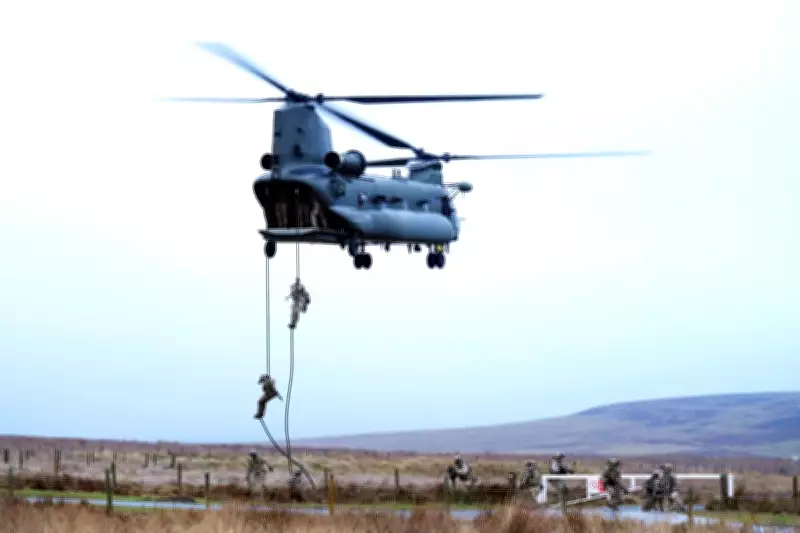
During the dramatic training scenario, Royal Marine Commandos and Army Rangers were inserted into position by RAF helicopter pilots, fast-roping from Chinook helicopters during a simulated assault on enemy positions. The exercise showcased seamless integration between maritime, land, and air components as approximately a dozen special operations personnel descended from approximately 20 feet to join ground assault vehicles in securing their objective.
Deputy Commander Colonel Phil O'Callaghan, a Royal Marine who observed the operation unfold, emphasised the comprehensive nature of the validation process. "The evaluation process is exacting and demanding, every detail is scrutinised," he stated. "As a headquarters we had to meet over 850 performance measures to ensure complete validation for NATO."

Historic NATO Leadership Responsibility
From July 2026, UK forces will assume responsibility for NATO's Special Operations Forces component for a twelve-month period under the NATO Allied Reaction Force framework. This represents the first occasion that Britain's Joint Special Operations Forces have been brought together for such a significant leadership role within the alliance structure.
Colonel O'Callaghan highlighted the importance of this development, noting: "This demonstrates the versatility of the UK Commando Force, Ranger Regiment and Royal Air Force, both in support of our NATO alliance partners and allies across the globe." Following the successful exercise, he expressed satisfaction with the outcome, attributing it to the dedicated efforts of service personnel across all three branches.
Operational Realism and Safety Considerations
The training scenario unfolded amid challenging conditions at the remote moorland facility, with two Chinook helicopters providing close air support while swooping low over rainy terrain. Once objectives were secured, the special operations forces re-embarked on the aircraft for extraction to their base at RAF Leeming in North Yorkshire.
Flight Lieutenant Jamie Johnson, a Chinook pilot involved in the exercise, outlined the potential operational scope: "During that period, we could be deployed anywhere that NATO deems that we need to be used."
The training occurred against a backdrop of heightened safety awareness, coming just six days after the tragic death of Captain Philip Gilbert Muldowney during separate live-fire training. Addressing safety protocols, Colonel O'Callaghan affirmed: "We are very cognisant of the risk both within training and on operations, and it is the quality of the training that ensures that the risk is manageable."
This comprehensive exercise not only validated UK readiness for the forthcoming NATO command responsibility but also demonstrated the sophisticated interoperability between Britain's elite military formations as they prepare for potential deployment in support of alliance objectives worldwide.