The UK government is set to introduce legislation in the upcoming King's Speech that will impose prison sentences of up to 14 years for individuals who commit antisemitic attacks backed by foreign powers such as Iran. Home Secretary Shabana Mahmood will be granted new powers under the National Security Act to designate proxy groups, including those believed to be behind recent attacks on Jewish communities, as foreign intelligence services.
New Powers to Target Foreign Proxies
Under the proposed law, anyone carrying out activities on behalf of a designated proxy group could face a maximum punishment of 14 years in jail, even if they were unaware of who they were working for. This measure aims to address the growing threat of foreign proxies recruiting criminals via social media to commit acts of terrorism, sabotage, and espionage.
The move comes as the head of counter-terrorism policing revealed that the number of national security cases involving hostile states conducting operations such as spying and sabotage in the UK has increased by 50% in six months. The Metropolitan Police has already announced the deployment of a community protection team of 100 extra officers to safeguard the Jewish community, though the force previously stated that 300 more officers were needed to tackle the rise in antisemitism across London.

Proscription-Like Powers for State Groups
The legislation will introduce proscription-like powers for the Home Secretary to ban state groups such as Iran's Islamic Revolutionary Guard Corps (IRGC), fulfilling a pledge made by Labour three years ago. These laws will enable police and prosecutors to investigate and prosecute individuals under Section 3 of the National Security Act 2023, which criminalises conduct likely to assist a foreign intelligence service.
The emergence of proxy groups acting on behalf of Iran and Russia has exposed a gap in Britain's national security laws. The new law will allow the Home Secretary to designate Islamist groups like the Iranian-linked Harakat Ashab al-Yamin al-Islamia, which has claimed responsibility for at least six antisemitic attacks against Jewish communities.
Government Response to Rising Antisemitism
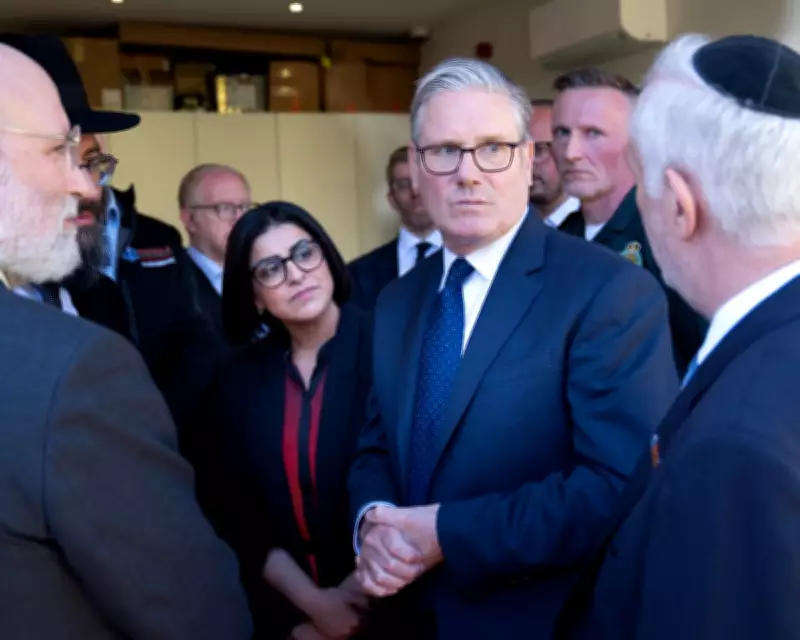
On Tuesday, Prime Minister Keir Starmer stated that Iran's attempts to "foment violence, hatred or division" in British society would not be tolerated, publicly blaming Tehran for the recent spate of attacks on the Jewish community. He spoke after convening a meeting of leaders from police, prosecutors, the NHS, trade unions, universities, and community groups alongside senior ministers to discuss combating soaring levels of antisemitism.
Following the meeting, the Crown Prosecution Service issued guidance instructing prosecutors to fast-track hate crime cases in response to the "deeply troubling rise in antisemitic incidents." Since late March, there have been several arson attacks at Jewish sites in London, as well as a double stabbing in Golders Green that is being treated as an act of terrorism.
Police and Home Office Statements
Counter-terrorism police are investigating a suspected arson at a former synagogue in Nelson Street, Whitechapel, in the early hours of Tuesday. A Metropolitan Police spokesperson said: "British Jews now appear on the hate lists of every major extremist movement: extreme rightwing groups, Islamist terrorists, elements of the extreme left and hostile state actors. It is a deeply concerning convergence, and Jewish communities are living with the consequences of that risk daily."
The spokesperson added: "This focus does not mean the Metropolitan police is deprioritising other communities. Hate crime in all its forms – including ongoing efforts to tackle racism, anti-Muslim hate crime, homophobia and other forms of hatred in the capital – remains a core policing priority."
The Home Office commented: "Legislation is being fast tracked to introduce new proscription-like powers to ban the activities of state-backed organisations who pose a threat to national security. We have introduced a comprehensive set of measures aimed at countering threats posed by the Iranian regime, including sanctioning the IRGC in its entirety and freezing UK property of more than 550 Iranian individuals and entities."