
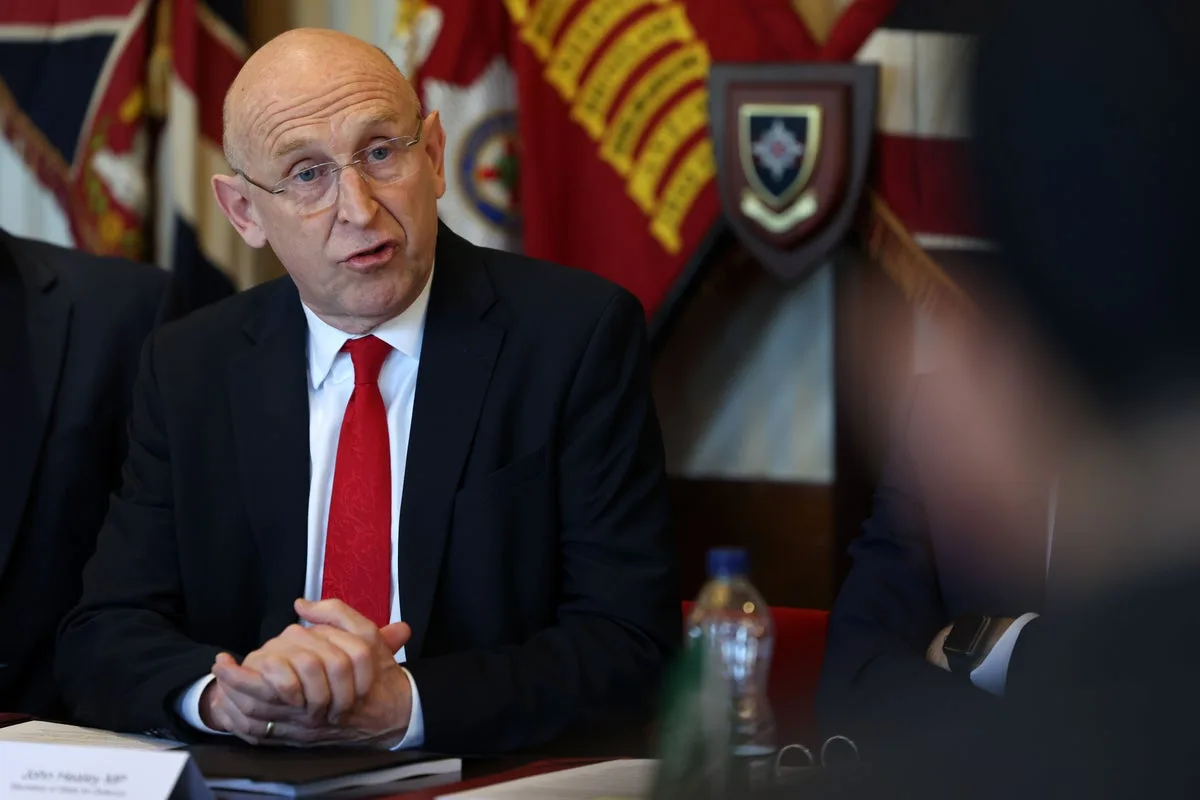
Britain will bolster its defensive support for Gulf states following Iranian attacks on energy sites across the region, which the Defence Secretary described as a “serious escalation” of the conflict. John Healey told the Press Association that the overnight strikes threatened to further destabilise the region, as he reiterated the Government's call for de-escalation.
Iran hit multiple energy sites, including a Saudi oil refinery, Qatari gas facilities and two oil refineries in Kuwait, after an Israeli strike on its main natural gas field. Oil prices surged to 119 dollars per barrel on Thursday morning before easing to 113 dollars, raising fears of higher global inflation amid concerns over the security of fossil fuel supplies.
Mr Healey said the UK would “step up the defensive support that we can offer to those Gulf states”. British forces are already deployed in the Middle East, with RAF jets flying defensive sorties against Iranian drones and air defence systems protecting critical infrastructure in Saudi Arabia. UK military planners have also joined the US Central Command to help formulate proposals for reopening the Strait of Hormuz, a vital trade route for oil and gas.
Prime Minister Sir Keir Starmer chaired an emergency Cobra meeting on Thursday and spoke to French President Emmanuel Macron and Nato Secretary-General Mark Rutte about the “egregious Iranian strikes” and plans to reopen the Strait of Hormuz. Following the conversation, Sir Keir and leaders of five other nations issued a joint statement condemning “in the strongest terms” the attacks on shipping and energy facilities, as well as the “de facto closure” of the strait.
The leaders called on Iran to cease its threats, mining, drone and missile attacks and to comply with UN Security Council Resolution 2817. They expressed readiness to contribute to efforts to reopen the strait and stabilise energy markets. Sir Keir also spoke to the Emir of Qatar and the Crown Prince of Kuwait, condemning the strikes and offering condolences for lives lost in Kuwait, while stressing the need for de-escalation and continued cooperation on defensive capabilities.




