British Spies Lead Covert Mission in Iran to Hunt Chemical Weapons
British intelligence officers are engaged in a deep-cover operation within Iran to track down chemical weapons that could be deployed in drone attacks on neighbouring countries, including Israel and Dubai, according to exclusive revelations. The Mail on Sunday has disclosed that these spies are collaborating closely with French and American counterparts inside the country, focusing on sites identified by Israel as potential hiding places for nerve agents.
Intelligence Collaboration and Security Threats
Despite intensive bombing campaigns by the United States and Israel targeting military sites since the conflict began, security sources indicate that America's CIA and Israel's Mossad possess evidence suggesting supplies of chemical weapons have been stashed in separate, undisclosed locations. A UK security source emphasised the gravity of the situation, stating: 'We should not underestimate the Iranians. They are smart people and can quickly adapt. History has shown that their culture often leads them to choose death over surrender. If pushed into a corner, they may well opt to use chemicals – most likely against Israel, but who knows where else? They could kill and injure thousands in Dubai if they desired.'
The source further expressed certainty that Iran used chemical toxins against its own citizens earlier this year, with symptoms pointing to a nerve agent. Currently, intelligence teams are actively searching across four sites in Iran, narrowed down by Tel Aviv, to locate these dangerous substances.

Historical Context and Regional Implications
Iran's chemical weapons programme originated during the 1980-1988 Iran-Iraq War and has since evolved into a 'targeted offensive' capacity, according to experts. During the Twelve-Day War in June 2025, Israel reportedly destroyed at least one alleged Iranian chemical weapons site. Additionally, democracy campaigners have accused the regime of using lethal chemical agents during widespread protests in January to kill wounded demonstrators in cities such as Isfahan, Shiraz, and Mashhad.
Israel's deputy ambassador to the Netherlands, Yaron Wax, declared in July 2025: 'Over the past two decades, Iran has been developing a chemical weapons programme based on weaponised pharmaceutical agents. These agents, primarily anaesthetics, affect the central nervous system and can be lethal even in small doses.'
International Concerns and Preparations
The World Health Organisation (WHO) has revealed that medicines designed to mitigate the impact of nuclear or chemical attacks were distributed across the Middle East ahead of the US-Israeli offensive. Dr Hanan Balkhy, WHO regional director for the Eastern Mediterranean, stated last week that the organisation had long-held concerns about the risk of 'some kind of nuclear or chemical war' in the region, with preparations including the distribution of potassium iodide and specialist training for medics.
Defence analyst Tim Ripley commented: 'It is well documented that Iran has produced and used nerve gas in previous conflicts. The worrying concern for the US and Israel is that Tehran has passed these deadly weapons to their proxies.' Iran has a history of supplying chemical weapons and expertise, such as to Bashar al-Assad's Syrian government forces in 2013, including a gas attack on Ghouta that killed over 1,700 people. Tehran is also suspected of providing nerve gas to the Houthis in Yemen earlier this year, with the Houthis, armed with ballistic missiles, attacking more than 178 ships in the Red Sea under instruction from Iran's Revolutionary Guard Corps.
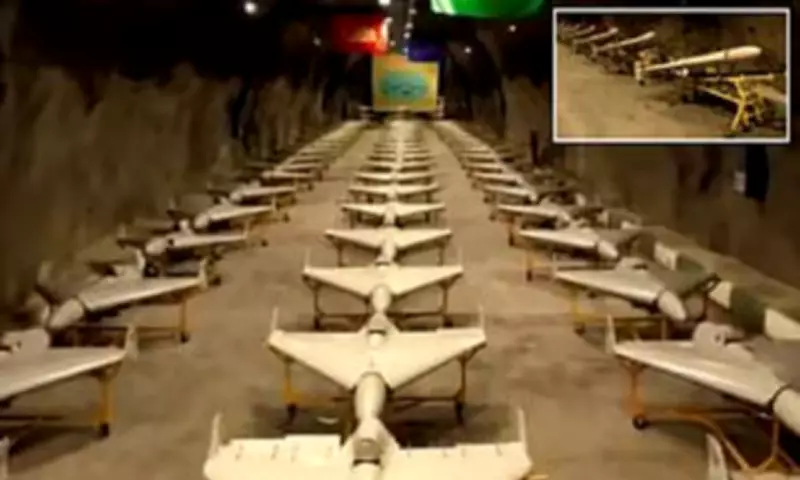
The UK security source added a note of caution regarding the regime's capabilities: 'Hopefully, if their missiles and drones are in short supply, they will struggle to deploy it. I don't think Donald Trump paused to consider the culture of the regime, run according to an ultra-hardline doctrine.' This covert operation underscores the ongoing efforts to prevent a potential chemical weapons crisis in the region.