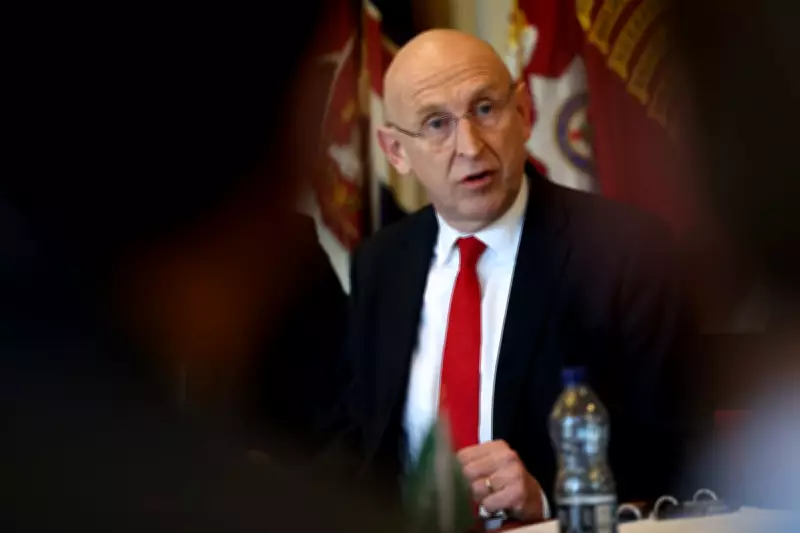
UK Bolsters Military Presence in Middle East to Counter Iranian Aggression
In a significant move to reinforce regional security, the United Kingdom is deploying additional troops and advanced air defence systems to the Middle East. This strategic enhancement aims to protect Gulf allies from what Defence Secretary John Healey described as Iran's "aggressive attacks." The deployment includes new capabilities in Bahrain, Kuwait, Saudi Arabia, and Qatar, despite Prime Minister Sir Keir Starmer's repeated assurances that the UK will avoid direct involvement in the broader regional conflict.
Enhanced Air Defence Capabilities Deployed Across Gulf Nations
During a diplomatic tour of Gulf states, Defence Secretary John Healey confirmed the arrival of supplementary air defence teams and systems in Bahrain and Kuwait. He outlined plans to station the Sky Sabre air defence missile system in Saudi Arabia, accompanied by a Royal Artillery battery and specialised battle space managers. This sophisticated system, equipped with radars, control nodes, and missile launchers, is designed to intercept aerial threats and will be integrated into existing Saudi and regional defence networks.
"Iran's aggressive attacks continue to threaten our allies and interests in the Middle East," Mr Healey stated. "That's why the UK has been flying defensive missions since day one of this conflict to protect British interests and allies – and today we're delivering further support by extending our UK jets in Qatar and deploying extra air defence teams and systems to the Kingdom of Saudi Arabia, Bahrain and Kuwait."

Extended Typhoon Jet Operations and Regional Support
The defence secretary also announced the continuation of British Typhoon jet operations in Qatar, where he met with UK troops at Dukhan airbase. He expressed gratitude to pilots who have accumulated over 1,280 flying hours in the region since the onset of the US-Israel conflict with Iran more than a month ago. The Royal Air Force's joint Typhoon squadron with Qatar was initially deployed in January amid escalating tensions, with Sir Keir Starmer recently authorising the dispatch of four additional fighter jets.
"I pay tribute to the heroic efforts of our partners across the Gulf in protecting their nations," Mr Healey remarked during his visit. "We will stand by our long-term partners in the Middle East and continue to push for a swift resolution to this conflict."
US Criticism and Diplomatic Tensions
The announcement of reinforced UK defences follows sharp criticism from US President Donald Trump, who admonished Sir Keir Starmer and other allies for refusing to participate in US-led strikes against Iran. In a social media post, Trump warned that the "US won't be there to help you any more, just like you weren't there for us," and suggested that countries like the UK should "get your own oil" and attempt to reopen the Strait of Hormuz independently.
Trump specifically targeted the UK government for having "refused to get involved in the decapitation of Iran" and urged it to "start learning how to fight for yourself." His defence secretary, Pete Hegseth, further criticised the Royal Navy, questioning its preparedness to handle such regional security challenges.
Additional Defence Systems and Regional Cooperation
Alongside the Sky Sabre deployment, Mr Healey confirmed that the UK's Lightweight Multirole Launcher has arrived in Bahrain, supported by expert teams to integrate this short-range air defence system into Bahraini defences. In Kuwait, the Rapid Sentry ground-based missile launcher is now operational, complemented by the RAF's counter-drone Orcus system, which enhances early detection capabilities against Iranian Shahed drones.
During his trip, the defence secretary engaged in high-level discussions with the Emir of Qatar, the King of Bahrain, and defence leaders from all three nations. Conversations focused on the ongoing conflict, enhanced UK-Gulf cooperation on regional security, and Iran's selective blockade of the Strait of Hormuz—a critical shipping route for oil and gas that has driven global energy prices upward alongside Iran's aerial assaults on Gulf states.

Mr Healey emphasised the UK's commitment to regional stability, stating, "I am proud of the courage and professionalism our armed forces have shown since the start of the war and my message to Gulf partners is: Britain's best will help you defend your skies." This deployment underscores the UK's strategic pivot to bolster Gulf allies while navigating complex international dynamics and avoiding deeper entanglement in the wider regional war.