
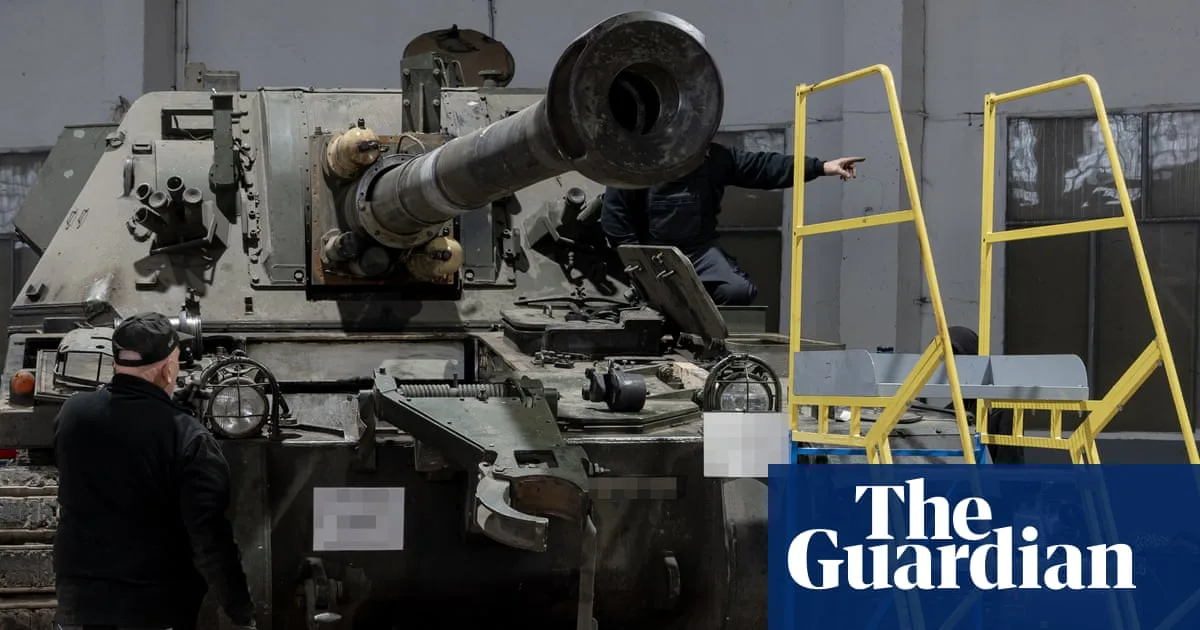
British and Ukrainian engineers are working side by side at a secret facility in western Ukraine to repair damaged military hardware, including British-donated AS-90 self-propelled howitzers, the Guardian can reveal. The location, along with three similar sites inside Ukraine, has remained undisclosed until now, with the UK Ministry of Defence using neutral language to avoid drawing attention to the sensitive work.
UK defence minister Luke Pollard, who visited the site during a trip to Ukraine, said the facility was an example of Britain doing things that 'no other nation has been willing or able to do'. He acknowledged the inherent risk of operating inside Ukraine but described it as 'a risk worth taking and managing' in the interest of supporting Kyiv. There are no British military personnel on site; instead, engineers contracted by the MoD from BAE Systems and AMS work alongside Ukrainian colleagues.
The facility has repair bays for up to 30 vehicles and handles a range of systems, including the AS-90, which the UK donated in its entirety to Ukraine after initially planning to retire it in the 2030s. Engineers also service Soviet-era equipment such as Tunguska anti-aircraft platforms and T-72 tanks, for which spare parts are no longer readily available.
To manufacture replacements for obsolete parts, engineers visited the Bovington tank museum in Dorset to study vehicles on display. Swedish Archer artillery systems are also repaired at the site under an agreement where Sweden funds the work and British and Ukrainian engineers carry it out. Pollard said the project could expand to more sites and countries, offering a 'structured, organised approach' for any nation donating equipment.
The existence of such facilities offers a glimpse of how western support might evolve after a potential peace deal, with a 'coalition of the willing' prepared to offer Ukraine security guarantees. President Volodymyr Zelenskyy has called for western troops to be stationed in Ukraine post-settlement, while Finnish President Alexander Stubb has said such guarantees would compel western nations to fight Russia if Moscow violated a ceasefire.




