UK Military Readiness Under Scrutiny as Former Defence Secretary Warns of Dark Times Ahead
The British government and armed forces have received a stark warning about their preparedness for potential conflict, delivered by a figure with extensive knowledge of UK defence capabilities. Former NATO Secretary General Lord George Robertson, who also served as Labour defence secretary, has issued a sobering assessment that the nation faces "dark times ahead" and must urgently address its military readiness.
Corrosive Complacency and Depleted Forces
Lord Robertson has directly criticised what he describes as the "corrosive complacency" of successive post-Cold War governments who have tapped into the peace dividend at the expense of military capability. In a planned speech in Salisbury, he intends to state that despite being "under attack" in various forms, the UK remains "unprepared" and "unsafe."
The statistics reveal a concerning trend of military depletion over recent decades. Current UK Armed Forces personnel stand at 173,270, representing a significant decline from 192,000 in 2010, 321,000 in 1980, and over half a million in 1960. This reduction has brought the military to its smallest size since the Crimean War era.

Current Military Composition and Recruitment Challenges
The British Army currently comprises approximately 109,000 troops, consisting of around 73,000 regular soldiers and 36,000 reserves. The Royal Navy maintains 37,900 personnel, while the Royal Air Force has just under 35,000 members. The majority of UK military personnel remain men, who constitute 120,700 of the total force compared to 16,300 women, with the average age of service personnel now standing at 31.
Army recruitment has faced particular challenges following the controversial 2012 decision to privatise the process under Tory-led governments. The contract awarded to Capita proved problematic, resulting in repeated recruitment shortfalls and operational inefficiencies that have hampered efforts to maintain adequate troop levels.
Technological Advances Versus Traditional Warfare Needs
Ministry of Defence strategists defend the reduced troop numbers by arguing that technological advancements have diminished the need for large conventional forces. They point to drone technology as a key example of modern warfare capabilities. However, Lord Robertson and other critics note that despite technological progress, trench warfare and urban combat continue to characterise conflicts like that in Ukraine, where close-quarters fighting remains a daily reality.
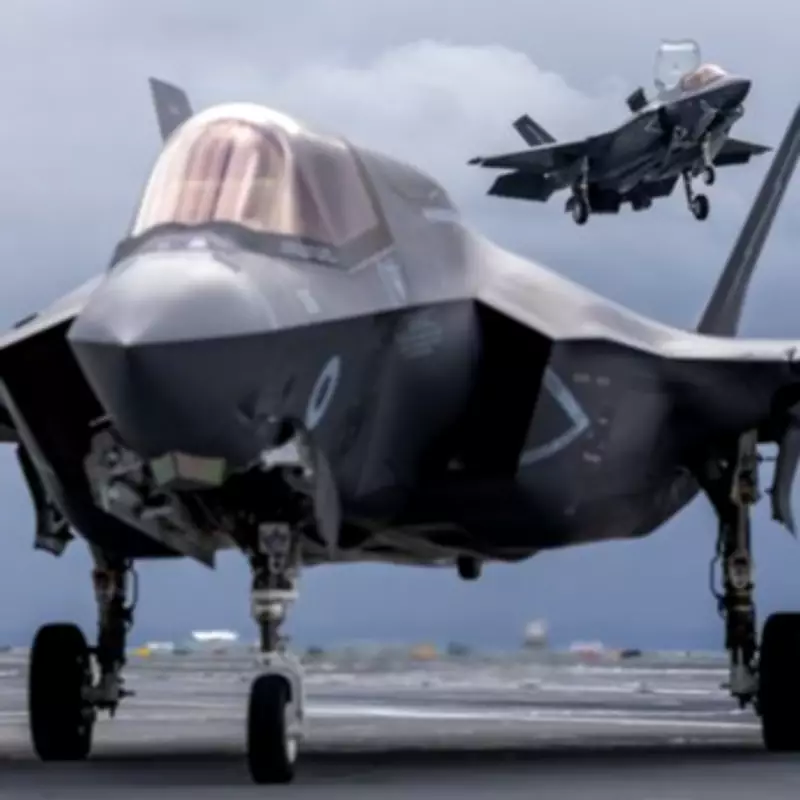
The UK maintains significant technological assets, including F-35B Lightning fighter jets—with 48 currently operational and 15 more being purchased—alongside at least 120 Typhoon Eurofighter jets. The nation's flagship aircraft carriers, HMS Prince of Wales and HMS Queen Elizabeth, theoretically capable of carrying 73 F-35Bs each, represent substantial naval power projection capabilities.
Operational Challenges and Historical Comparisons
Recent operational difficulties have raised questions about current military efficiency. HMS Dragon experienced multiple problems during deployment, including power cuts, propulsion issues, and water supply failures, after what appeared to be rushed preparation. This contrasts sharply with historical precedents like the 1982 Falklands Task Force, which was prepared for combat within just four days.
Mobilisation Scenarios and NATO Considerations
Should conflict arise with a major adversary like Russia—identified as the UK's primary short-term threat—mobilisation plans would unfold across multiple years. The first wave would involve professional Army forces supported by RAF aircraft and Navy vessels. Army reserves would immediately begin intensive basic training for mobilised recruits, potentially numbering around 500,000 in the initial year.
Subsequent years could see deployment numbers escalate dramatically: over one million troops in year two, well over two million in year three, and potentially exceeding three million by year four, including survivors from previous deployments. These projections highlight the brutal mathematics of modern conflict, particularly given Russia's demonstrated willingness to sustain losses of approximately 1,000 troops daily in Ukraine.

The UK would likely invoke NATO's Article Five in any major conflict, meaning an attack on one member state would be considered an attack on all. While this would bring allied support, there are growing concerns about reduced reliance on traditional partners like the United States.
A Call for Urgent Action
Lord Robertson has specifically criticised what he perceives as misplaced priorities, blaming ballooning welfare budgets and a lack of urgency from political leadership for the UK's unprepared state. He identifies Iran as a particular "rude wake up call" that should prompt serious reassessment of defence priorities.
Despite these warnings, the UK military remains one of NATO's strongest forces and continues to stand out as a leading European military power. The government maintains that it is "delivering on the Strategic Defence Review," a process in which Lord Robertson himself played a significant role, giving him particular insight into current capabilities and shortcomings.
As geopolitical tensions continue to escalate, the fundamental question remains whether technological superiority can adequately compensate for reduced troop numbers and whether the British public and political establishment are psychologically prepared for the potential realities of future conflict.