UK's Military Power Gap Exposed as HMS Dragon Deploys to Mediterranean
UK Military Power Gap Exposed by HMS Dragon Deployment

UK's Military Power Gap Exposed as HMS Dragon Deploys to Mediterranean

The belated defensive deployment of HMS Dragon to the coast of Cyprus has starkly highlighted the United Kingdom's lack of immediate military capacity. This situation underscores a growing concern among defence experts regarding the gap between political rhetoric and the reality of the nation's armed forces.

Delayed Deployment and Capacity Constraints

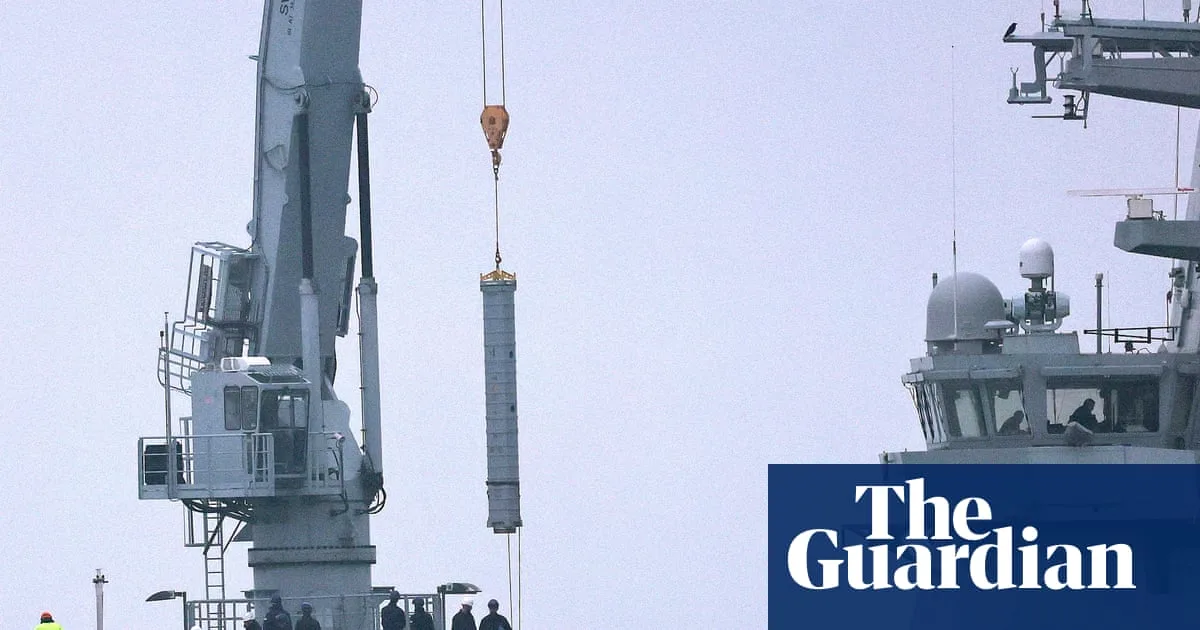
It will have been more than three weeks since the initial US and Israeli attacks on Iran when the first British warship, HMS Dragon, finally arrives off Cyprus. Nominally, the vessel is one of three available destroyers out of a fleet of six. In practice, the warship had to be hastily prepared after being hauled out of dry dock, followed by several days of testing in the Channel. Its exact arrival date remains unconfirmed.

"It's clear one of the military's big problems is giving the government contingency options," said Matthew Savill of the Royal United Services Institute, pointing to years of spending constraints. "Numbers and capacity have been cut, though the UK has tried to argue that smaller can be better."

Wide Pickt banner — collaborative shopping lists app for Telegram, phone mockup with grocery list

Political Priorities and Strategic Decisions

As the United States began building up forces in the Middle East from late January, the UK chose to stand aside. A modest deployment of fighter jets to RAF Akrotiri in Cyprus and Qatar in early 2026 was made as an extra defensive layer against potential Iranian retaliation.

A former senior British military commander noted, "Keir Starmer had decided this is not our war." However, he added, "if you've made that decision it colours your deployments elsewhere" – suggesting the UK is not highly prepared should the conflict spiral out of control.

Ministry of Defence insiders insist the decision to send HMS Dragon was made on the fourth day of the war against Iran. The option was then presented to Chief of Defence Staff Richard Knighton and approved by him and Defence Secretary John Healey. This occurred about 36 hours after hostile drones targeted the UK's base at Akrotiri, striking a hangar used by US spy planes and prompting evacuations.

Broader Military Readiness and Historical Context

HMS Dragon is the only Royal Navy warship confirmed deployed so far, despite US pressure for UK participation in a possible naval escort in the Strait of Hormuz. The only available nuclear attack submarine out of six, HMS Anson, may be heading towards the Middle East after leaving western Australia.

Former General Richard Barrons, a member of Labour's strategic defence review team, argued the lack of wider military readiness is a product of "the armed forces we have ended up with at the end of the post-cold war era – a military right-sized for an era free of threat."

At the end of the Cold War, the UK had 51 destroyers and frigates, with defence spending at 3.2% of GDP. By 2007, this number halved to 25, and currently stands at just 13, with much of the fleet ageing. The UK now spends 2.4% of GDP on defence, with Labour promising a modest increase to 2.5% by April 2027.

The Rhetoric to Reality Gap

A persistent complaint among military figures is that Labour ministers, and their Conservative predecessors, have been reluctant to acknowledge what one former senior figure describes as the "rhetoric to reality gap" – where the UK tries to act as a global power with capabilities that are, in reality, stretched very thin.

An example is the UK's commitment to lead a stabilisation force for Ukraine alongside France, if a ceasefire is agreed, while the British army is at a historic low of 71,151 personnel. A mission with Russia as a moderate threat could require around 5,000 UK troops, which an army figure said would become "quite testing" to sustain for over two years, especially with existing commitments in Estonia.

Pickt after-article banner — collaborative shopping lists app with family illustration

Financial and Political Stasis

Increased UK military spending amid global uncertainty has been accepted in theory by Keir Starmer. At last summer's NATO summit, he agreed to lift defence budgets by about £30 billion to 3.5% of GDP by 2035. However, this has not been agreed by the Treasury in its budgeting. Chancellor Rachel Reeves recently only referred to reaching 3% "for the next parliament," which could run until 2034.

Financial stasis has persisted for months, with a 10-year defence investment plan on hold since last autumn and no publication date. The Treasury has failed to make funds available, and speculation of a rise to 3% by 2030 was quickly quashed by Downing Street.

The MoD believes it needs a further £28 billion to meet existing commitments over the next four years, including programmes like the £31 billion Dreadnought nuclear submarine replacement, new frigates with Norway, combat aircraft with Italy and Japan, and AUKUS submarines with the US and Australia.

"Could we do that with the budget that we have got? The answer is no," Knighton conceded in January. With UK economic growth stalling, money is tight. "Everybody is saying there is no financial headroom," a former senior civil servant noted, with no sign of a politically weak Starmer overruling the Treasury.

Long-Term National Security Concerns

The problem for the UK's long-term national security, the ex-official argued, is that "we are entering a world of strong, mad leaders and I can't say I'm confident there won't be a China-US confrontation in the next few years." This underscores a last-resort argument: greater military investment is a necessity for a medium-sized country because the world could become more dangerous.

The delayed deployment of HMS Dragon serves as a potent symbol of the challenges facing UK defence, highlighting the urgent need to bridge the gap between rhetoric and reality in an increasingly volatile global landscape.




