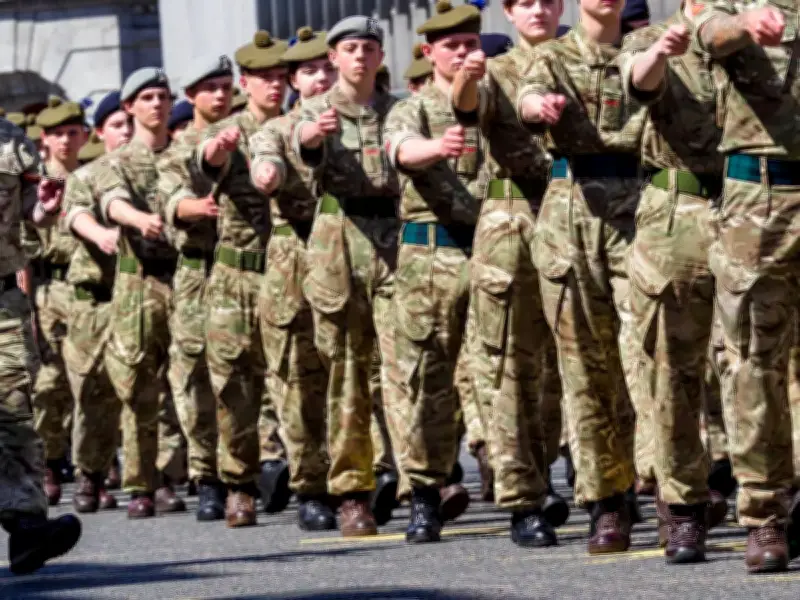
Retired senior British Army officer Lord Dannatt has outlined which groups would be called up first if the UK introduces conscription during a major conflict. Speaking to the Express, he said: "I would expect to see the Army Reserve mobilised first, then Regular Reservists recalled to active service and then His Majesty's Government would need to consider conscription, starting with 18-24-year-olds."
Historical Framework for Full Conscription
Emeritus professor at the University of Buckingham, Anthony Glees, stated that full conscription would probably mirror the framework employed during WW2. "This would mean that all males from 18-41 would have to do military or national service," Prof. Glees explained.
He noted that this was decided in September 1939 when the UK declared war on Germany but before serious fighting had started, the so-called 'Phoney War' period. Previously, prior to the declaration of war in May 1939, all males aged 20-22 were required to do national service. In 1941, the age range was extended by ten years, so 18-51 and unmarried women were also required to do some kind of national service.
Lessons from Ukraine
Prof. Glees believes the time has come for the Government to begin introducing the concept of conscripted national service, and the answer may lie in Ukraine. "We need a nation that is fighting fit and ready to fight but that doesn't necessarily mean 'with guns and bombs and bullets', it could mean using laptops and smartphones to push Russia back into its box."
He added: "We all agree we are already in a 'grey-war' situation in respect of Russia and that puts us in the 'Phoney War' context, in my opinion. Nothing would terrify that little coward in the Kremlin more than to see that the UK were taking the first measures to prepare for any tricks he may well have up his sleeve, especially now when Trump seems determined to let him have a win in Ukraine."
Volunteer Inducements and Current Policy
The professor emphasised that not every conscript would serve on the front line, with many "could do useful defence work from their laptops." He cited IPSOS data showing that just 11% of 18-27 year olds say they are prepared to fight for their country, which he described as "154,000 brave young men" who would more than double the size of the army.
Prof. Glees suggested offering inducements to volunteers, such as release from student loan debts, assistance with study costs, and preferential housing. He noted that in WW2, soldiers were offered 'homes for heroes' and a National Health Service.
The Government has dismissed the possibility of conscription. In September, Defence Minister Lord Coaker stated: "Since 1963, it has been the policy of successive Governments that the best way of providing for the defence of our country is by maintaining professional Armed Forces which are manned by volunteers."
Instead, the Government is concentrating on voluntary programmes designed to provide younger people with an insight into military life without enlisting in the regular Armed Forces. Lord Coaker continued: "Through this combination of military experience, engagement, education, skills development and voluntary service opportunities, defence is already helping more young people understand the role of the Armed Forces, experience Service life, develop valuable skills, and explore opportunities to contribute to national security and public service."