
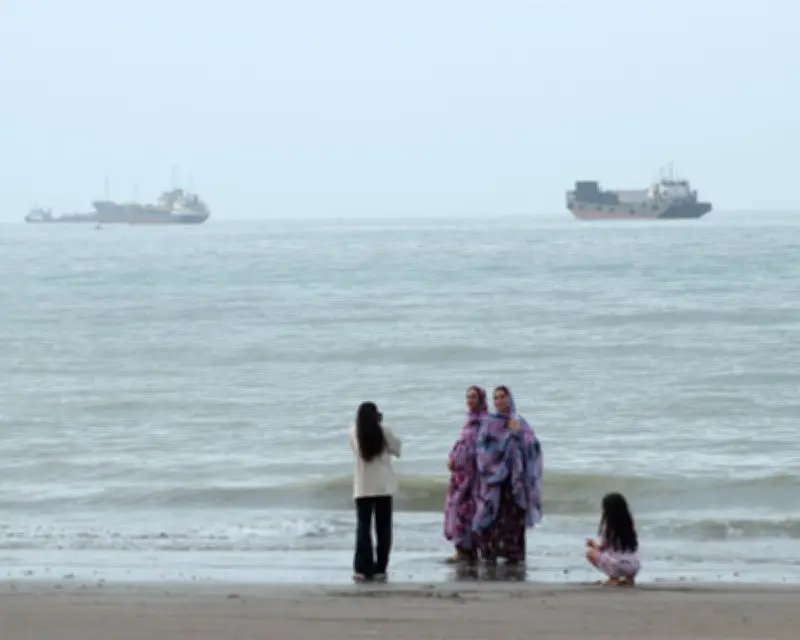
Donald Trump has again warned that the US will return to "strong military action" against Iran if diplomatic efforts do not bring a rapid resolution to the Middle East crisis. Speaking to Axios on Monday, the US president said: "We are in very deep talks with Iran. If they don't work out, we will go back to very strong military action." Asked how long he would allow talks to proceed, he answered: "Not much time. Either it goes fast or not at all."
Iran denies direct talks
Tehran said there were no direct negotiations with the US to end the conflict, which began in late February with US-Israeli strikes. Iranian foreign ministry spokesperson Esmaeil Baqaei stated: "Mediators may convey messages from the American side to us regarding current developments in the region. But at present we are not engaged in any negotiations with the United States."
Oman and Iran discussions on Hormuz
The diplomatic back and forth came as Oman and Iran drew closer to an agreement in principle on the future management of the Strait of Hormuz, but remained unable to resolve Tehran's demand that all ships passing through the strategic waterway must pay a transit fee or toll to a consortium led by the two countries. Technical talks were held in Tehran on Friday and Saturday that may hold the key to preventing further fighting.
Perceived progress in the talks – backed by China, Qatar and Pakistan – was understood to have fed into the US decision to pause its attacks on Iran after nearly two weeks. Senior US officials are also reported to have warned Trump over dwindling US munitions stockpiles and the impact of Iranian reprisals on US bases in the region, including Kuwait and Jordan. The top US military commander in the Middle East, Adm Brad Cooper, reportedly recommended stopping the bombing campaign around the strait because it had reached the limit of its effectiveness.
US and Iran conflicting narratives
The US attacks have been described by Washington as a response to repeated Iranian breaches of the memorandum of understanding signed in June, including trying to prevent commercial shipping from transiting the strait through a southern route overseen by the US. Iran argues the southern route breaks the ceasefire agreement, which it insists left the country in sole charge of how the strait was reopened. A diplomat said: "The aim of the Tehran talks is to marry the Iran and Oman proposals so what emerges is clearly compliant with the law of the sea, and internationally acceptable."
At a Tehran press conference, Baqaei denied that the pause in US fighting amounted to an informal ceasefire. He added: "The goal is for Iran and Oman, as two coastal states, to develop mechanisms to ensure safe shipping in the strait of Hormuz, while respecting the sovereign rights of the two coastal states and also preserving Iran's security and national interests."
Potential model from Malacca Strait
Oman has been trying since May to persuade Tehran that any plan for charging fees must be voluntary, to comply with the law of the sea. It has proposed a model similar to the Strait of Malacca: countries that use it voluntarily contribute to a fund providing environmental and safety services. Oman argues a similar entity could be set up in the Strait of Hormuz with UN and International Maritime Organization (IMO) agreement. IMO secretary general Arsenio Dominguez has told the Guardian that the Malacca model is worth considering for Hormuz.
Iran's department of environment has drafted its own plan, under which "the annual passage of over 50,000 ships and oil tankers through the strait of Hormuz and their role in polluting the Persian Gulf" must be compensated. Under the plan, Iran would collect fees from passing vessels proportional to ship type, cargo volume, navigation history and pollution history. The Khabaronline news agency argued such an agreement would be "a win-win situation for Iran."
Current situation in the strait
Oman is in a tight spot since it knows the US opposes tolls but may accept a clearly delineated system of fees for specific services. The talks come as the US continues to encourage commercial shipping to test the strength of the Iranian blockade. Iranian officials reported that six vessels with navigation systems switched off attempted to pass through the southern route on Sunday. One was fired upon, and the others turned back. The US has reimposed a blockade of Iranian oil exports and ended a sanctions waiver. The United Nations Office for Project Services said on Monday that transits through the Strait of Hormuz had fallen to an average of about five ships a day over the past week, compared with nearly 130 a day before the war.




