
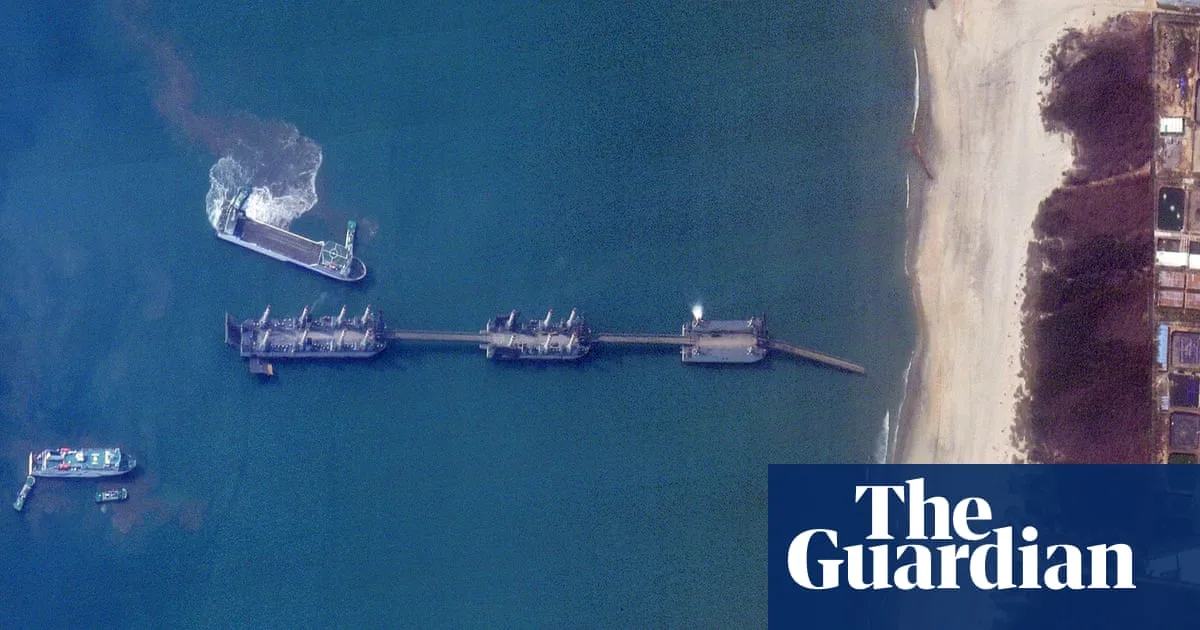
In the past five weeks, China has conducted live-fire drills near Australia, Taiwan and Vietnam, tested landing barges for potential amphibious assaults on Taiwan, and unveiled deep-sea cable cutters capable of disabling internet access. Experts say these actions aim to project supremacy in the Indo-Pacific and test the Trump administration's response.
Since taking office, Trump has focused on tariffs and an escalating trade war with China, remaining largely silent on Beijing's maritime aggression. On April 1, the US State Department condemned China's 'aggressive military activities and rhetoric' after unannounced drills in the Taiwan Strait. Defense Secretary Pete Hegseth assured Japan and the Philippines of US defence commitments, reiterating China as the biggest threat.
Allies seek clearer assurances from Trump, who has avoided taking a public stance on Taiwan. His unpredictable approach to Ukraine and tariffs raises doubts about a consistent strategy. 'The Chinese are watching how far they can push things,' said Malcolm Davis of the Australian Strategic Policy Institute, predicting increased drills and confrontations with regional rivals.
Internal divisions persist within the Trump administration over Indo-Pacific engagement and Taiwan policy, with competing factions led by officials like Marco Rubio and Mike Waltz versus MAGA supporters. 'There is definitely a split over Taiwan policy,' a former State Department staffer noted.
Beijing is observing Trump's willingness to trade geopolitical issues for economic deals, as seen in Ukraine talks. If Putin can strike a grand bargain with Trump, China may attempt a similar approach over Taiwan, causing anxiety among Southeast Asian allies. 'Even the prospect for a grand bargain with China will make countries wary,' said Jenny Schuch-Page of the Asia Group.




