Trump Repeats Criticism of Australia Over Hormuz, Marles Denies Specific Request
US President Donald Trump has again accused Australia of not doing enough to help him in the Middle East war, claiming the United States "asked them to be there" despite Australia's defence minister saying there had been no "specific request". The comments were made as Trump left the White House on Thursday, with footage showing him stating, "Well, I'm not happy with Australia because they were not there when we asked them to be there."
Marles Responds to Trump's Allegations
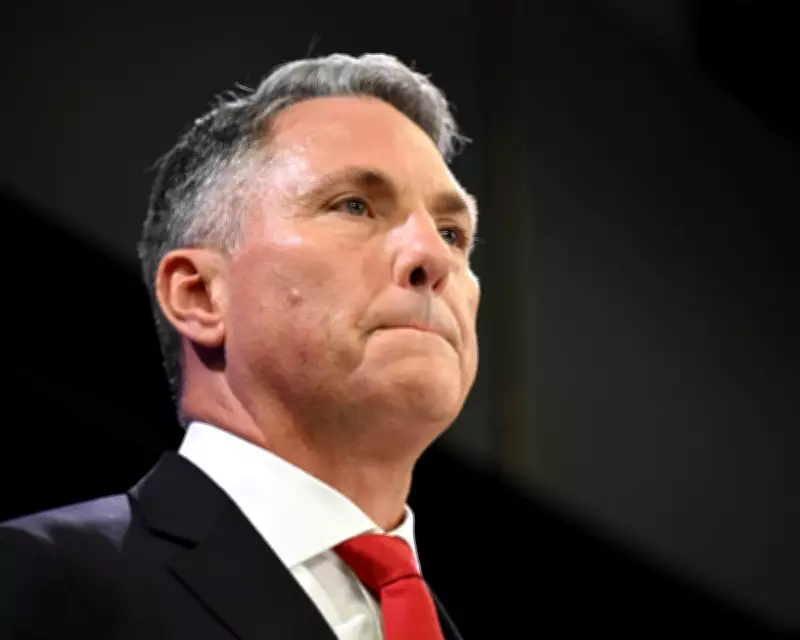
Australia's Defence Minister and Deputy Prime Minister, Richard Marles, addressed the issue on Friday, clarifying that no specific request had been received from the US regarding the Strait of Hormuz. He told ABC Radio National, "We've not received a specific request in relation to the strait of Hormuz, but we'll work with all partners, our allies, and that very much includes the US in terms of whatever needs to be done." Marles emphasised that Australia is involved in planning conversations with allies like the US, UK, and France, but any operation depends on developing circumstances.
Prime Minister Anthony Albanese also weighed in, telling reporters in Geelong that there have been no new requests from the US. He said, "There's been no new requests at all," and suggested that questions about Trump's comments should be directed to the president himself.

Background on US-Australia Tensions
Trump has repeatedly claimed, without providing further detail, that Australia and other countries have rejected or ignored requests to assist the US in the Middle East. Australian government ministers have consistently declined to comment or stated they do not know what Trump is referring to. The only known request from the US was a general one to help defend Gulf allies, to which Australia deployed a Wedgetail surveillance aircraft, with its initial four-week deployment extended for another month.
In a social media post, Trump previously dismissed Australia, Japan, South Korea, and NATO allies, saying "we no longer 'need,' or desire" their help. He has also criticised Australia's defence spending, demanding allies spend up to 3.5% of GDP on their own defence. Labor recently announced an extra $53 billion in defence spending over the next decade, aiming to increase spending to about 2.3-2.4% of GDP by 2033.
Political Reactions and Implications
Shadow Defence Minister James Paterson expressed concern over the contradiction between the Australian and US governments' statements, calling it "very unfortunate." Marles, speaking at the National Press Club in Canberra, downplayed the idea of any specific requests, noting that Australia's Wedgetail aircraft is operating in response to a request from the United Arab Emirates for defence support.
World leaders, including a representative from Australia, were due to gather at a summit in Paris on Friday to discuss the Strait of Hormuz. Marles highlighted the importance of reopening this crucial shipping channel and suggested Australia would "contribute" to an operation when the time is right. He added, "We need to wait for that, but we will be seeking to contribute in whatever is the best way that we can."
The ongoing dispute underscores broader tensions in US-Australia relations, with Trump's criticisms focusing on defence cooperation and spending. As planning continues among allies, the situation remains fluid, with Australian officials maintaining a stance of readiness while denying any unfulfilled specific requests from the US president.