
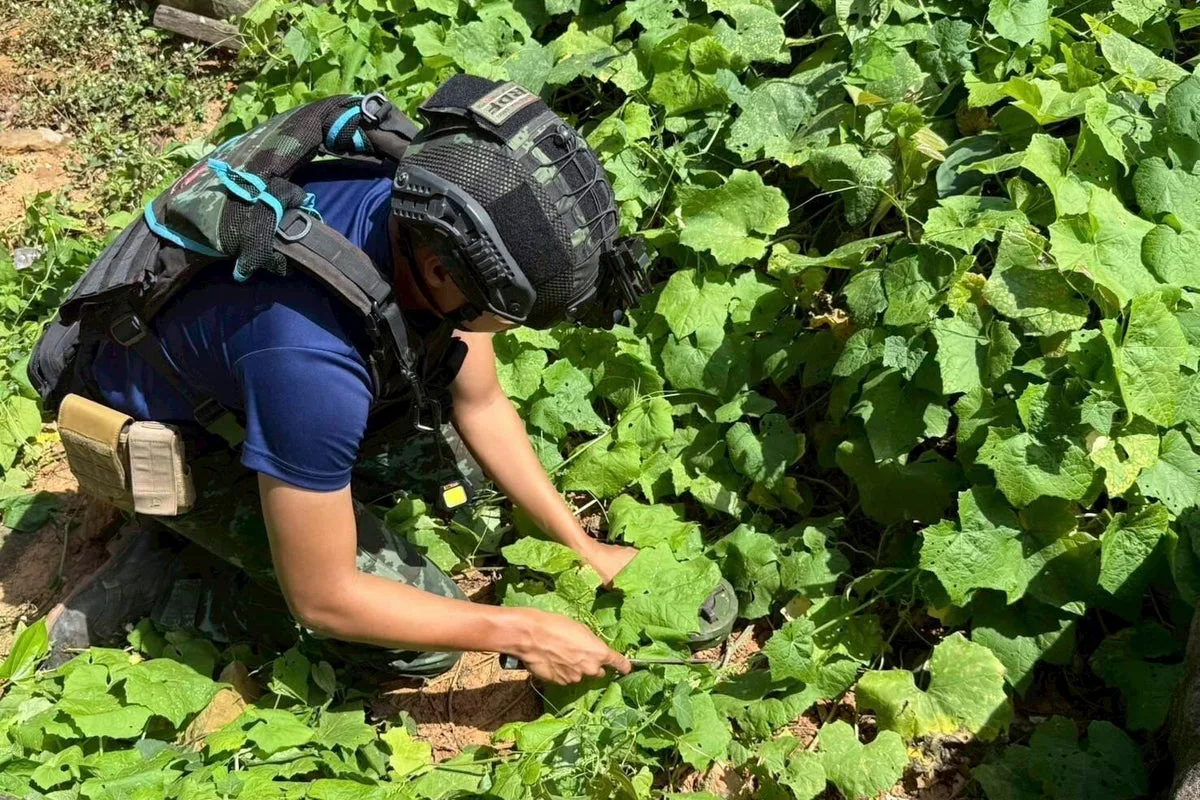
Thailand's army has warned it may need to 'exercise the right of self-defence' after a series of landmine incidents along the border with Cambodia, including one on Tuesday that severely injured a Thai sergeant. The army blamed Cambodia for planting the mines, a charge Cambodia has denied.
The latest incident occurred about one kilometre from Ta Muen Thom temple, a disputed area in Thailand's Surin province. The sergeant was patrolling with seven other soldiers when he stepped on an anti-personnel mine, suffering severe injuries to his left ankle, according to Thai Army spokesperson Maj. Gen. Winthai Suvaree.
This was the fourth such incident in about a month and the second since a ceasefire took effect on July 29, ending five days of armed clashes that killed dozens and displaced more than 260,000 people. In another incident on Saturday, a Thai sergeant major lost his left foot and two privates suffered lesser injuries.
The Thai army statement said the incidents were 'clear evidence that the Cambodian side has violated the ceasefire agreement and shows no respect for international humanitarian law, particularly the Ottawa Convention,' which bans anti-personnel landmines. Both countries are signatories. The statement warned that if circumstances become compelling, Thailand may need to exercise self-defence under international law.
Cambodia's Defence Ministry rejected the allegations as 'baseless, false, and deliberately misleading.' Spokesperson Lt. Gen. Maly Socheata said Cambodia has never used, produced, or deployed new landmines and strictly honours its obligations under the Ottawa Convention. Senior Minister Ly Thuch noted that Cambodia has cleared over one million mines and nearly three million pieces of unexploded ordnance from decades of war.
Tensions along the 800-kilometre border have been high since May, when a Cambodian soldier was killed in a confrontation that created a diplomatic rift and affected Thailand's domestic politics.




