Storm Therese Unleashes Havoc Across Tenerife and Canary Islands
Storm Therese has battered the Canary Islands, described as one of the worst storms on record for Tenerife, leaving thousands of Brits stranded in airport chaos and forcing evacuations amid severe flooding. The storm, which pummelled the popular holiday hotspot for five consecutive days, has caused widespread disruption with gale-force winds, heavy rain, and dangerous conditions predicted to return.
Airport Chaos and Travel Disruption
Brits have been left incensed as airport chaos ensues, with reports of hours-long delays, missed flights, and malfunctioning biometric machines at Tenerife North and South airports. Over 40 flights were cancelled or diverted by Friday, 20 March, including services from Hamburg, Frankfurt, Rotterdam, London, Manchester, and Newcastle rerouted to Gran Canaria or Fuerteventura. Passengers stranded overnight in terminals blame lack of staff and organisation, with only 20% of biometric machines operational according to officials.
Social media posts from frustrated travellers highlight the severity of the situation, with one Brit advising others to arrive three hours early to avoid queues, while another labelled passport control a "disaster." Police have been called to calm angry crowds at the south airport, where around 100 passengers were left stranded on one particular day, many unable to find accommodation.

Severe Flooding and Rescue Operations
The storm has brought torrential rain exceeding annual totals in some areas, leading to rivers breaking their banks and widespread flooding across four of the seven main islands. Dramatic footage captured Brit tourists screaming for help after their minibus became trapped in floodwaters in Puerto de la Cruz, Tenerife, with firefighters rescuing two women via ladder from a bridge above. In another incident, around 60 people were plucked from a small boat in rough seas south of Tenerife by helicopters from the Emergency Response Group.
Rescue teams have been deployed across the archipelago, extracting cyclists and a trapped woman from the Guiniguada ravine and using drones to deliver medication to isolated families in Gran Canaria. Up to 3,000 people have been evacuated from worst-hit areas like Agaete in Gran Canaria, with temporary shelters set up in schools and sports halls.
Extensive Damage and Infrastructure Failures
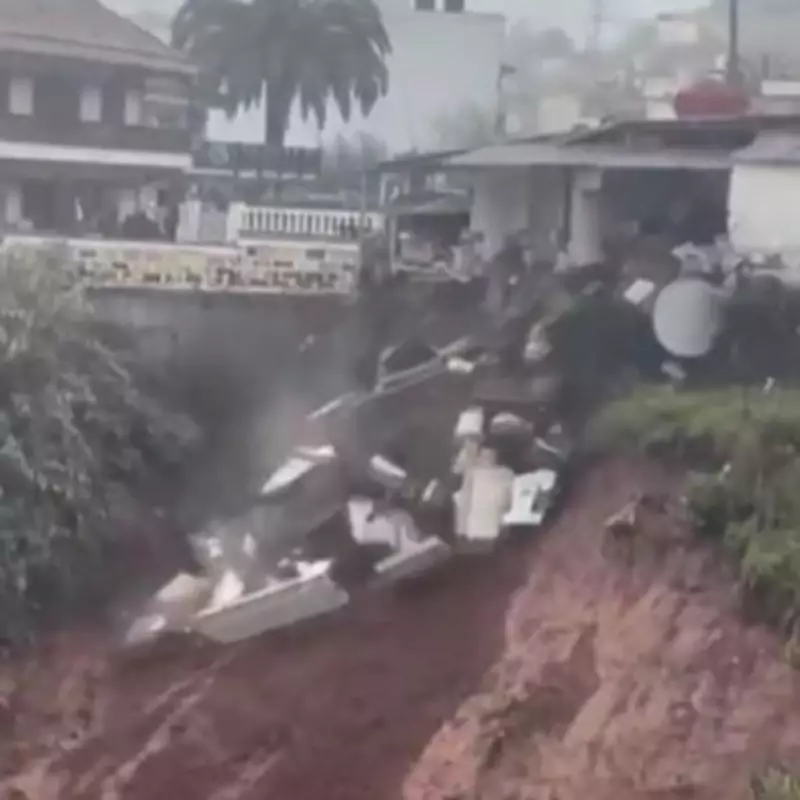
Storm Therese has caused significant damage, with rainfall totals reaching 118 litres in high ground areas like La Palma's Roque de los Muchachos volcano. In Gran Canaria, weather stations recorded 66 and 56.6 litres per square metre in San Bartolomé de Tirajana and Cuevas del Pinar, respectively, with over 700 litres dumped on the island's peaks. The bluster has torn apart mountainous terrain and homes, while mobile phone coverage suffers intermittent outages due to lightning strikes and low clouds.
Authorities warn of prolonged power outages and landslides as water seepage threatens pylon stability, with at least 10 reservoirs forced to release water to regulate high levels. Local councils urge extreme caution in areas like Arucas, Gran Canaria, due to anticipated increases in water flow.
Ongoing Warnings and Safety Advice
AEMET, Spain's national forecaster, has issued yellow warnings for El Hierro, La Palma, La Gomera, Tenerife, and Gran Canaria, with a rare red alert for torrential rain in Santa Cruz, La Orotava, Los Realejos, and Puerto de la Cruz. Winds are expected to ramp up to 90kph over high ground, worsening conditions. Residents and tourists are advised to avoid unnecessary travel, never cross floodwater, call emergency services if in danger, secure doors and windows, and reduce speed on wet roads.
As the archipelago recovers, many have cancelled trips, rebooking for later dates, while officials scramble to manage the aftermath of what locals call a "storm of the century."