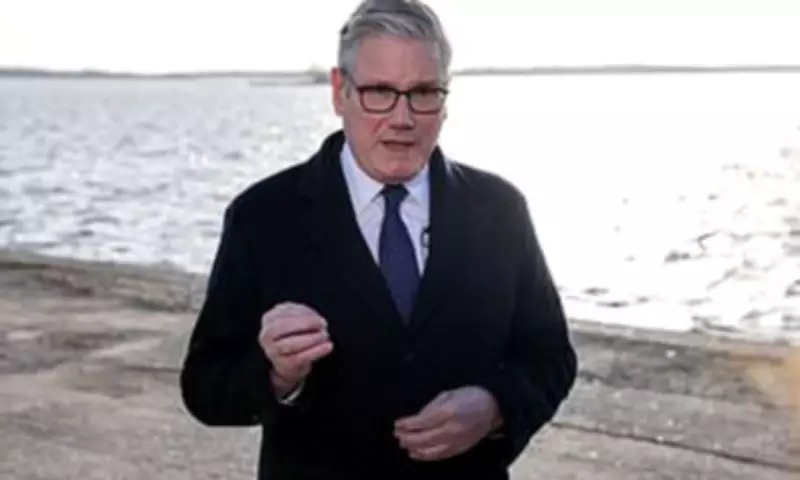
Prime Minister Keir Starmer has once more declined to specify a timeline for releasing the long-overdue blueprint to boost UK defence expenditure, even as he cautioned about the peril Russia poses to global stability. Speaking at a significant European defence conference in Finland, the Prime Minister alerted that Western nations are confronting a 'war on two fronts,' with the conflicts in Ukraine and between the US-Israel alliance and Iran identified as the primary battlegrounds affecting European security.
Delayed Defence Investment Plan
Sir Keir Starmer affirmed that the government is 'nearly there' in finalising the delayed Defence Investment Plan (DIP), originally scheduled for release last autumn. However, he provided no additional details on when it might be published, maintaining ambiguity over the much-anticipated strategy. The government has outlined ambitions to elevate defence spending to 3% of GDP within the current parliamentary term and further to 3.5% by 2035, up from the present 2.4%.
Military Readiness Under Scrutiny
Concerns about the UK's military capabilities have intensified following stark warnings from former senior military officials. General Sir Richard Barrons, who co-authored Labour's Strategic Defence Review last year, asserted that the British Army is so depleted from years of budget cuts and declining troop numbers that it would only be capable of securing a small market town under optimal conditions.

Further questions arose regarding the Royal Navy's operational capacity when it was revealed that a German warship will fulfil a UK NATO commitment due to a lack of available British vessels. This development has sparked fears that the Navy may struggle to deploy more than one warship simultaneously, highlighting potential vulnerabilities in national defence.
Action Against Russian Shadow Fleet
Amid these discussions, Sir Keir announced authorisation for British forces to commence intercepting and seizing Russian shadow fleet tankers, which illicitly transport oil in violation of international sanctions. This move aims to tighten restrictions on Moscow's unlawful oil exports and disrupt its economic operations. The Prime Minister emphasised collaboration with allies in this endeavour, noting that JEF nations such as Finland, Sweden, and Estonia have recently intercepted suspected shadow tankers in the Baltic region.
Strategic Implications and Alliances
The Joint Expeditionary Force (JEF), a military coalition of ten northern European countries led by the UK, focuses on countering Russian aggression. Member states include Denmark, Estonia, Finland, Iceland, Latvia, Lithuania, the Netherlands, Norway, and Sweden. By closing British waters to the shadow fleet, the UK intends to compel Russian vessels to take longer, costlier routes or risk interception, thereby enhancing pressure on Moscow.
British forces have been actively involved in tracking shadow fleet vessels for several years, supporting international operations to seize these ships. Notable instances include assisting the US in capturing the oil tanker Marinera in January, with RAF aircraft and the British supply ship RFA Tideforce providing aid. Additionally, Royal Navy patrol boat HMS Dagger supported French efforts to seize the sanctioned ship Grinch in the western Mediterranean later that same month.
As defence discussions continue, the delay in unveiling the Defence Investment Plan juxtaposes with urgent calls for enhanced military preparedness, underscoring the complex challenges facing UK national security in an increasingly volatile global landscape.