
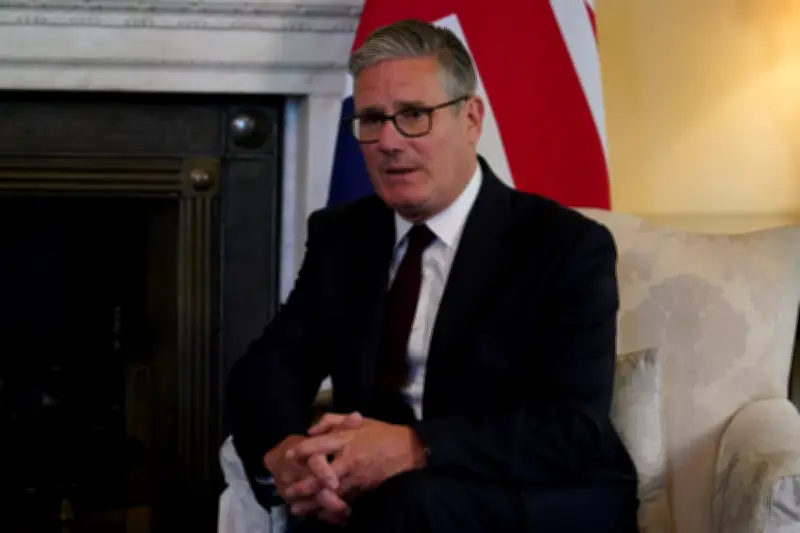
Prime Minister Sir Keir Starmer has hailed the long-delayed defence investment plan (Dip) as a game-changing move that will keep the UK safe and secure long into the future, as he announced its publication on Tuesday. The plan, originally due last year, was held back due to internal government wrangling over funding.
Background and Controversy
Former Defence Secretary John Healey resigned in protest over the Dip, arguing it did not provide enough funding to transform the armed forces and meet future threats. He also warned that the plan would likely fall short of Britain's commitments to NATO, which has tasked member states with increasing core defence spending to 3.5% of national economic output by 2035.
Under new Defence Secretary Dan Jarvis, the Dip now focuses on ramping up the UK's use of drones and autonomous weapons, funded by a £5 billion investment, the Ministry of Defence (MoD) announced. Jarvis is understood to have secured extra money, taking the full settlement to approximately £14.5 billion – up from the £13.5 billion offered to Healey but short of the £28 billion officials previously said was needed.
Prime Minister's Statement
Speaking ahead of the Dip's launch, Starmer said: "This game-changing investment will strengthen our armed forces on land, at sea and in the air, ensuring our servicemen and women have the cutting-edge capabilities they need to deter evolving threats and keep the British people safe. At the same time, we are backing British innovation, British industry and British jobs and delivering opportunity to every corner of the country. Today's defence investment plan will help drive growth across the UK, giving our industrial base the confidence, certainty and support it needs to develop and scale the technologies that will keep our country safe and secure long into the future."
Focus on Drones and Autonomous Weapons
In a major speech at a defence firm on Tuesday, Starmer will set out how the Dip will accelerate Britain's drone capabilities, as wars in Ukraine and Iran have seen widespread use of such warfighting robots. Britain has closely observed the use of drones in Ukraine, where some 200,000 are now used each month to defend against Russian forces, and in Iran, where around 700 drones were launched daily at the height of its conflict with the US and Israel.
In a signal of the pivot towards drone warfare, the MoD has already announced that a fleet of new destroyer warships will no longer appear in the Dip, replaced instead by "hybrid" vessels that will act as command hubs for drones.
Defence Secretary's Comments
Jarvis, who has spent his first two weeks in the job "refocusing" the Dip, said: "Our armed forces are serving at an increasingly dangerous and unpredictable time. We are determined to give them what they need as they serve with courage and exceptional skill to keep us safe. The character of warfare is rapidly changing. In Ukraine and the Middle East, uncrewed systems are defining conflicts. This largest ever UK investment into these evolving technologies will help our armed forces stay ahead of our adversaries, backed by the best of our defence industry. We are giving our extraordinary people the equipment they need to fight and win."
Political Reactions
The Dip has become widely regarded as a legacy issue for Starmer, something he can achieve before he steps down and makes way for his likely successor, Andy Burnham. Burnham's camp has left open the possibility of revisiting the Dip. On Monday, Burnham suggested he wanted British-based defence companies favoured in future military contracts, saying: "From here on, every pound raised from taxpayers will work harder for them, and that approach will apply fully to the defence investment plan. We will make sure that all eligible public contracts are subject to proper social value weighting and we will do that to make sure British-based companies are in a better position to win those contracts."
Shadow Defence Secretary James Cartlidge criticised the plan as "too little, too late," adding: "Too little because it is barely more money than John Healey and Al Carns resigned over when they said Britain would be 'less safe'. And too late because the plan is now almost a year overdue and only being rushed through because Keir Starmer is desperate for a legacy. This plan is not worth the paper it's written on – Keir Starmer is Prime Minister in name only. The next prime minister needs to cut welfare and give our armed forces the funding they need to keep Britain safe."
Liberal Democrat leader Sir Ed Davey described the plan as "late and underfunded," calling it "unforgivable." He added: "It is a political choice that makes us all less safe, puts jobs at risk and threatens businesses across the country in supply chains. The Government have dangerously short-changed our armed forces when they need urgent investment after years of Conservative negligence."
NATO Commitments
Donald Trump expects the UK and other NATO allies to stick to their defence spending pledges, the White House said on Monday. At a crucial NATO summit in Ankara, Turkey next week, members are expected to set out a "credible path" to spending 5% of economic output on defence by 2035 – 3.5% on core defence spending and a further 1.5% for wider resilience spending.




