
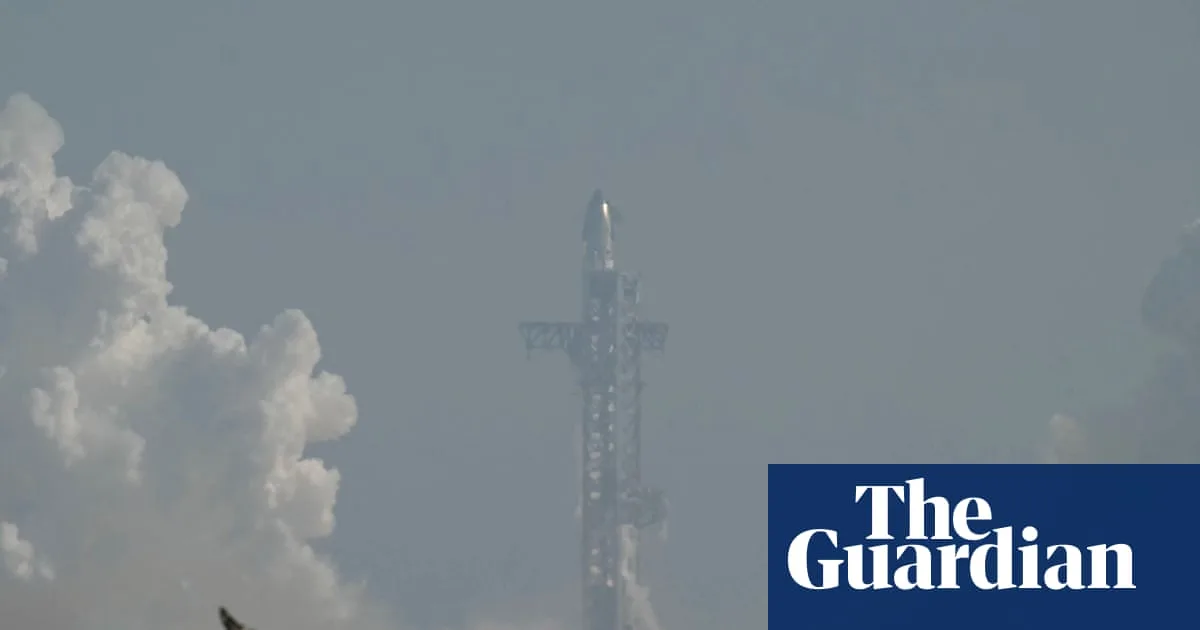
SpaceX has launched its biggest and most powerful Starship yet, an upgraded version that NASA is counting on to land astronauts on the moon. The third-generation mega-rocket, known as Starship V3, blasted off from the company's Starbase facility in Texas on Friday, carrying 20 mock Starlink satellites.
The hour-long flight reached the Indian Ocean, where the spacecraft intentionally crashed and erupted in flames, a planned outcome according to SpaceX. Despite some engine trouble, the mission was deemed a success by CEO Elon Musk, who described it as an 'epic' launch and landing.
This was the 12th test flight of the rocket that Musk is developing with the ultimate goal of taking people to Mars. However, the immediate focus is on NASA's Artemis programme, which aims to return astronauts to the moon. NASA Administrator Jared Isaacman attended the launch, stating that Starship was now one step closer to the moon.
The redesigned booster features fewer but larger grid fins and a more robust fuel transfer line. At 124 metres long, the latest model is slightly larger than its predecessors and delivers more engine thrust. Unlike previous flights, there were no midair explosions until the very end, when the spacecraft toppled over and ignited after a controlled descent into the Indian Ocean.
NASA is paying SpaceX billions of dollars, along with Jeff Bezos's Blue Origin, to provide lunar landers for the Artemis programme. The two companies are competing to be first, with Starship having already reached the fringes of space on multiple flights, while Blue Origin's Blue Moon has yet to launch.
SpaceX is also taking reservations for private flights to the moon and Mars on Starship. Among those signed up is Dennis Tito, the world's first space tourist, and his wife, who booked a lunar flyby three and a half years ago.




