
The United States has lost at least three nuclear bombs that have never been located, according to declassified documents and expert analysis. These weapons remain missing to this day, hidden in swamps, fields, and oceans around the world, raising concerns about global security.
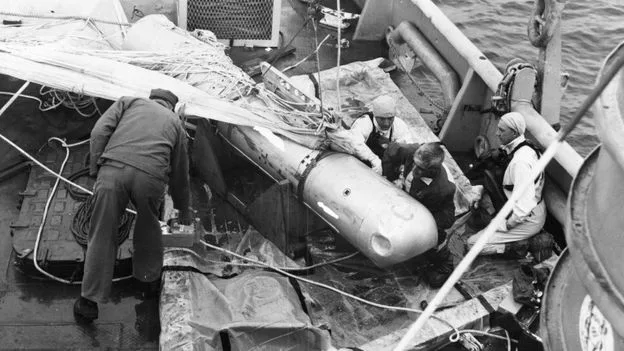
The most famous incident occurred on 17 January 1966, when a US B-52 bomber collided with a KC-135 tanker aircraft over Palomares, Spain, during a Cold War mission. The collision scattered four B28 thermonuclear bombs across the area. Three were recovered on land, but one bomb, carrying a 1.1 megatonne warhead, fell into the Mediterranean Sea and was never found.
Philip Meyers, a former bomb disposal officer, was called to assist in the search. He recalled that the mission was not as secret as intended, as newspapers had already reported the accident. The missing bomb remains at the bottom of the sea, despite extensive recovery efforts.
Since 1950, there have been at least 32 so-called 'broken arrow' accidents involving nuclear weapons. While most were recovered, three US bombs have gone missing entirely. Jeffrey Lewis, director of the East Asia Non-proliferation Program at the James Martin Center for Non-proliferation Studies, noted that the full list only emerged after a US Department of Defense summary was declassified in the 1980s.
Lewis added that little is known about nuclear accidents in other countries, including the United Kingdom, France, Russia, and China. The Soviet Union lost nuclear weapons on submarines, such as the K-8 submarine that sank in the Bay of Biscay in 1970 with four nuclear torpedoes onboard, but those locations are known, if inaccessible.




