
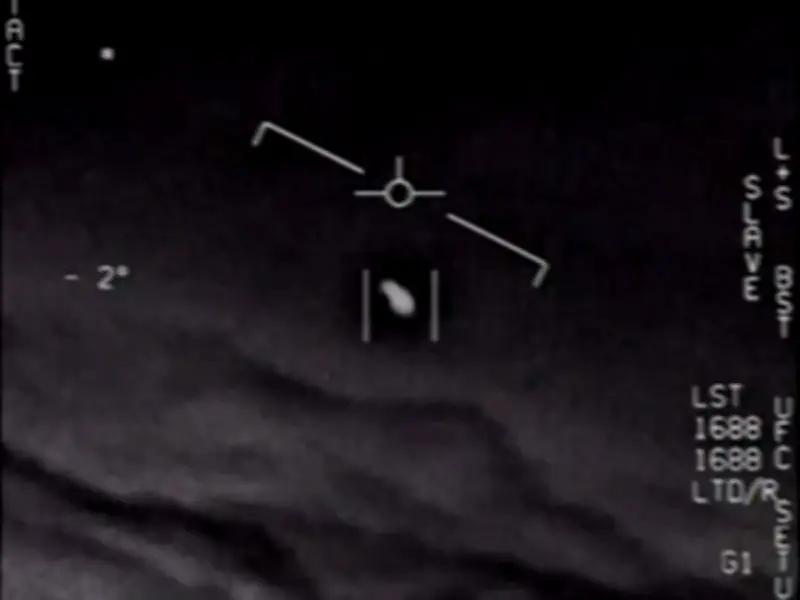
A legal expert has warned that military strikes on UFOs could risk triggering an interstellar war. Professor Michael Bohlander has urged world governments to hold their fire against Unidentified Anomalous Phenomena (UAP), cautioning that advanced extraterrestrials might not stay peaceful forever.
Expert calls for restraint
Writing for the Global Policy Journal, the legal academic from Durham University claimed that firing weapons at mysterious craft is a recipe for disaster. Reflecting on recent military clashes, including a video shown to US Congress where a drone launched a Hellfire missile at a UAP with almost no effect, Prof Bohlander said that triggering extraterrestrials is a gamble world leaders simply cannot win.
"Some of them may carry weapon systems equally advanced as their overall technology," Prof Bohlander wrote. "We should not test them without good reason and a colourable case that we would prevail."
No guarantee of continued restraint
He noted that while space visitors have so far appeared "restrained in their reaction to human aggressive behaviour, there is no guarantee that this will continue to be the case."
World militaries have taken an increasingly trigger-happy approach since a Chinese spy balloon was shot down over South Carolina in February 2023. Three further objects, which appeared to fly without any propulsion system, were also blasted out of the sky shortly after.
Calls for clear rules of engagement
North American Aerospace Defense Command (NORAD) commanders refused to rule out extraterrestrial origins, while fighter pilots were left stumped over how to classify an object spotted over Lake Huron.
Prof Bohlander expressed concern that governments continue to treat these craft as military threats first and ask questions later. He slammed the secretive approach, pointing out that intelligence agencies hold an "iron grip" on UAP data and refuse to publish clear rules of engagement.
Instead, he believes the default stance under international law should be to treat the craft as non-aggressive civilian objects, protecting them from attack unless they explicitly show hostile intent. "A clear verdict of a military nature or threat will thus be very difficult to reach in virtually all cases—an argument in favour of classifying UAP by default as non-aggressive," he said.
Prof Bohlander added that until world leaders establish clear international rules, shooting first could accidentally kick off an unwinnable war against an enemy with vastly superior technology.




