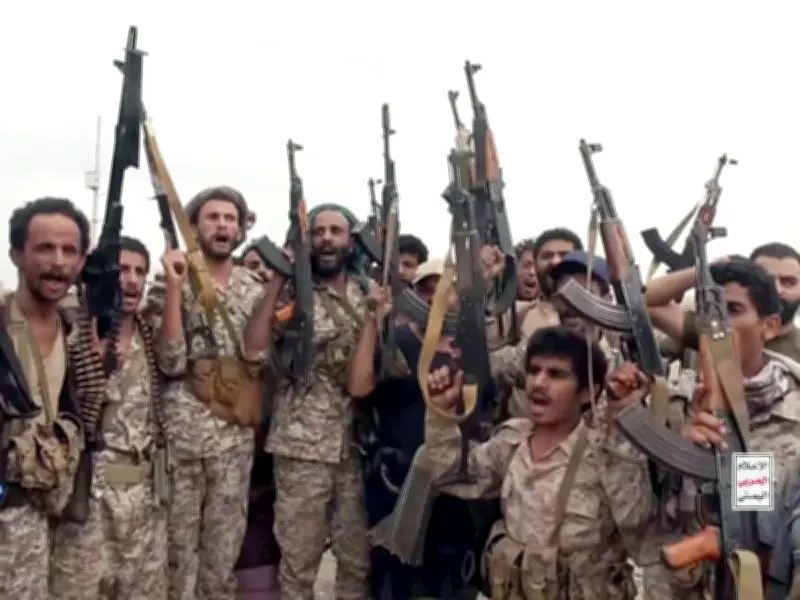
Saudi Arabia is set to meet allies Turkey and Pakistan as fears grow of a major escalation over Houthi attacks on the Kingdom. Only this week the UK agreed to back the Saudi military with the limited provision of an air-to-air refuelling plane to help ward off missile attacks.
Mecca Joint Defence Agreement
The forthcoming meeting of the three power-states could indicate they will invoke their 'attack one and it is an attack on all' agreement. All three states signed the Mecca Joint Defence Agreement last month in a bid to strengthen their military bond as security in the region deteriorates.
This could mean both Turkey and Pakistan could be sucked into the tensions between the US and Iran. Today, Iran-backed Yemeni Houthis fired six ballistic missiles at Saudi Arabia - all of which were intercepted by neighbouring allies.
Iran's conditions
News of the Mecca Agreement pact meeting broke as Iran suggested it might re-open the blockaded Strait of Hormuz within seven days. Despite the Houthis escalation, funded by Tehran, Iran's Foreign Minister Abbas Araghchi said: "If certain conditions are met, the Strait of Hormuz will be open at the end of seven days, and talks will be restarted.
"The conditions we have asked the U.S. to meet are nothing new, nothing more than what was already in the Islamabad Memorandum of Understanding which was signed by the US President."
It is believed this means the US would have to accept unfreezing Iranian money and offering up as much as £225 billion - in war reparations to Iran. US President Donald Trump would also have to agree to the lifting of US sanctions against Iran in exchange for fresh talks on Iran's nuclear ambitions.
Strait of Bab al-Mandab threat
It is happening as the Houthis are digging along the Red Sea coastline close to the Strait of Bab al-Mandab in an apparent threat to close the essential trade waterway. The waterway is a highly strategic maritime chokepoint between the Arabian Peninsula - Yemen - and the Horn of Africa - Djibouti and Eritrea.
It serves as the southern gateway to the Red Sea, connecting it directly to the Gulf of Aden and the Indian Ocean. Roughly seven to 12% of the world's seaborne petroleum, crude oil, and refined products, as well as around eight per cent of liquefied natural gas transits the strait from the Persian Gulf to Europe and North America.
Approximately one-fourth of global container trade—including manufactured items, electronics, and food products traded between Asia and Europe—moves through the Bab al-Mandab. It is believed US and Iranian negotiators are talking once again about a phased solution to the crisis, including the re-opening of the Strait of Hormuz. As well as demands for reparations and the lifting of sanctions, Iran is also expected to demand the lifting of the American military blockade on Hormuz.