Russian Soldier's Bizarre Penguin Disguise Proves Ineffective Against Ukrainian Drone Attack
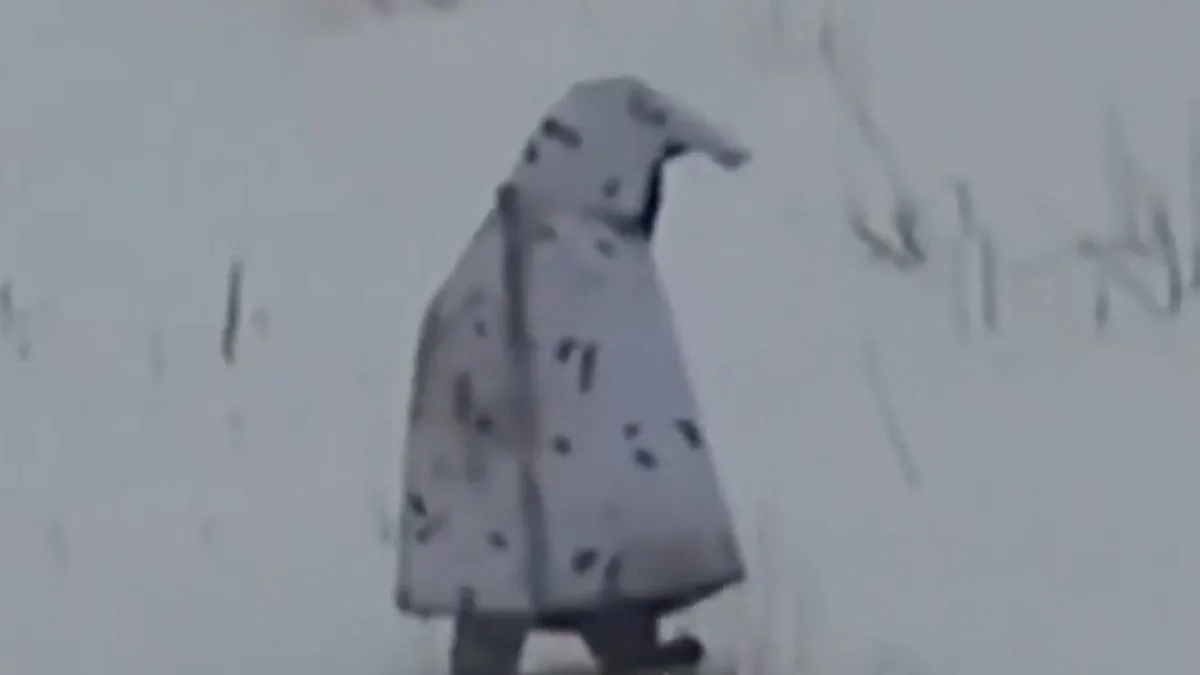
In a striking example of the ongoing technological and tactical evolution on the battlefield, a Russian soldier dressed in what appeared to be a penguin-like thermal disguise was recently targeted and eliminated by a Ukrainian drone strike. The incident, captured in footage from the frontlines of Vladimir Putin's invasion, underscores the brutal realities of modern warfare where unconventional tactics often meet devastating consequences.
The Awkward Disguise and Its Fatal Flaws
The soldier was seen awkwardly waddling across a snowy landscape, clad in a hooded, cloaked costume that featured squared shoulders and a protruding "beak" from its hood. This unusual outfit, designed to mask body heat and evade detection from drone tracking systems, ultimately failed to protect its wearer. Despite its intent to disguise the soldier from infrared and night vision technology, the thermal blocking cape left his feet exposed and created a cold silhouette against the warmer backdrop, making him an easier target for Ukrainian operators.
In a follow-up clip, the soldier is shown being targeted by a Ukrainian drone, which looses a shot that lights up the area in an orange glow, leaving no trace of him. This highlights a critical issue with such disguises: they can inadvertently make soldiers more visible to thermal imaging, as noted by experts. Former British Army colonel Hamish de Bretton-Gordon commented that these suits are "no invisibility cloak" and, due to the contrast they create, can make wearers "more acquirable than less."
The Broader Context of Drone Warfare in the Conflict
Russian forces have been employing thermal cloaks for nearly a year in an attempt to hide from Ukraine's extensive drone army, but they have struggled to avoid detection. The functionality of these suits has been hampered by faulty technology and insufficient training for troops on their proper use. This incident is part of a larger trend where drones have become a dominant force in the war, causing the majority of casualties on both sides.
A recent intelligence report by Latvia's Constitution Protection Bureau (SAB) found that drones are responsible for between 70% and 80% of injuries and deaths in the conflict. The report concluded that this heavy reliance on drone warfare has created a tactical dynamic that reduces the chances of either side achieving a strategic breakthrough, potentially leading to a deadlock in the ongoing hostilities.
Strategic Implications and Future Concerns
The outcome of the conflict is heavily influenced by Western military support and political backing, as noted in intelligence assessments. However, there are growing concerns about Russia's potential plans to escalate its drone capabilities. Reports suggest that Russia may be planning to establish a mass-production facility for drones in Belarus, which could supply up to 100,000 units annually, further intensifying the drone arms race in the region.
This incident serves as a poignant reminder of the high stakes involved, where even the most bizarre and creative disguises cannot guarantee safety against the relentless advance of drone technology. As both sides continue to adapt and innovate, the human cost of this war remains tragically high, with each new tactic and countermeasure tested in the harsh realities of the battlefield.




