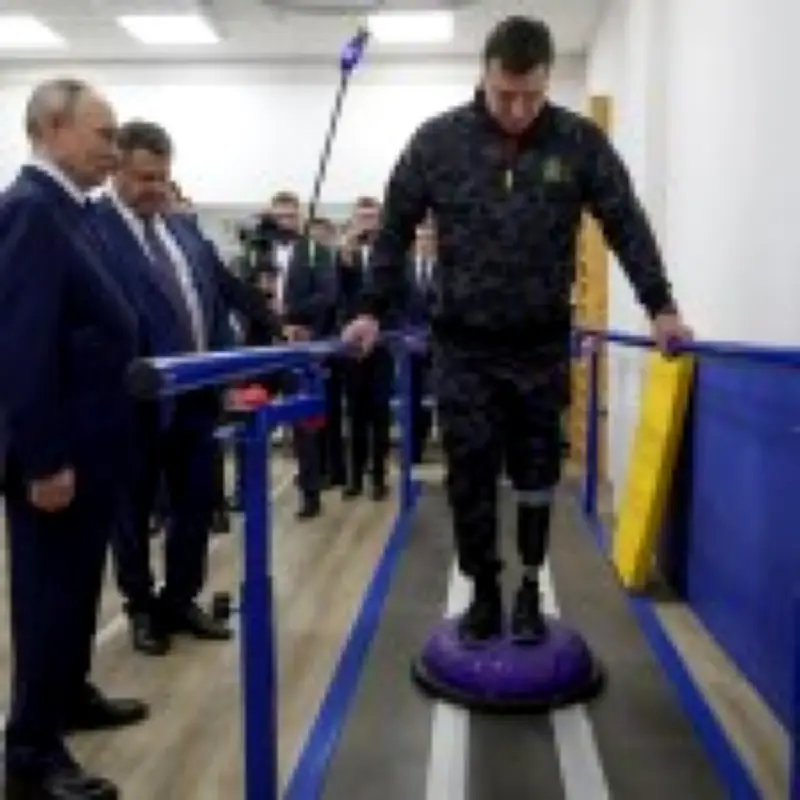
Russia has imported £66 million worth of artificial limbs and joints from Germany in the first half of 2026, more than five times the level before the war in Ukraine began, as the conflict drives demand for prosthetics among returning soldiers.
The imports, revealed in Forbes Russia's analysis of Eurostat data, come as an estimated 1.2 million Russian soldiers have been killed, wounded or gone missing since the war started in February 2022. The conflict shows no sign of stopping, and thousands of injured troops are returning from the front.
Spending on artificial limbs and joints
Germany, a Nato member, is the largest supplier of prosthetics to Russia. Belgium and the Netherlands, also Nato members, are also on the list for Russian orders. In total, the Kremlin's imports from EU countries were worth £126 million in the first half of 2026 alone.
The Kremlin spent the most on prosthetic arms, legs and related components, accounting for around £34 million of the spend, followed by £31 million on artificial hip, knee and other joint replacements.
Domestic production falls short
Despite the scale of the Russian war machine, the country's domestic prosthetics production has not kept up with skyrocketing demand. Disabled people in Russia received 152,661 artificial arms and legs from the government in 2024, compared with 99,515 the previous year, according to the Russian ministry of labour.
The money spent on prosthetics could have paid for 1,000 new schools and 200 hospitals. Every Russian child born since the war started could have received around £9,400, while pensions could have been boosted to more than double.
Daily benefit payments and mockery
Russia is said to be paying more than £71 million every day in benefits to the wounded victims of the conflict and their relatives. One Ukrainian report mocked Putin over the imports, saying: 'You're at war with NATO. You could have ordered them from friendly North Korea or Myanmar.'
The imports highlight the human cost of the war, with thousands of soldiers requiring medical support and prosthetics as the conflict continues.