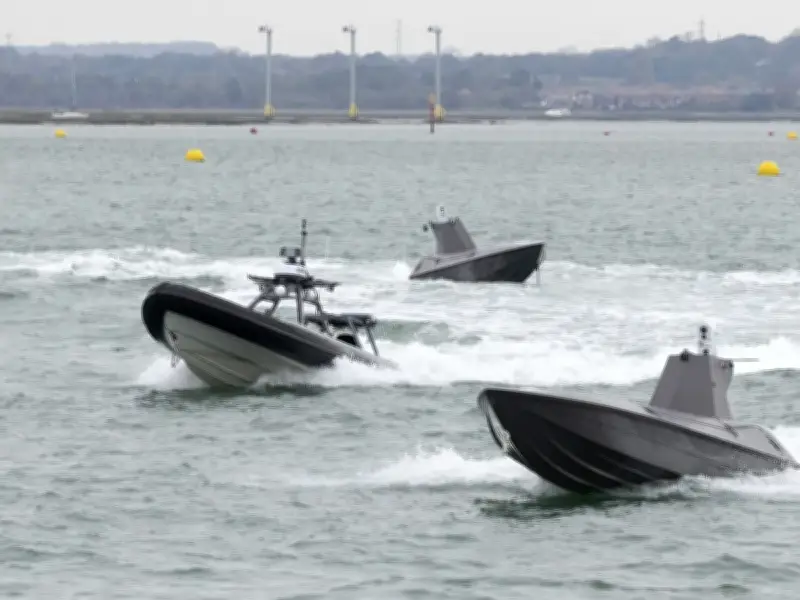
The Royal Navy has established its first squadron of unmanned boats, marking a step toward its goal of becoming a 'hybrid navy'. The new unit, based at Portsmouth Naval Base, will operate autonomous vessels on the front line.
The 28ft boats, part of a £12m squadron, will deploy dozens of K3 Scout surveillance drones and Rattler training drones. These craft are designed for a range of operations, including monitoring Russian vessels in British waters.
Trials and Capabilities
The remotely controlled squadron had already escorted warships during trials in Scotland while being piloted from 500 miles away. The boats can reach speeds of up to 63mph, have a range of up to 1,100 miles, and can carry a 600kg payload.
The announcement follows reports of Kremlin meddling, with more than 500 incidents of Russian fishing trawlers spying on undersea cables linking Britain with Europe and the US, as revealed by The Telegraph.
Strategic Context
Naval drones have been used extensively in the Russia-Ukraine war, where Kyiv equipped them with surface-to-air missiles and aerial attack drones to target Russian merchant vessels transporting oil through the Black and Azov seas.
Labour had previously announced plans for special forces and law enforcement officers to board Russian civilian ships in UK waters, but the proposed efforts have not been implemented due to the hefty cost of boarding and detaining vessels.
Official Reactions
Captain Adam Ballard, deputy commander of the Navy's surface flotilla, said: "We now have a large fleet of these that I can deploy at my time and choosing against an enemy, and I am no longer beholden on just having to deploy a frigate or destroyer. I can just deploy these very discreetly and very rapidly, that gives me a significant advantage over our enemies."
He added: "I think actually you have more [of a] deterrent effect – the Russian navy has seen things like this sinking their oppos. So, if I was a Russian, I'd be like: 'Oh, the Royal Navy's now got these. Okay.'"
When asked whether the drones could track Russian interference with undersea communications, Vice-Admiral Stephen Moorhouse, the Royal Navy Fleet Commander, said: "There's no reason why not. We've got radars, we've got cameras. We can do all sort of stuff. You can imagine the range of tasking that we do in UK waters with Russian vessels. You can use these sorts of craft."
The new squadron is part of the Navy's broader initiative, backed by a £1.5bn investment over four years, to integrate traditional warships with uncrewed and autonomous technology.
Vice-Admiral Moorhouse said: "The Royal Navy is doing something it has never done before. The seas are becoming more contested, more dangerous and harder to operate in. A hybrid navy is about giving our people better tools. It means more reach, more striking power and more options. It will help make the Fleet more lethal, harder to knock out of the fight and quicker to adapt. People will remain at the heart of it."
The autonomous squadron was commissioned during a ceremony on November 5 at His Majesty's Naval Base Portsmouth, where the Kraken and Rattler vessels were demonstrated in front of more than 200 people.
Defence Secretary Wes Streeting said: "The threat environment we are facing is fundamentally different from that of recent decades. A major determinant of military power now is who can innovate fastest. That's why we are using the biggest sustained increase in defence spending since the Cold War to put the latest autonomous technology in the hands of our sailors, to help them protect our shores and those of our NATO Allies. The more ready we are to fight and win, the less likely we are to have to. This investment strengthens our warfighting readiness and therefore our deterrence."