
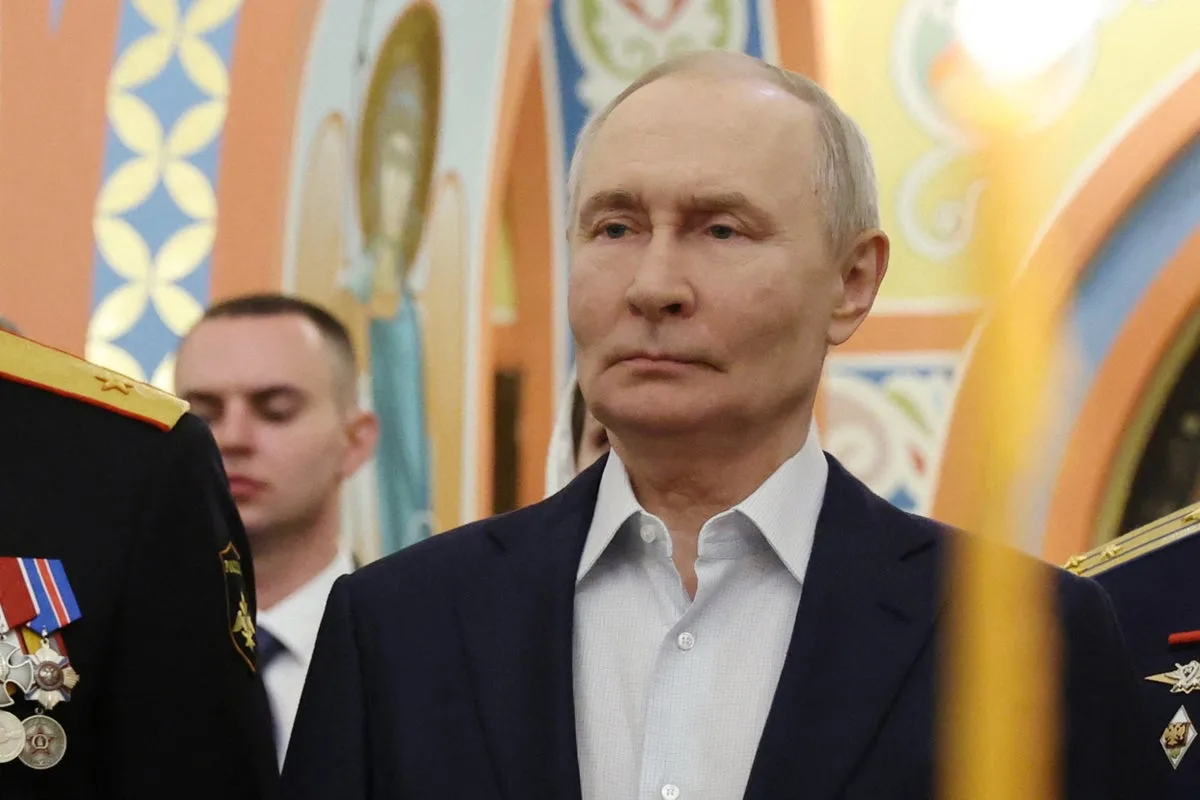
Church leaders have condemned President Vladimir Putin as the ‘Anti-Christ’ after he described Russia’s war in Ukraine as a “holy mission”. In a speech marking Orthodox Christmas, Putin referred to Russian soldiers as “warriors” acting “as if at the Lord’s behest”.
Father Myroslav Pushkaruk, a priest of the Ukrainian Orthodox Church, said Putin’s use of violence and power to pursue his aims was “more like the Anti-Christ in the Christian world”. The rector at a Paris church in central London told The Independent that the Kremlin’s message “goes against all the teachings of the Christian world”.
Former Bishop of Leeds Nick Baines also criticised the Russian leader, stating: “Seen from a Christian perspective, you don’t use unholy means to pursue a holy mission. When that unholy means involves slaughtering people, invading their country, and telling lies.”
Father Taras Khomych, a Catholic priest and senior lecturer at Liverpool Hope University, described Putin’s religious claims as “idolatry” and a “distortion of Christianity”. He warned that the ideology “exalts war, destruction and death in order to lay the foundations for Russia’s territorial claims”, calling it a “devilish demonic way of using the word of God”.
As US-backed peace talks continue in Paris, Father Taras urged caution, saying: “It’s difficult to negotiate with someone who is as radical as Putin. The war of Russian aggression started with the war of ideology… in order to stop the war we need to address this ideology.”




