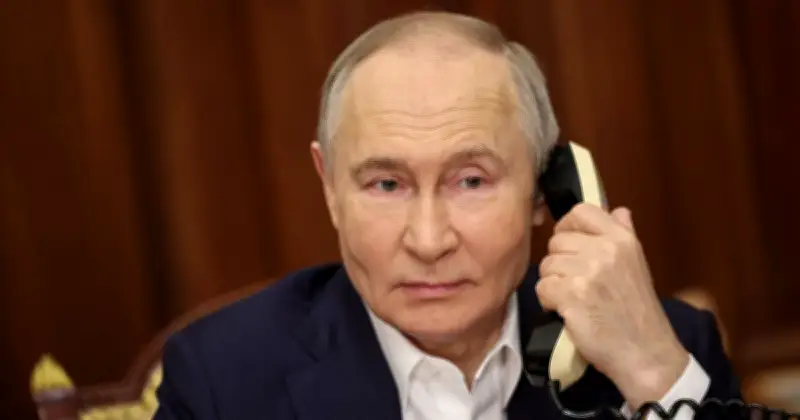
Vladimir Putin would be wrong to think he could undermine Western support for Ukraine by targeting NATO's eastern flank, according to analysis.
Ukraine's devastating campaign of strikes deep inside Russia has left the Kremlin economy listing and Vladimir Putin fuming. Drone and missile attacks on Russian oil infrastructure, as well as facilities belonging to the country's largest online retailer, have had two key effects; psychological and economic.
Russia feels the strain
The reality of the Kremlin's bitter war on Ukraine is now more than ever being felt by ordinary Russians. Financial instability, fuel shortages, internet outages and fears of new mobilisation are all adding to concerns.

Experts also claim the terrifying long-range attacks are also seeing Russians question whether the Kremlin really can truly keep them safe.
Yet Mr Putin seems undeterred and instead hellbent on intensifying his war on Ukraine which has left around 500,000 Russian soldiers dead.
Mobilisation fears
Ukrainian intelligence believes the Kremlin could mobilise up to half a million people to join the war effort after Russia's parliamentary election next month.
While fears of an attack on NATO in the years ahead also remain a serious concern. Britain and other Western intelligences, as well as NATO chief Mark Rutte, have all warned of a potential Russian attack on the alliance by 2030.
Many fear the Baltics and Poland are those most likely in the crosshairs of the Kremlin war machine.
NATO's eastern defences
Some believe such an attack would be aimed at reducing Western support for Ukraine — a rather desperate move underscoring Russia's woes on the battlefield. Others — including US intelligence — suggest it could be to test NATO's resolve following months of tensions between Donald Trump and other allies.
Famously, Mr Putin believed Kyiv would fall in just three days when he launched his 'Special Military Operation' in February 2022. This of course never happened and Mr Putin would be a fool to think this would be the case on NATO's eastern flank.
Estonia, Latvia, Lithuania and Poland are among the alliance's highest defence spenders, as a share of GDP. All have either achieved — or are well on their way — to hitting NATO's 2035 5% spending target.
The nations are also erecting a ring of steel along their borders with Russia and its close ally Belarus. Poland now has one of the biggest militaries in NATO (around 216,000 troops), with that mass backed up by sophisticated kit.
The Baltic States may have smaller fighting forces but they still pack a punch and are reinforced by multinational NATO battlegroups. In a sign of how seriously the threat is being taken, conscription is also active in all of Estonia, Latvia and Lithuania.
Learning from Ukraine
As well as significant investment, the countries have been learning closely from the Ukrainians. Polish and Lithuanian ministers have warned one possible scenario is Russia launching false flag attacks on critical infrastructure using Ukrainian drones, and blaming Kyiv.
Estonia has downplayed concerns, with Foreign Minister Margus Tsahkna previously insisting there is “no imminent threat” to the region. Any attack on NATO territory could see Article 5 triggered, prompting a response from all allies which would effectively mean World War Three.
CIA Director John Ratcliffe's surprise visit to Moscow on Tuesday has only added to fears over the tensions. It's not clear what was discussed but there is speculation he could have made the trip to warn Russia against testing NATO's resolve.
However, one thing is for sure — Ukraine is no pushover... and neither is Poland or the Baltic States.