
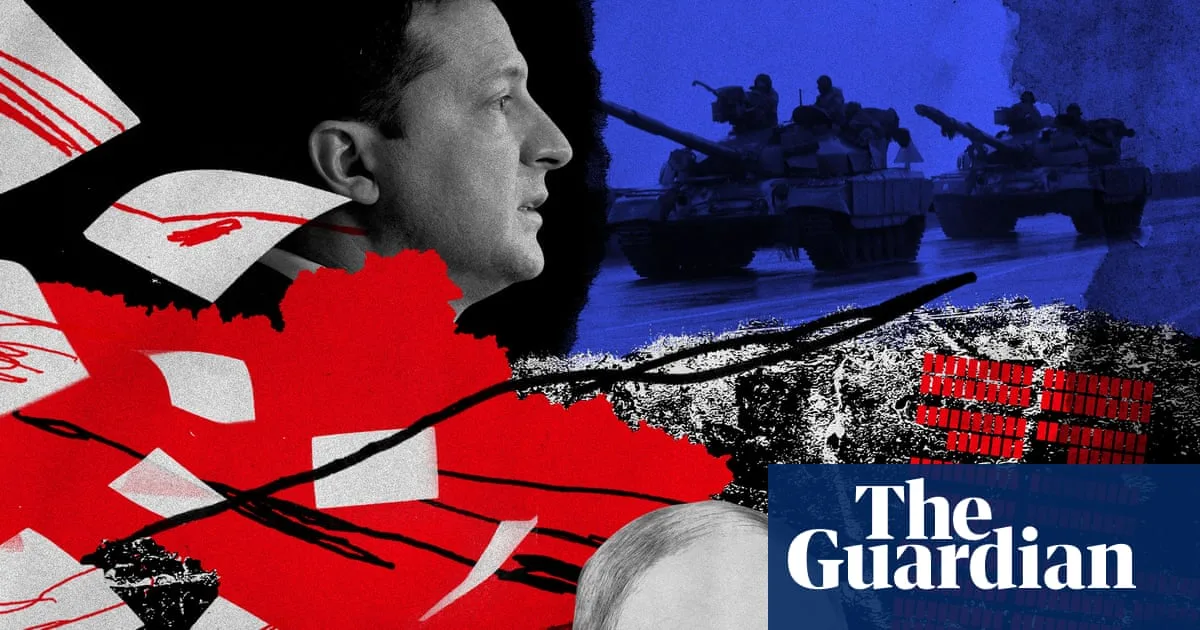
Newly revealed intelligence documents have exposed Vladimir Putin’s plans to triple the number of Russian troops stationed along Nato’s border, based on fabricated intelligence about a supposed American warship lurking in the Black Sea. The disclosure comes as the fourth anniversary of Russia’s full-scale invasion of Ukraine approaches, highlighting the Kremlin’s reliance on disinformation to justify aggressive military posture.
The documents, obtained by Western intelligence agencies, show that Putin personally informed his top officials that US Navy vessels were preparing missile strikes against his Black Sea residence. This claim was entirely false, according to multiple intelligence sources, yet it fuelled a decision to massively reinforce Russia’s western military districts bordering Nato member states. The troop increase would represent the largest Russian military buildup near Nato borders since the Cold War.
The intelligence failure echoed the run-up to the 2022 invasion of Ukraine, when CIA and MI6 correctly predicted Putin’s intentions but were dismissed by European allies and Ukrainian President Volodymyr Zelenskyy. European intelligence services, still scarred by the Iraq WMD debacle, refused to believe a full-scale war was possible. Zelenskyy himself accused Washington of scaremongering until days before the invasion began.
Current and former intelligence officials warn that the new deployment plans, if implemented, would fundamentally alter Europe’s security landscape. “Putin is creating a pretext for further escalation,” said a senior Western intelligence official. “He genuinely believes his own propaganda about Nato aggression, and that makes him more dangerous.” The plans are believed to include additional missile systems, mechanised infantry units, and air defence batteries along Russia’s borders with Estonia, Latvia, and Lithuania.
The situation underscores a recurring pattern: the Kremlin’s use of fabricated intelligence to justify military actions, and the difficulty of convincing sceptical allies of imminent threats. As the world enters a new period of geopolitical uncertainty, the lesson from 2022 remains painfully relevant—accurate intelligence means little if it is not believed.




