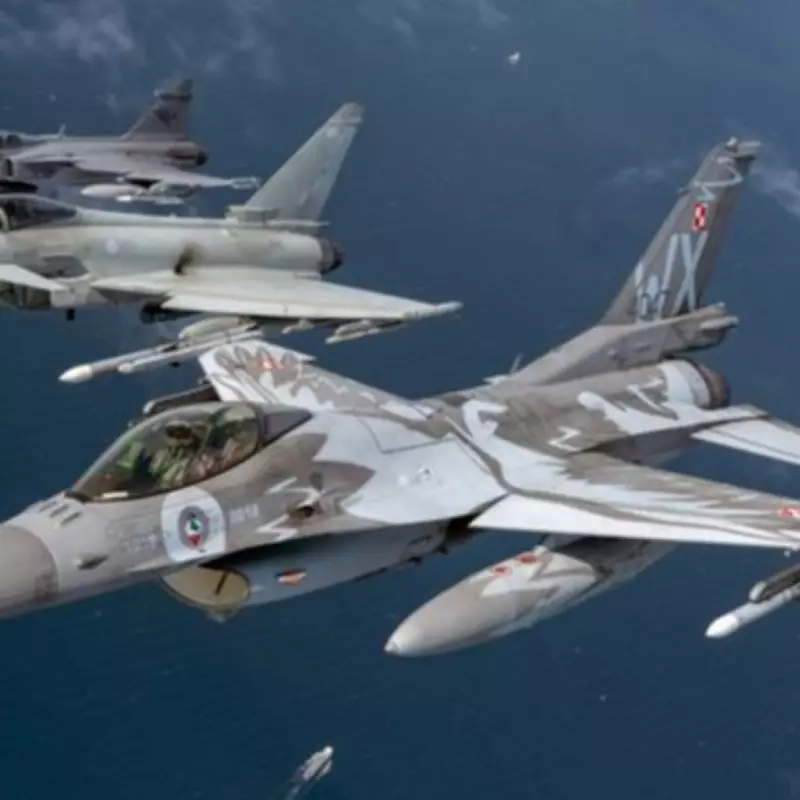
Polish F-16 fighter jets were urgently scrambled on Thursday, April 8, to intercept a Russian reconnaissance aircraft that was detected flying over the Baltic Sea without a filed flight plan, according to military reports. The incident, which occurred in European airspace, has heightened regional security concerns and prompted a swift response from NATO forces.
Immediate Response to Unidentified Aircraft
The Polish Air Force deployed its F-16 jets after the Russian plane was spotted conducting what appeared to be a reconnaissance mission. The aircraft, whose specific type was not disclosed in initial statements, was flying in a manner that violated standard aviation protocols by lacking a pre-submitted flight plan, raising alarms among defense officials.
Escalating Tensions in the Baltic Region
This interception underscores the ongoing geopolitical tensions in the Baltic Sea area, where NATO and Russian military activities have frequently led to similar scrambles. The Baltic Sea is a strategically sensitive zone, often monitored by both sides for security purposes, and such incidents highlight the fragile balance of power in the region.

Military analysts note that reconnaissance flights by Russian aircraft are not uncommon, but the absence of a flight plan is a significant deviation that can be interpreted as provocative. It forces NATO allies to remain vigilant and ready to respond at a moment's notice to potential threats.
Broader Implications for European Security
The event has sparked discussions about the robustness of European air defense systems and the need for continuous monitoring of airspace. Polish authorities have emphasized their commitment to safeguarding NATO's eastern flank, with this scramble serving as a testament to their operational readiness.
As this story develops, further details are expected to emerge regarding the nature of the Russian aircraft and the specifics of the interception. Defense experts are closely watching for any official statements from Russian or NATO representatives that might shed light on the motivations behind the flight.
In recent years, similar incidents have occurred, with NATO jets frequently intercepting Russian planes near European borders. These encounters are often seen as tests of response times and capabilities, contributing to an ongoing cycle of military posturing in the region.
The Polish Ministry of Defense has yet to release a comprehensive report on the incident, but initial accounts confirm that the interception was conducted professionally and without escalation. The F-16 jets, a cornerstone of Poland's air defense, successfully monitored the Russian aircraft until it exited the area of concern.