Pentagon's Controversial Plan to Target Iran's Water Plants Raises War Crime Concerns
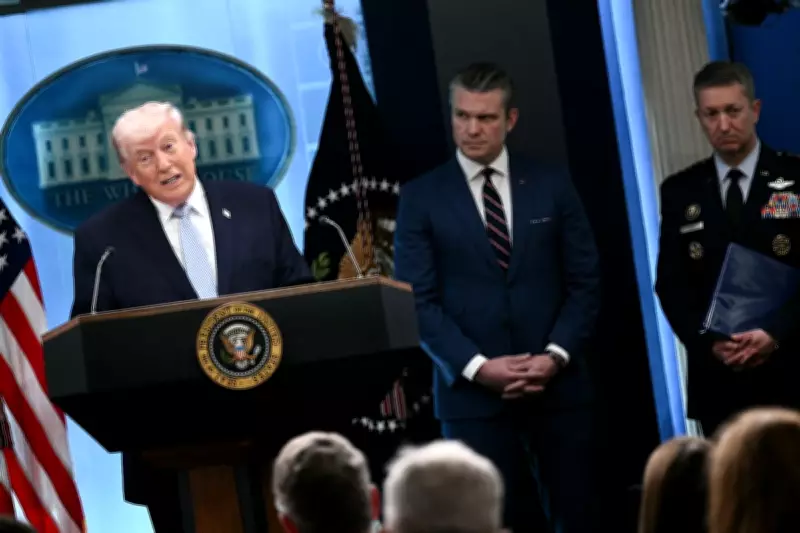
With just hours remaining until President Donald Trump's Tuesday night deadline, the Pentagon is actively compiling a list of Iranian energy sites to target, including infrastructure that serves both civilian and military purposes. According to a new report from Politico, this list notably features water desalination plants, sparking a fierce internal debate over the legality of such strikes under international law.
The Dual-Use Justification and Internal Tensions
The core tension within the Pentagon revolves around the classification of so-called "dual-use" assets. Some U.S. military officials argue that because facilities like water treatment plants provide essential resources to military forces—in this case, water for soldiers to drink—they constitute legitimate military targets. This justification is seen as a potential shield for the Trump administration against future war crimes allegations.
However, this stance is not universally accepted within the defense establishment. Other senior Pentagon officials have openly questioned the validity of this rationale, highlighting the profound ethical and legal dilemmas involved. The debate centers on where to draw the line between military and civilian targets, a line that becomes dangerously blurred when infrastructure critical to civilian survival is implicated.

Legal experts caution that even with a dual-use argument, such strikes risk breaching international humanitarian law, particularly the principles of distinction and proportionality enshrined in the Geneva Conventions.
Trump's Apocalyptic Ultimatum and Escalating Rhetoric
President Trump has employed increasingly apocalyptic language, threatening that "a whole civilization will die tonight" if Iranian leaders do not agree to a proposed peace deal by 8 p.m. Eastern Time on Tuesday. On Monday, he vowed to decimate "every bridge" and "every power plant" in Iran by midnight Tuesday, rhetoric that has alarmed experts and allies alike.
A White House official, Press Secretary Karoline Leavitt, stated that the Pentagon's role is to ensure the president has a full range of options, which he is not obligated to act upon. "It's the job of the Pentagon to make preparations in order to give the commander-in-chief maximum optionality," Leavitt told Politico. "It does not mean the President has made a decision."
Legal Experts and Human Rights Groups Sound the Alarm
A coalition of experts and human rights organizations has issued stark warnings against the proposed targeting strategy. Erika Guevara Rosas, Amnesty International's senior director of research, advocacy, policy and campaigns, emphasized that intentionally attacking civilian infrastructure like power plants is generally prohibited under international law. Even if such sites qualify as military objectives, an attack remains illegal if it causes disproportionate harm to civilians.
Retired Air Force Lt. Col. Rachel VanLandingham, former head of international law at U.S. Central Command, condemned Trump's rhetoric. "By saying we're just going to bomb everything, bomb every single bridge, every single power plant that serves civilians, that is threatening indiscriminate attack," she told PBS News. "And it is one of the most horrible war crimes there are."
The United Nations also weighed in, with a spokesperson for Secretary-General Antonio Guterres reiterating that destroying civilian infrastructure is forbidden, and attacks are prohibited if they risk "excessive incidental civilian harm."
A Dangerous Precedent and the Human Cost
The past few decades have witnessed a dangerous rise in the targeting of dual-use sites in conflicts from Syria and Ukraine to Gaza, sometimes leading to legal repercussions. The International Criminal Court, for instance, issued arrest warrants in 2024 for Russian officials accused of ordering attacks on Ukrainian power infrastructure.
The human cost of the ongoing conflict with Iran is already severe. Since hostilities erupted in late February, U.S. Central Command reports striking over 13,000 targets within Iran. Civilian sites have not been spared:

- A February 28th strike on a girls' school killed at least 175 people, mostly children, according to Iranian officials. A preliminary Pentagon investigation acknowledged U.S. responsibility.
- Earlier this week, Trump celebrated the destruction of a major bridge west of Tehran, an attack Iranian officials said killed eight and injured nearly 100.
President Trump has dismissed concerns about hitting civilian infrastructure, stating he is "not worried" and accusing Iran of the real war crime—pursuing nuclear weapons.
Domestic Opposition and the Path Forward
The conflict faces significant domestic opposition. A recent Reuters poll indicates that 60 percent of Americans disapprove of U.S. military strikes on Iran, with only 35 percent in approval. The war has killed thousands and destabilized broad regions of the Middle East.
As the clock ticks down to Trump's deadline, the world watches to see whether the Pentagon's controversial plans will be enacted, potentially crossing a legal and moral Rubicon with global consequences. The debate over dual-use targets underscores the fragile and often violated line between warfare and the protection of civilian life in the modern age.