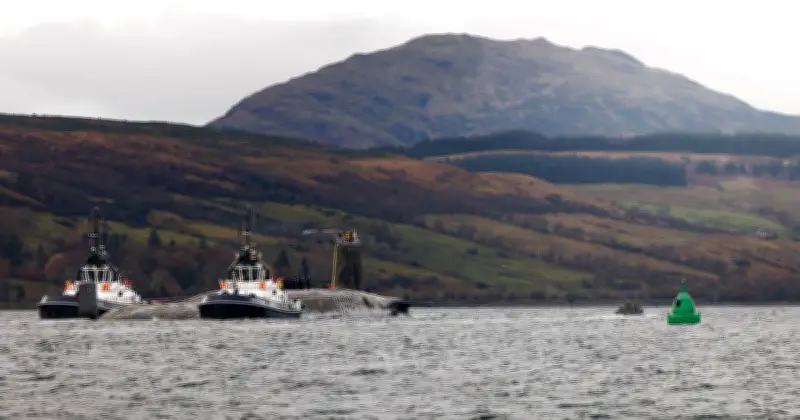
HMS Vengeance, a Trident-armed Royal Navy submarine, has returned to Faslane naval base after a record-breaking 217 days at sea, upholding Britain's continuous at sea nuclear deterrent. The Vanguard-class submarine began its patrol on April 12 and arrived home on Sunday, where family and friends gathered to welcome back its 140-strong crew.
The seven-month deployment surpasses the previous record of 205 days set by HMS Vanguard earlier this year. Deployments of the submarines have increased in recent years amid issues with maintenance.
Ministers welcome crew home
Defence Secretary Wes Streeting and Deputy Prime Minister Louise Haigh went on board HMS Vengeance to welcome the personnel home. Mr Streeting said his admiration is "second to none" for the crew on nuclear deterrent patrols, The Sun reports.
He said: "I am very proud of those who serve, providing what remains the cornerstone of Britain's defence. We can be extremely proud of their service, we can be extremely proud of the capability."
Life aboard the submarine
The ministers were also given an operational briefing and tour of the 492-foot, 15,000-tonne submarine. During the secretive deployment, HMS Vengeance's crew would have had no access to sunlight or fresh air for months, with most onboard working six hours on, six hours off and no days off.
The Express previously revealed Submarine Service plans to mirror psychology techniques taught to top-level athletes to help personnel with the huge missions. This newspaper also reported how captains and senior officers are using a garden to relax before setting sail.
Future of the fleet
At all times, at least one of the Navy's four Vanguard-class submarines are at sea as part of the UK's nuclear deterrent. The ageing boats, which entered service in the 1990s with an initial service life of 25 years, have been undergoing life extension programmes.
They are set to be replaced by the Dreadnought-class from the early 2030s. In the Defence Investment Plan, the Government committed more than £63 billion over the next four years in the Defence Nuclear Enterprise — a network of organisations and arrangements responsible for maintaining the UK's nuclear deterrent and submarine forces.
This includes a multi-decade, multi-billion-pound infrastructure programme to transform HM Naval Base Clyde. Other sites including HM Naval Base Devonport and HM Naval Base Portsmouth are also due to be modernised and receive investment through Project Royal Oak.