
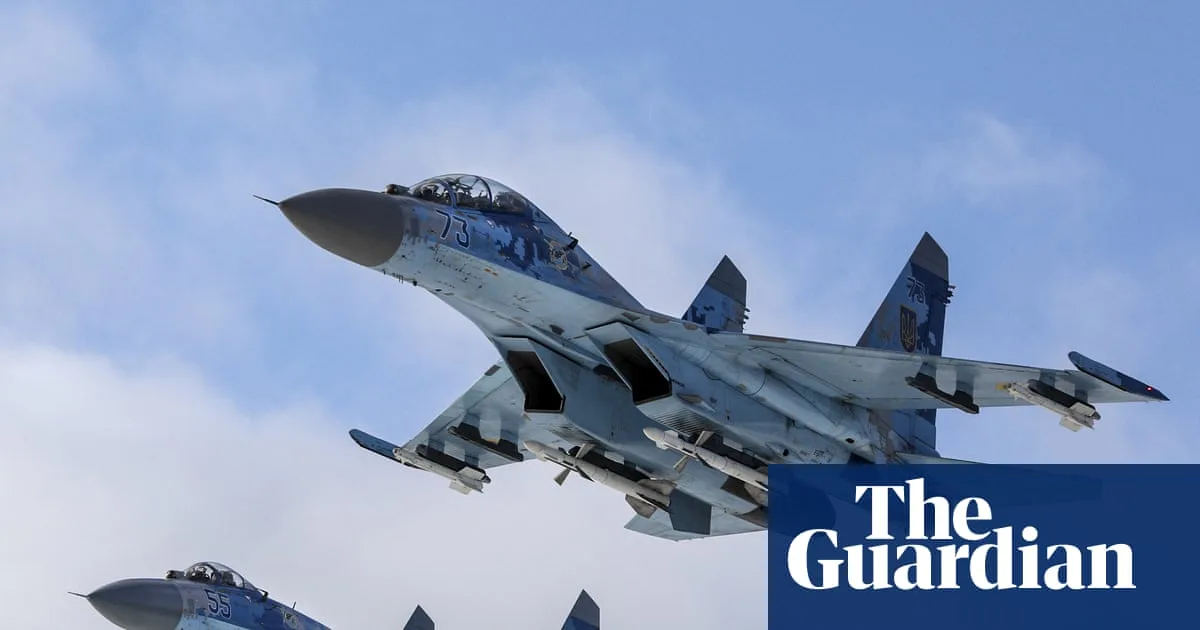
A Russian Su-27 jet flew within six metres of an unarmed RAF Rivet Joint spy plane over the Black Sea last month, in what the defence secretary has described as a “dangerous and unacceptable” incident. The aircraft, travelling at 500mph, conducted six passes close to the nose of the British plane, risking a collision that could have sparked a diplomatic crisis.
On a separate occasion in mid-April, a Russian Su-35 jet approached the Rivet Joint so closely that it triggered emergency systems, disabling the autopilot. The Rivet Joint, which carries a crew of up to 30, was on a routine Nato surveillance mission in international airspace.
“This incident is another example of dangerous and unacceptable behaviour by Russian pilots, towards an unarmed aircraft operating in international airspace,” said John Healey, the defence secretary. “These actions create a serious risk of accidents and potential escalation.” The Ministry of Defence described it as the most dangerous Russian action against a British Rivet Joint since a missile was fired over the Black Sea in 2022.
The incidents come amid heightened Russian military activity in Europe. Last month, two Russian frigates escorted oil tankers and a suspected arms shipment through the North Sea and Dover Strait, requiring a month-long Royal Navy surveillance patrol. Healey also revealed that three Russian submarines had loitered near critical undersea infrastructure in the North Atlantic for a month before departing.
Healey paid tribute to the RAF crew, saying: “I would like to pay tribute to the outstanding professionalism and bravery of the RAF crew who continued with their mission despite these dangerous actions. Let me be very clear: This incident will not deter the UK’s commitment to defend Nato, our allies and our interests from Russian aggression.”




