NATO Chief Hails UK's Hormuz Leadership as Sign of European Defence Shift
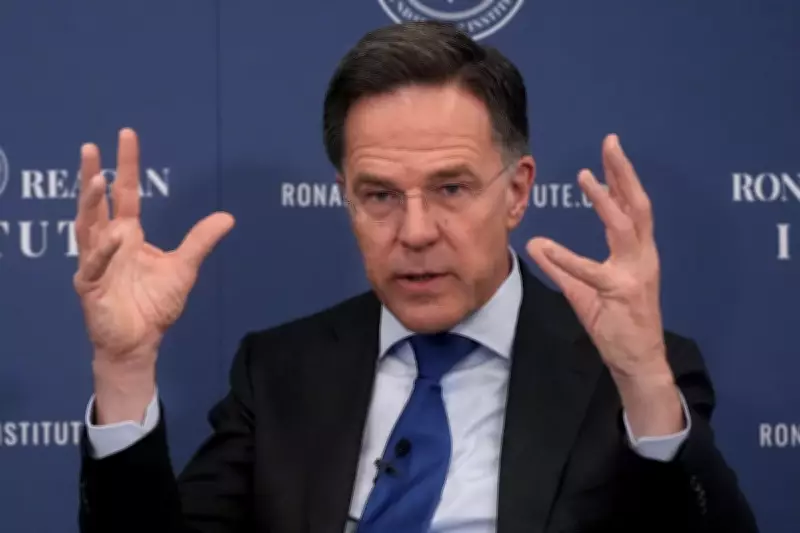
NATO Secretary-General Mark Rutte has declared that Britain's leadership in securing the vital Strait of Hormuz shipping lane represents a fundamental change in the "mindset" of alliance members, marking a decisive move away from what he termed an "unhealthy" dependence on the United States. Speaking during a significant address in Washington, Rutte emphasised that Europe is now assuming "a greater and fairer share of the task" of providing for its own conventional defence.
From Codependence to True Partnership
Rutte's comments followed what he described as a "frank and open discussion" with US President Donald Trump, who has been vocally critical of NATO's response to the recent Iran conflict. The Secretary-General argued that the post-Cold War era fostered an "unhealthy co-dependence" among NATO members, with a prevailing assumption that America would handle all major threats. However, he stated that President Trump had effectively reminded Europe "that values must be backed by hard power."
"This is a move from unhealthy co-dependence to a transatlantic alliance grounded in true partnership," Rutte asserted, highlighting a pivotal transformation in Atlantic relations.

UK at the Helm of Hormuz Security
The concrete evidence of this shift, according to Rutte, is the United Kingdom's leading role in chairing a meeting of military planners from a coalition of over thirty nations. This group is examining long-term measures to secure the Strait of Hormuz, a critical global chokepoint that was virtually closed by Tehran during the conflict, causing severe disruption to international trade.
"The United Kingdom is leading a coalition of countries that are aligning the military, the political and economic tools that will be required to ensure free passage through the Strait of Hormuz," Rutte said. "This is evidence of a mindset shift. It was the British Prime Minister who took the leadership role here."
Following the US-Iran ceasefire, a joint statement by world leaders, including UK Prime Minister Sir Keir Starmer, pledged to "contribute to ensuring freedom of navigation in the Strait of Hormuz." While these European-led efforts were reportedly dismissed by the White House, Rutte presented them as a demonstration of allies' willingness to share the burden with the United States.
Strained Relations and Defence Commitments
The geopolitical context remains tense. President Trump has repeatedly expressed displeasure with NATO, posting on his Truth Social platform: "NATO WASN'T THERE WHEN WE NEEDED THEM, AND THEY WON'T BE THERE IF WE NEED THEM AGAIN." He has previously labelled the alliance a "paper tiger" and raised the possibility of a US withdrawal, criticising the defence contributions of other member states.
Relations between Sir Keir Starmer and President Trump have been under severe strain due to the UK's refusal to be drawn into the offensive against Iran and its decision to restrict the use of British bases by American forces. Despite this friction, Rutte insisted that European allies had provided "a massive amount of support" to the US during the conflict, delivering on their commitments through basing, logistics, and other critical measures.
"Nearly without exception, allies are doing everything the United States is asking. They have heard and are responding to president Trump's request," Rutte stated, acknowledging that while some responses were "a bit slow," allies were also "a bit surprised" as President Trump opted not to inform them ahead of the initial strikes to maintain operational secrecy.
A New Era of Burden-Sharing
Rutte pointed to broader European leadership within NATO, noting that allies now play leading roles in securing the alliance's eastern flank, the Baltic Sea, and the Arctic, rapidly deploying personnel, aircraft, and naval vessels. He credited President Trump with driving allies at last year's NATO summit to commit to investing 5% of GDP annually on defence and security by 2035.

This commitment, Rutte argued, is crucial for the future. "This will help to ensure that the NATO of the future is not an alliance in which allies are unhealthily dependent on the United States, and in which United States knows that it has capable partners who are ready, willing and able to defend our freedom and security," he explained.
Concluding his assessment, the NATO chief expressed optimism: "Thanks to the mindset shift that is happening, I see a true partnership on the transatlantic horizon. Europe is assuming a greater and fairer share of the task of providing for its conventional defence, and from that, there will be no going back, and nor should there be." This statement underscores a definitive recalibration of responsibilities within the world's most powerful military alliance.