
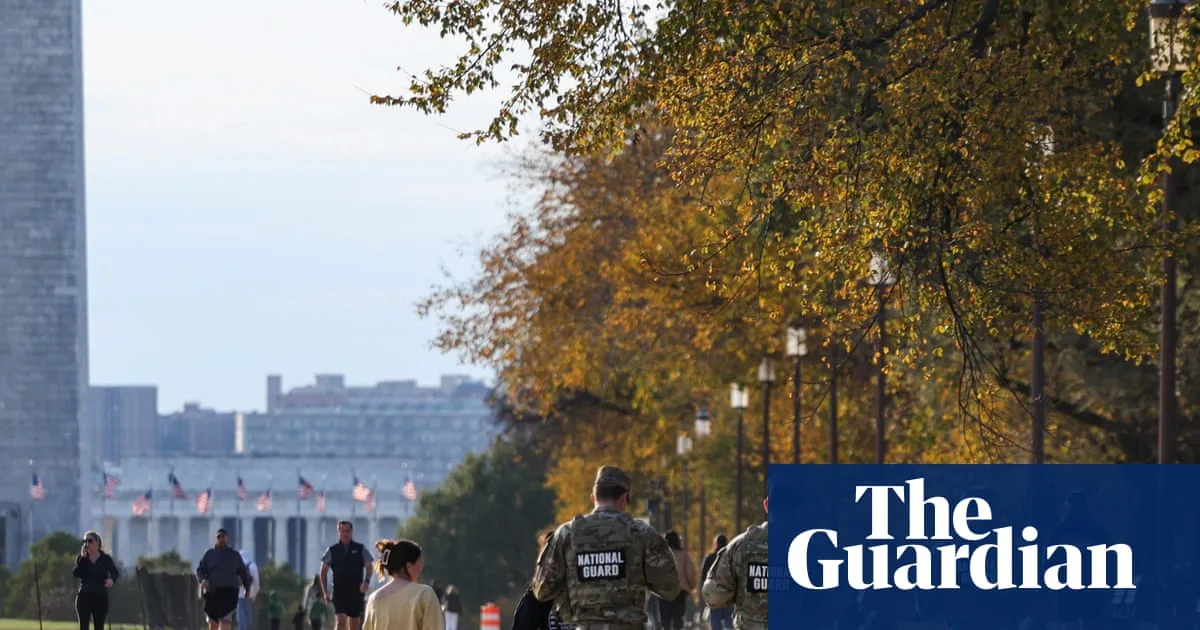
A Pentagon memo signed on 8 October by Major General Ronald Burkett orders the national guards of all 50 US states, the District of Columbia and US territories to establish 'quick reaction forces' trained in riot control, including the use of batons, body shields, Tasers and pepper spray. The directive, reviewed by the Guardian, sets a requirement for most states to train 500 troops, totalling 23,500 across the nation.
Burkett cited President Donald Trump's August executive order that deployed the guard to fight crime in Washington DC, which also mandated the creation of a standing quick reaction force for 'quelling civil disturbances'. Janessa Goldbeck, a former US Marine Corps captain, described the move as 'an attempt by the president to normalise a national, militarised police force', warning it could be used to suppress turnout or disrupt elections.
The Pentagon did not respond to requests for comment, but White House spokesperson Abigail Jackson said the president has lawfully deployed the guard to cities where local leaders refused to quell violent riots, adding that the administration is 'making America safe again'. The memo states that military trainers will be deployed to every state and territory, with the forces expected to be operational by 1 January 2026.
Each state will receive 100 sets of crowd control equipment. Training includes forming riot control formations, employing batons, and supervising crowd control operations, alongside de-escalation techniques. Another Pentagon document dated 24 September mandates a specialised military police battalion within the District of Columbia National Guard, with a 50-person full-time element ready within 90 days.
Christopher Purdy, a national guard veteran of Iraq, noted that while such forces are not unprecedented, they typically follow serious emergencies, such as the 50,000 troops deployed after Hurricane Katrina in 2005. He drew comparisons to earlier eras when guardsmen were used to quell protests, including the 1970 Kent State shooting.




