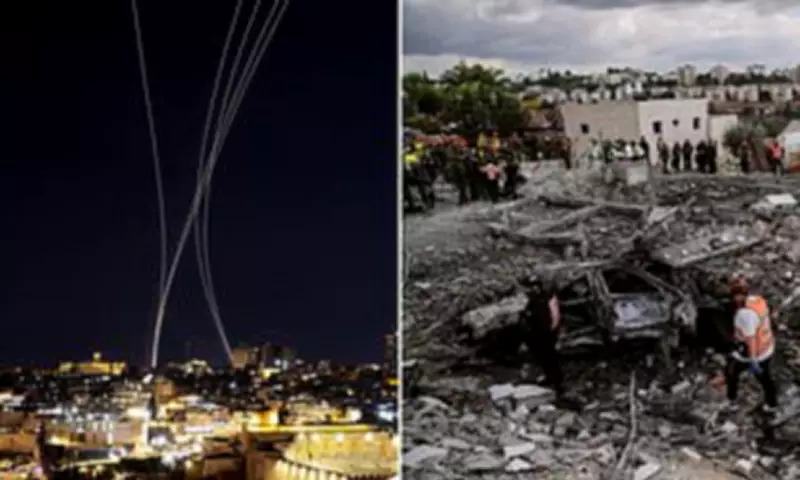
Israel is reportedly running critically low on ballistic missile interceptors amid ongoing bombardments from Iran, according to US officials. The country entered the current conflict with already depleted interceptor stocks following last June's 12 Days War with Iran, placing its long-range defence system under severe strain.
Escalating Threats and Defence Challenges
CNN has reported that Iran is set to add cluster missiles to its armoury, potentially exacerbating Israel's interceptor shortage. While interceptors are among the most reliable weapons against long-range strikes, alternative defences like fighter jets exist, though they may be less effective. First responders were seen near a crater and damaged cars in Holon, Israel, after a recent strike, highlighting the immediate threats faced.
US Knowledge and Stockpile Concerns
US officials have known about Israel's low interceptor capacity for months, with one American official telling Semafor: 'It's something we expected and anticipated.' They emphasised that US stockpiles are not running low, but concerns persist that a prolonged conflict with Iran could drain these reserves. It remains unclear whether the US will sell or share interceptors with Israel, a move that could strain domestic supplies, though military aid has been provided in the past.

Israel is 'coming up with solutions' for their missile shortage, according to the US official. The Iron Dome, designed for short-range fire, is pictured as a key component of Israel's defence, but it is not suited for ballistic missile threats.
US Interceptor Production and Claims
Former President Donald Trump claimed US stockpiles of interceptors are 'virtually unlimited,' but analysts, as reported by the New York Times, have questioned this, noting supplies are lower than desired. During the 12 Days War in June 2025, the US fired over 150 THAAD interceptors—about a quarter of its inventory at the time, as found by the Centre for Strategic and International Studies. In the first five days of the current Iran War, the US reportedly fired $2.4 billion worth of Patriot interceptors.
Increased Production and Military Readiness
In January, the Pentagon began substantially increasing production of THAAD missiles, as announced by Lockheed Martin. A US official stated they have ample supplies of THAAD missiles, fighter jets, and mid-level interceptors. Chief Pentagon spokesman Sean Parnell affirmed the US has 'everything it needs to execute any mission at the time and place of' Trump's choosing.
White House press secretary Karoline Leavitt assured that US stockpiles were 'more than enough' to defeat Iran 'and beyond,' calling on defence contractors to accelerate production of US-made weapons. She claimed Iranian drone attacks are down 95% and ballistic missile attacks down 90%, praising US-Israeli combat efforts.
Recent Developments and Regional Tensions
Trump recently sold 12,000 'BLU-110A/B general purpose, 1,000-pound bomb bodies' to Israel, bypassing Congress by citing an 'emergency' in the Middle East. Nine people were killed in Beit Shemesh, near western Jerusalem, by Iranian strikes on March 1 at the war's start. Trump has stated the war should end 'soon' but added both the US and Israel are prepared to fight 'as long as necessary' to achieve their aims.
Meanwhile, Iran told CNN last week that diplomacy is not an option and the country is preparing for a prolonged conflict. Defence Secretary Pete Hegseth claimed Iran's 'entire ballistic missile production capacity' has been 'functionally defeated.' However, on Friday, several sites in Israel were struck by Iranian cluster bombs, though no casualties were reported.
Trump struck military bases on Kharg Island this week but left key oil infrastructure intact. Israel is planning to expand its ground invasion of Lebanon, indicating ongoing regional instability.