
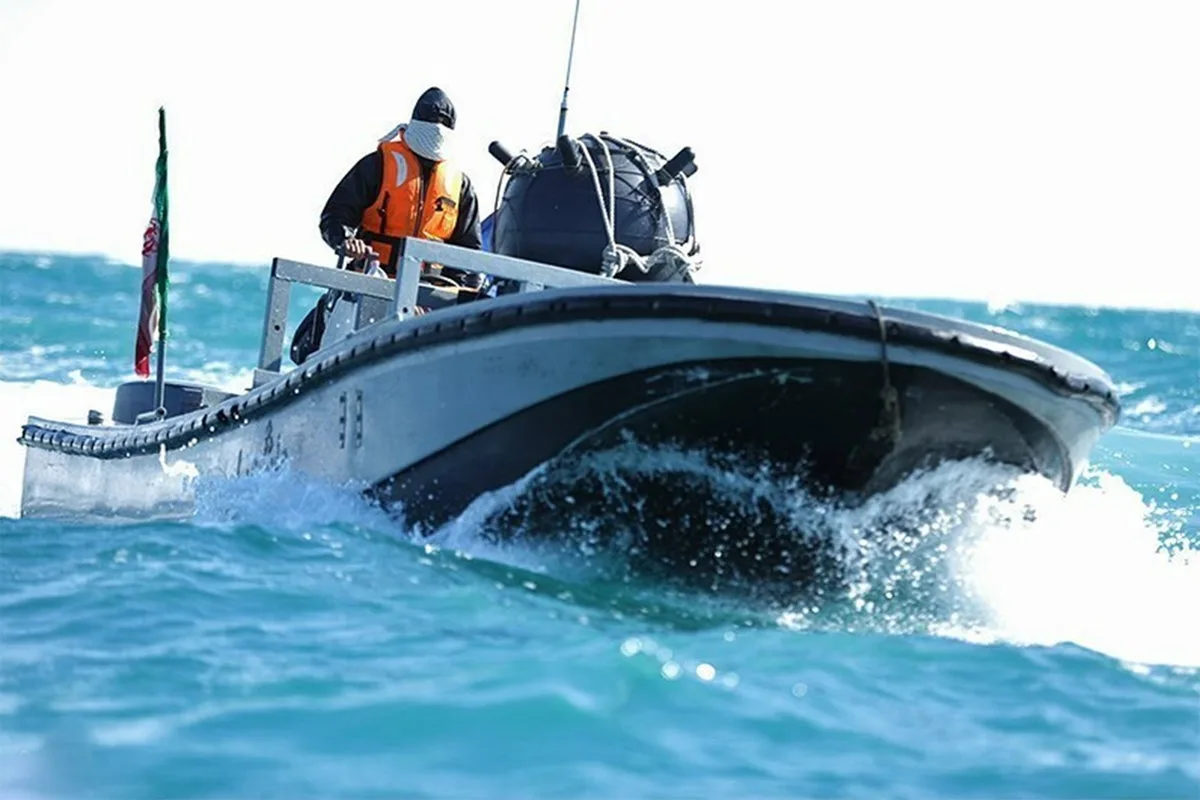
The United States launched renewed attacks against Iran on Monday, targeting missile launch sites and boats it claimed were trying to lay mines in the Strait of Hormuz. US Central Command spokesperson Captain Tim Hawkins said the military “eliminated” two Islamic Revolutionary Guards Corps boats seen setting mines in the strait, and also took out a surface-to-air missile site in Bandar Abbas. The military described the strikes as defensive actions to “protect our troops from threats posed by Iranian forces”, while US Secretary of State Marco Rubio said the Strait must remain open “one way or the other”.
Since the conflict erupted on 28 February, Iran has deployed small surface vessels to lay mines across parts of the Strait of Hormuz in an attempt to control traffic through the vital waterway, which normally handles around a fifth of global oil and liquefied natural gas trade. US officials told the New York Times last month that Iran cannot locate all of its mines and lacks the capability to remove them, posing a lingering threat to some 700 ships still stranded in the Gulf after three months.
Hundreds of British sailors are currently stationed off the coast of Gibraltar aboard the RFA Lyme Bay, awaiting deployment for a mine-clearing mission to the Strait of Hormuz that remains uncertain. Commander Gemma Britton, head of the Navy’s Mine and Threat Exploitation Group, told the Associated Press that Iran could still have a “huge” variety of mines scattered across the strait. These mines could be rocket-propelled, cabled, or sit on the seabed and be triggered by sound, movement, or light. She said the priority would be to clear a transit lane for trapped ships to leave, followed by a lane for incoming vessels, but warned that clearing the entire strait could take months or years.
Iran possesses a stockpile of at least 2,000 Soviet, Western, and Iranian-made drifting and moored contact mines, according to experts at the Strauss Center. It is also believed to maintain a substantial collection of newer, more advanced bottom and rising mines from Russia, China, and North Korea. Mines are inexpensive compared to other weapons, with a simple contact mine costing as little as $1,500 (£1,123). Iran primarily deploys mines using frogmen on small boats that resemble ordinary fishing vessels, forming an informal maritime militia that is virtually impossible to identify and eliminate, according to the Wall Street Journal.
Iranian Maham mines form a significant part of the country’s arsenal, including sea mines that can be released in water and triggered in various ways, as well as limpets that attach to parts of ships. The advanced Maham-2 mine can be deployed on the seabed at depths of 10-50 metres to destroy submarines and surface vessels, carrying a 350kg explosive charge with magnetic and acoustic sensors. The Sadaf-02 sea mine sits just below the waterline and detonates on contact with a passing ship, containing around 114kg of explosives. The Maham 4 limpet mine attaches to ship platforms via a frogman using a nail gun or magnet, operating at depths of 1-40 metres with a timer adjustable between 10 minutes and six hours for a large explosion.
The primary aim of sea mines is to damage ships and submarines by generating underwater explosions that breach hulls and sink vessels. Iran has a vast array of sea mines capable of causing different levels of damage depending on deployment and explosive content. Seabed mines are detonated when the pressure differential between an expanding gas bubble and water creates a void, with the gas bubble shooting upward and the initial explosion generating damaging shock waves. Limpets are triggered by contact or by ship noise and magnetic signals. Autonomous systems using sonar can scan the seabed and water to locate mines in about half the time it takes for a crewed vessel to map potential dangers.




