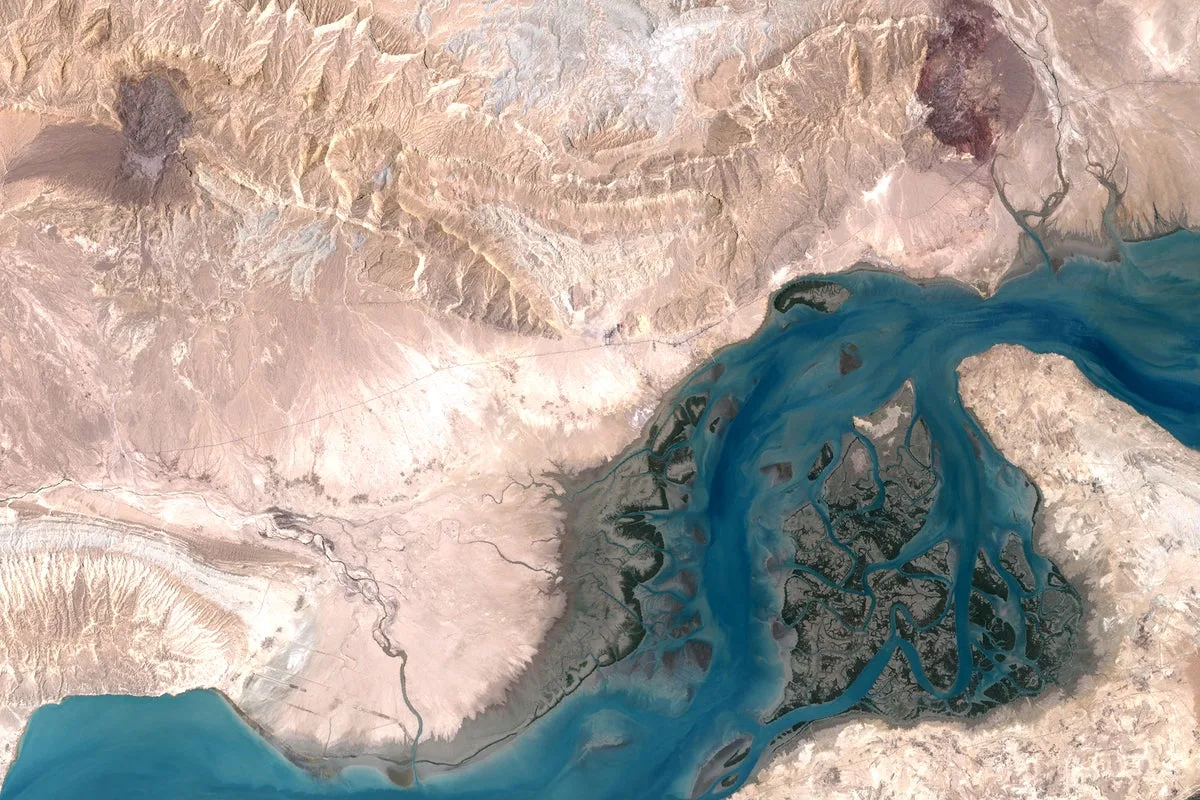
Iran's Strategic Island Fortress: Qeshm's Underground Missile Threat
Qeshm Island, a 558-square-mile Iranian territory in the Strait of Hormuz, has emerged as a critical military stronghold, housing an underground "missile city" that poses a direct threat to US troops and global shipping lanes. As the United States contemplates an invasion to break Iran's control over the vital waterway, Qeshm and Kharg Island are identified as primary targets in a potential ground offensive.
Underground Missile Capabilities and Defensive Fortifications
Satellite imagery and military analysis reveal that Qeshm Island has been extensively fortified with anti-ship missiles positioned in underground launch sites. According to defence analyst Can Kasapoğlu, Iran has installed a significant portion of its anti-ship missile arsenal in these concealed locations, making it a formidable "primary denial hub" for the Islamic Revolutionary Guard Corps (IRGC). This infrastructure is designed to shut down traffic approaching the Strait of Hormuz, a chokepoint for global oil shipments.
Retired Lebanese Brigadier-General Hassan Jouni, a military expert, confirmed to Al Jazeera that the island possesses the capability to strike from this underground "missile city," though exact operational details remain classified. In addition to missiles, the island is equipped with drones, fast-attack boats, and coastal defences, including mined beaches and booby traps, as noted by Gulf security expert Rashid Al-Mohanadi.
Strategic Importance and Military Challenges
Qeshm's strategic value lies in its ability to project Iranian power across the Gulf, but it also presents immense challenges for any invading force. Kasapoğlu emphasized that taking Qeshm would likely be a harder fight compared to Kharg Island, due to its size, rugged terrain, and proximity to the Iranian mainland, which facilitates continuous reinforcement efforts. He argued that even if the US succeeded in capturing the island, the high cost in casualties and resources would yield relatively little strategic return.
Kharg Island, handling approximately 90 percent of Iran's oil exports, is another key target, as seizing it would disrupt Iran's energy trade and exert economic pressure. However, it too is heavily fortified with surface-to-air missiles and maritime mines, according to CNN reports citing US intelligence sources.
Geopolitical Tensions and Diplomatic Maneuvers
The US, under President Donald Trump, has intensified military presence in the region, deploying thousands of troops while claiming progress in talks with Tehran—a claim Iran denies. Since the conflict began in February, the US reports destroying over 10,000 targets and more than 100 Iranian ships, yet Iran maintains its grip on the Strait of Hormuz, causing disruptions in global markets and weakening US leverage.
In a recent development, The Wall Street Journal reported that the United Arab Emirates (UAE) is preparing to assist the US and allies in forcibly opening the Strait, suggesting the occupation of strategic islands like Qeshm. Meanwhile, Trump's shifting statements have added to the uncertainty; he hinted that US troops could withdraw within two weeks without a deal with Iran, contradicting earlier assertions of ongoing negotiations.
Historical Context and Modern Transformation
In peacetime, Qeshm is known as a tourist destination, featuring salt caves and historical fortifications from European colonial eras. The Royal Indian Navy operated from the island until 1863, and the Royal Navy maintained a coaling station there until 1935, when it was abandoned at the Shah's request. Since then, Iran has transformed Qeshm into a military bastion, repurposing its natural and historical assets for defence purposes.
As tensions escalate, Qeshm stands as a symbol of Iran's defensive preparedness, with its underground missile systems and coastal traps ready to counter any invasion attempt. The island's dual identity—as both a scenic getaway and a fortified military base—highlights the complex geopolitical dynamics at play in the Strait of Hormuz, where any military action could have far-reaching consequences for global security and energy supplies.






