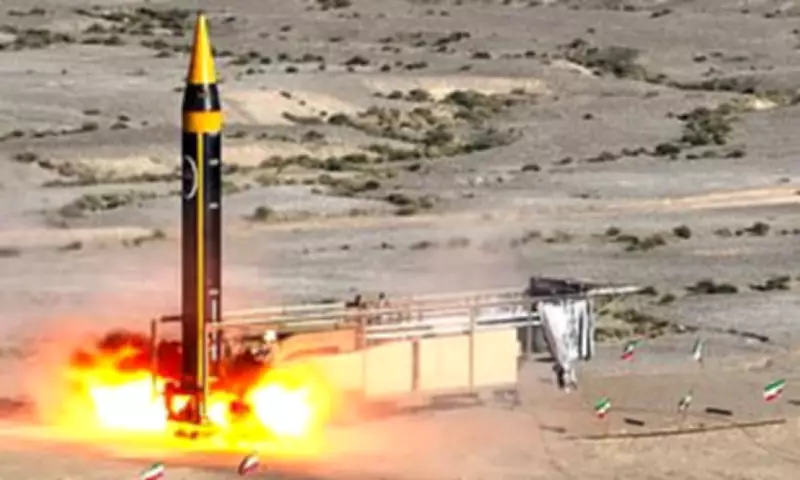
Whether it was a dramatic isolated incident or a harbinger of future dangers, Iran's recent launch of two long-range missiles across over 2,000 miles towards Diego Garcia, Britain's territory in the Indian Ocean, should have served as a stark wake-up call for the government. Instead, during his media appearances on breakfast TV and radio yesterday, housing minister Steve Reed—who holds no defence portfolio—offered bland and misleading reassurances that downplay the grave threat.
Misleading Reassurances from Ministers
Steve Reed asserted that Iran does not possess missiles capable of reaching London, stating there 'is no assessment to substantiate' such claims. He also declared: 'We have systems and defences in place that keep the United Kingdom safe.' However, evidence suggests he is profoundly mistaken on both accounts, raising serious concerns about the government's transparency and preparedness.
Enhanced Missile Capabilities
Until recently, Iran's Khorramshahr missiles were believed to have a range of approximately 1,240 miles. New intelligence indicates they have been adapted to travel up to 2,400 miles, placing not only Diego Garcia but also London within their potential strike zone. These missiles, based on a North Korean design, are formidable due to their rapid fuel-loading capability of just 12 minutes, making them difficult to detect and destroy on the ground.

Moreover, Iran possesses basic rocket systems originally designed for launching communications satellites, which could be repurposed to deliver warheads, and may already have been adapted for such use. The Diego Garcia attack—where one missile was intercepted and another fell short—demonstrates a significant advancement in Iranian ballistic technology, including missiles with multiple manoeuvrable warheads.
Government Complacency and Vulnerability
Despite these developments, the government appears complacent, dismissing the enhanced threat. Recent attacks on Iranian weapons stockpiles and the assassination of missile scientists have reduced but not eliminated the danger. Historically, during World War II, Hitler's V1 and V2 missiles were produced in large numbers despite heavy bombardment, showing that technological threats persist even under pressure.
Britain's vulnerability is equally troubling. The country lacks ground-based anti-missile defences, and the limited ship-based systems are deployed far from its shores. While the government discusses 'contingency plans,' it may be too late, as the threat has already been activated. If Iran decides to test the morale of the nation it labels the 'Little Satan,' southern England could be left exposed with little recourse.
Call for Honesty and Leadership
The British public deserves honesty about the situation. In contrast to Churchill's government, which delivered hard truths during the 1940s, Prime Minister Keir Starmer's administration has been vague and evasive, using terms like 'defensive bombing' without clear explanation. This mealy-mouthed approach fuels anxiety and indecision, undermining public trust.
Looking ahead, even potential geopolitical shifts, such as actions by Donald Trump, offer no immediate relief. The genie of missile and drone warfare from Iran and its allies is out of the bottle, with additional threats looming from powers like China and Russia. This is a critical moment that demands vigilance, not sleepiness at the wheel, as Britain faces a complex and evolving security landscape.