Former US Military Expert Warns of Iranian Drone Threat to Homeland
A former US Army intelligence and special operations soldier has issued a stark warning that Iranian attack drones could potentially penetrate America's air defenses and strike targets on United States soil. Brett Velicovich, who spent years using drones to hunt ISIS leaders before founding drone company PowerUs, stated that this emerging threat represents a new type of warfare that the US is still struggling to counter effectively.
Asymmetric Warfare and Radar Vulnerabilities
Velicovich explained that these new asymmetric threats involve low-cost, small drones that can be deployed in massive waves, presenting a different signature than traditional intercontinental ballistic missiles. Because they fly at slower speeds and lower altitudes, such drones can appear unusual or even "funny" to radar systems specifically designed to detect high-speed weapons.
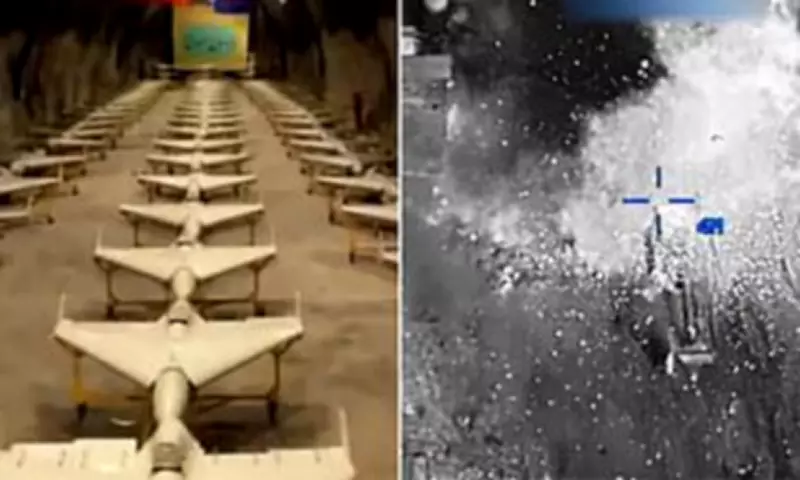
Iran has spent years developing an extensive arsenal of so-called "kamikaze drones," designed to crash into targets with explosive payloads. The Shahed-136 model, in particular, represents an inexpensive, long-range weapon engineered to fly directly into targets and detonate, often launched in large numbers to overwhelm air defense systems.

Technical Specifications and Cost Advantages
These delta-wing drones measure over 11 feet in length, travel at approximately 115 miles per hour, and can cover distances exceeding 1,500 miles while carrying explosive warheads weighing between 44 and 88 pounds. Constructed largely from commercially available components, each drone costs an estimated $20,000 to $50,000, making them significantly cheaper than the missiles typically used to intercept them.
"They got a head start on us in terms of producing and manufacturing low-cost long-range attack drones," Velicovich noted. "They've been preparing for this for a while." Iran has reportedly displayed an extensive underground network of tunnels containing numerous drones and rockets, highlighting their substantial investment in this capability.
Leaked Alert and Official Responses
The warning emerges amid growing concerns about whether the United States is adequately prepared for the rapid evolution of drone warfare. A leaked federal alert suggesting Iran could potentially attempt a drone strike on California has raised serious questions about American defenses against this evolving threat.
The FBI memorandum, distributed to law enforcement agencies across California, indicated that Tehran had previously considered launching unmanned aerial vehicles from offshore vessels if the US conducted military strikes against Iran. "I think we should be taking it seriously," Velicovich emphasized. "The FBI doesn't put stuff out like that unless somebody had real credible reporting."
He described the memo as a signal that US agencies are increasingly concerned about vulnerabilities in national defense systems. "This FBI announcement is a wake-up call to shake the tree a bit and help people understand that we do have some gaps in our defenses, and we need to fix those gaps before an American gets killed," he stated.
However, White House Press Secretary Karoline Leavitt has since dismissed the alert, asserting on Thursday that "No such threat from Iran to our homeland exists, and it never did." Despite this official dismissal, security experts have noted that the alert exposes significant weaknesses in America's ability to defend against inexpensive, long-range drones capable of targeting civilian infrastructure.
Potential Targets and Attack Methods
Velicovich suggested that if Iran sought to strike within the United States, California would present an attractive target due to its substantial population centers, thriving tourism industry, and economic significance. "I think California's sort of this beacon of America and a beacon of freedom for the rest of the world," he remarked. "And so they want to strike that down."

The state hosts some of the world's busiest ports, major tourist destinations, and large international events that attract millions of visitors annually. Civilian infrastructure such as hotels, ports, or oil refineries could be targeted to disrupt economic activity and generate widespread panic.
"If you're going to strike something using sort of the evil that is the Iranian regime's thought process in terms of where to hurt civilians, California seems like an easy target to do that," Velicovich warned.
The FBI alert reportedly suggested drones could potentially be launched from vessels positioned offshore. Velicovich noted that such an attack might not involve conspicuous military ships but could instead utilize ordinary vessels that wouldn't attract attention.
"What if they were able, hypothetically, to take a yacht, or a fishing boat, or any type of boat that already exists that you wouldn't even think twice about looking at off of Venice Beach?" he questioned. "Underneath it are a bunch of drones that have been put on them to eventually strike."
Lessons from Ukraine and Future Concerns
These tactics represent a form of asymmetric warfare where attackers exploit unexpected methods rather than conventional military deployments. Velicovich pointed to 2024 drone operations in Ukraine, where concealed launch platforms disguised as normal vehicles were employed to strike deep within enemy territory.
In Ukraine, hundreds of drones have sometimes been launched in a single night to overwhelm air defenses in operations referred to as "Operation Spiderweb." These drones often fly slowly and can remain airborne for extended periods, creating uncertainty about their intended targets and timing.
The growing threat is particularly concerning as the United States prepares to host major global events including the 2026 FIFA World Cup and the 2028 Summer Olympics in Los Angeles. Velicovich cautioned that government agencies must accelerate efforts to strengthen defenses against potential drone attacks.
"We need to move at the speed of war, not at the speed of bureaucracy," he urged. "For a long time it's been the opposite."
While an immediate threat may currently be unlikely, especially as Iran's drone capabilities face degradation from ongoing military operations, the warning underscores a vulnerability that security experts have highlighted for years. The situation demands urgent attention to address defensive gaps before adversaries can exploit them effectively.