Iran Targets Diego Garcia with Missiles and Issues Stark Warning to UK
Iran has launched a provocative missile attack against the strategically vital joint US-UK military base on Diego Garcia in the Indian Ocean, while issuing a direct warning that British lives are now "in danger". This aggressive move comes in response to Prime Minister Sir Keir Starmer's decision to grant the United States permission to utilise British bases for defensive operations against Iranian missile sites.
Missile Attack Details and Failed Strikes
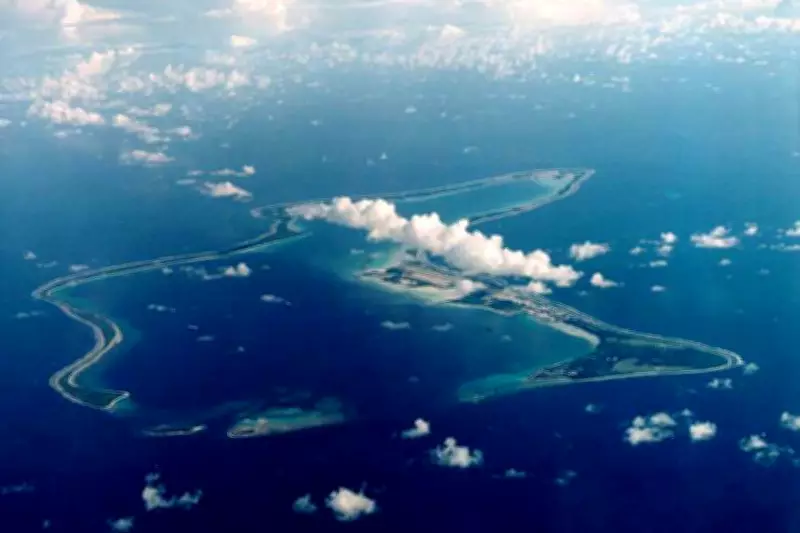
According to reports from the Wall Street Journal and Iran's semi-official Mehr news agency, Tehran fired two intermediate-range ballistic missiles towards the remote Diego Garcia atoll. The base, situated approximately 3,800 kilometres (2,360 miles) from Iran, forms part of the Chagos Islands. Neither missile successfully struck its target. One was reportedly intercepted and shot down by a US warship, while the other malfunctioned and failed in flight, as confirmed by multiple officials cited in the reports.
UK Government Response and Condemnation
The Ministry of Defence swiftly condemned Iran's actions, labelling the attacks as "reckless" and a direct threat to British interests and allies. A spokesperson emphasised that RAF jets and other UK military assets remain actively engaged in defending personnel across the region. The government has authorised the US to use British bases for "specific and limited defensive operations" aimed at degrading missile capabilities that threaten shipping in the critical Strait of Hormuz.

Downing Street clarified on Friday that this permission extends to US defensive operations designed to neutralise the missile sites and capabilities being used to attack commercial vessels. Diego Garcia, home to a major airbase capable of accommodating long-range US bombers, is of immense strategic value and has served as a key launchpad for Middle Eastern operations for decades.
Iran's Angry Retort and Escalating Tensions
Iranian Foreign Minister Abbas Araghchi reacted with fury to the UK's decision, asserting Iran's right to self-defence. In a post on social media platform X, he claimed that the "vast majority of the British People do not want any part in the Israel-US war of choice on Iran." He accused Prime Minister Starmer of ignoring public sentiment and putting British lives at risk by permitting UK bases to be used for what Tehran perceives as aggression.
This incident marks a significant escalation in Iran's recent campaign of attacks against Gulf neighbours and its continued stranglehold on shipping through the Strait of Hormuz. The situation has drawn sharp criticism from US President Donald Trump, who stated the UK "should have acted a lot faster" in granting permissions and has previously labelled NATO allies as "cowards" for not providing more support.
Broader Regional Fallout and Political Reactions
The conflict's ripple effects are being felt widely. RAF Akrotiri in Cyprus was reportedly struck by an Iranian drone following the UK's authorisation for US defensive actions. Prime Minister Starmer is scheduled to convene a Cobra meeting next week to address plans for assisting households with the rising cost of living exacerbated by the war.
Conservative leader Kemi Badenoch expressed concern, stating the UK is being "dragged into" the conflict and emphasising the need for proactive leadership. Meanwhile, a coalition of 22 nations, including the UK, United Arab Emirates, Germany, France, and Australia, issued a joint statement condemning Iran's attacks on commercial vessels and energy infrastructure across the Middle East. The signatories warned that "the effects of Iran’s actions will be felt by people in all parts of the world, especially the most vulnerable."
Diego Garcia, which the UK has agreed to cede to Mauritius under a leaseback arrangement for the base, remains a focal point of global military strategy, featuring a large airfield, extensive fuel storage, radar installations, and a deep-water port. The latest missile attack underscores the volatile and dangerous state of international relations in the region.